
Meeting the Demand for High Efficiency Heat Transfer Equipment
Industrial processes such as chemical production, energy generation, and petrochemical processing require efficient heat exchange to maintain stable operation.
As production capacity increases and installation space becomes more limited, traditional large heat exchangers may not always be the best solution.
Plate shell heat exchangers have gained popularity because they provide:
High heat transfer efficiency
Compact equipment design
Strong mechanical strength
These advantages make them particularly suitable for modern industrial plants where both efficiency and space utilization are important.
The combination of plate technology and shell protection creates a new generation of efficient heat transfer equipment.
Plate Channel Flow Patterns Improving Thermal Performance
One of the key advantages of plate shell heat exchangers is the unique flow channel formed between the plates.
Each plate contains specially designed corrugations that create narrow flow paths.
When fluids pass through these channels:
Flow velocity increases
Turbulence becomes stronger
Heat transfer rates improve significantly
Compared with conventional tube surfaces, these plate channels allow heat to transfer more rapidly between fluids.
As a result, the exchanger can achieve the same thermal performance using a smaller heat transfer area.
This is one reason why plate shell exchangers are often more compact than traditional shell and tube units.
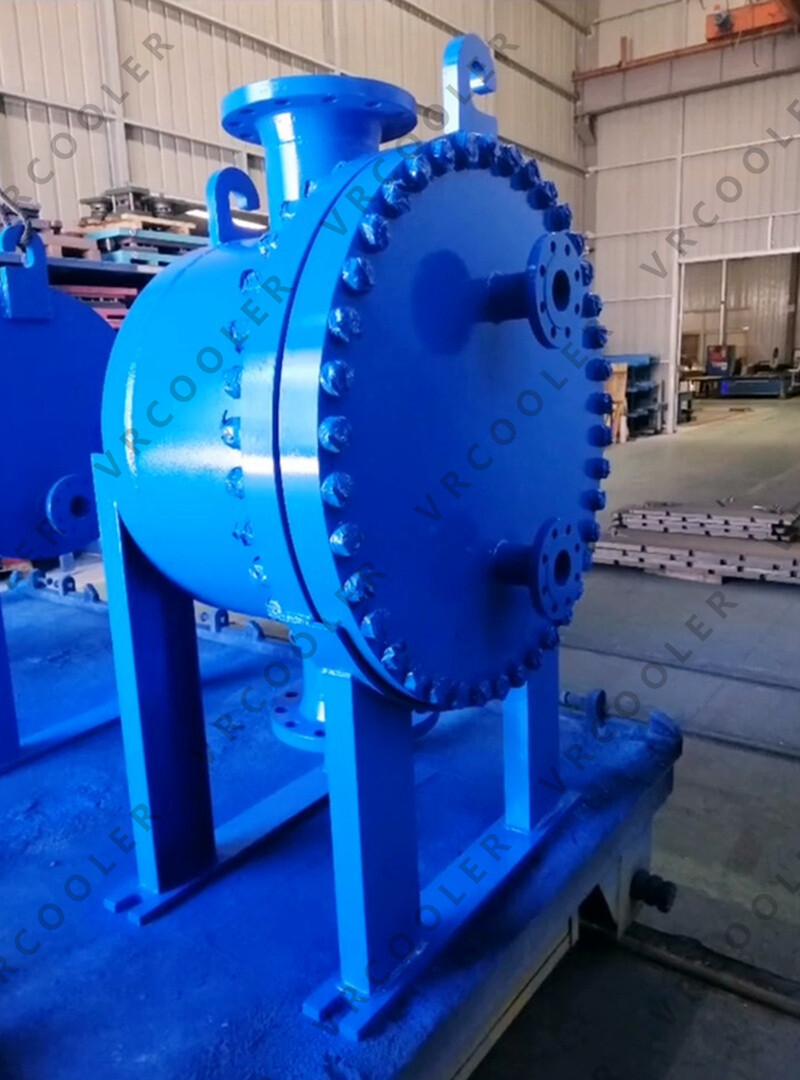
Compact Structure Designed for Limited Installation Space
In many industrial facilities, installation space is limited due to existing equipment and piping layouts.
Large heat exchangers may require major modifications to plant infrastructure.
Plate shell heat exchangers offer a more compact alternative.
Their design allows:
Higher heat transfer density
Reduced equipment volume
Easier installation within tight spaces
Because of this compact configuration, plate shell exchangers are frequently used in offshore platforms, energy plants, and process units where equipment space is restricted.
The smaller footprint can significantly simplify plant design and installation.
Manufacturing Plate Packs Through Advanced Fabrication Techniques
The internal plate pack is the core component of the plate shell heat exchanger.
Producing this component requires specialized fabrication processes.
Manufacturing steps may include:
Forming plates with corrugated patterns
Aligning the plates into a stacked configuration
Welding the plates to create sealed flow channels
The welding process must ensure that the two fluids remain completely separated while maintaining structural strength under pressure.
Advanced welding technology and precise alignment techniques help ensure that the plate pack functions reliably during operation.
Engineering Design Balancing Pressure Resistance and Efficiency
While plate heat exchangers provide excellent heat transfer performance, they sometimes have limitations in handling high pressure.
By placing the plate pack inside a strong cylindrical shell, plate shell heat exchangers overcome this limitation.
The shell structure provides:
High pressure resistance
Mechanical protection for the plate pack
Additional structural stability
This combination allows the exchanger to operate safely in industrial systems where pressure and temperature levels are relatively high.
The design therefore balances efficiency with durability.
Delivering a Customized Plate Shell Heat Exchanger for Process Cooling
For this project, the plate shell heat exchanger was designed according to the client’s specific cooling requirements.
The engineering team optimized several parameters including:
Plate pack size
Flow channel arrangement
Shell dimensions and nozzle positions
After fabrication and quality inspection, the exchanger was prepared for delivery.
Once installed in the client’s processing system, the equipment will provide:
Efficient process cooling
Compact equipment layout
Reliable long-term operation
This case demonstrates how plate shell heat exchanger technology can provide practical solutions for modern industrial heat transfer challenges, combining advanced thermal performance with strong mechanical design.
