
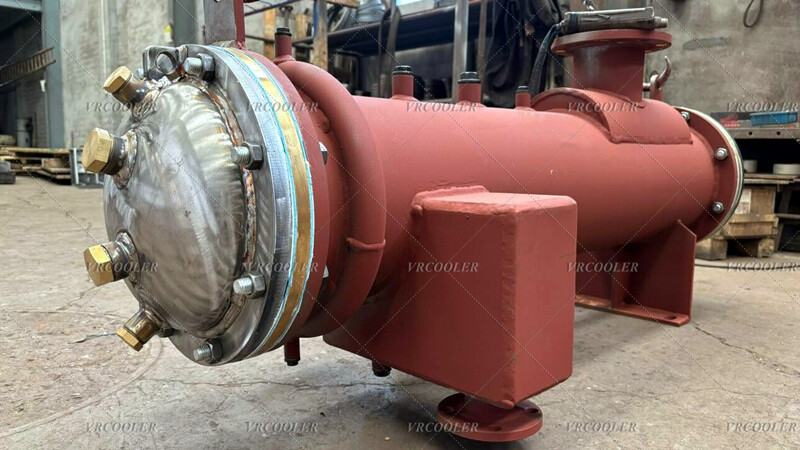
For this application, the required equipment is a compact shell-and-tube heat exchanger designed to cool compressed air by using seawater as the cooling medium. The air flow is 1000 SCFM at 45 PSIG, and the process requirement is to reduce the air temperature from 90 °C to 35 °C. Seawater is available at 22 °C, with a preferred flow rate of 20–25 GPM. The unit also needs to meet practical installation limits, including 3-inch air connections, 1.5-inch seawater connections and a maximum overall length of 52.5 inches.
Based on the supplied operating data, the sensible heat duty is approximately 30–35 kW, depending on the actual air moisture content and standard condition used for SCFM. With 20–25 GPM of seawater, the expected seawater temperature rise would normally be around 5–7 °C, which means the outlet seawater temperature may be roughly 27–29 °C. This is a reasonable range for a compact seawater-cooled air cooler.
For this duty, the recommended arrangement is to put seawater inside the tubes and compressed air on the shell side. This makes the seawater side easier to clean, inspect and maintain. Since seawater can cause scaling, biological fouling and corrosion, tube-side access is very important. A straight-tube fixed tubesheet design with removable water boxes is often suitable when the air side is relatively clean and the main maintenance requirement is cleaning the seawater tubes.
The material selection should be copper-based and suitable for seawater service. A practical construction would use copper-nickel tubes, such as Cu-Ni 90/10 or Cu-Ni 70/30, together with naval brass or aluminum bronze tubesheets and bronze/copper-alloy water boxes. For better service life, sacrificial anodes, proper vent and drain connections, and suitable gasket material should also be considered. If the compressed air contains moisture, the unit should include a condensate drain because water may condense when the air is cooled close to 35 °C.
Because air has a much lower heat transfer coefficient than water, the design must pay special attention to the air-side surface area. To keep the exchanger within the 52.5-inch length limit, enhanced tubes or finned copper-based tubes may be considered if a plain-tube bundle becomes too large. The final design should balance heat transfer area, air-side pressure drop, seawater velocity, tube cleaning access and mechanical strength.
This type of seawater-cooled shell-and-tube air cooler is suitable for marine systems, offshore equipment, compressed-air packages, process skids and coastal industrial plants. Compared with an air-cooled cooler, it offers a more compact footprint and stable cooling performance when seawater is readily available. With the correct copper alloy material and proper tube-side maintenance design, it can provide reliable long-term operation in corrosive seawater environments.
Vrcooler can customize this shell-and-tube heat exchanger according to the required air flow, design pressure, seawater flow, connection size, material grade and maximum installation length. For final sizing, the key details to confirm are allowable air pressure drop, allowable seawater pressure drop, air humidity or dew point, design code requirement, installation orientation and whether the unit needs removable bundle construction.
