
In the paper industry, heat transfer equipment is expected to do more than simply move heat from one fluid to another. It has to work reliably in a plant environment where moisture, fiber carryover, process contamination, temperature fluctuation, and continuous-duty operation are all part of normal life. That is one of the main reasons the shell and tube heat exchanger remains a trusted solution in paper mills and pulp processing plants.
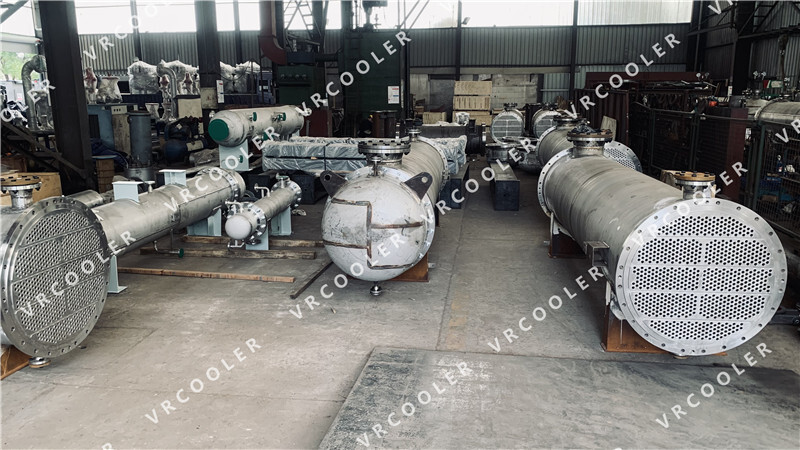
Paper production involves many thermal processes. Pulp preparation, stock treatment, chemical recovery, condensate handling, machine room cooling, dryer section support, and utility systems all depend on stable heat exchange. In these services, shell and tube heat exchangers are widely used because they are mechanically strong, easy to maintain, and flexible enough to handle different fluids, temperatures, and pressure levels.
The value of a shell and tube exchanger in the paper industry comes from its practical design. The shell side and tube side can be arranged to suit the actual process fluid, whether the plant is cooling water, condensing vapor, handling process liquid, or recovering heat from a utility stream. Compared with more compact exchanger types, a shell and tube unit is often better suited to dirty service and long-term industrial use because it provides stronger mechanical construction and more straightforward maintenance access.
In paper mills, process conditions are rarely perfectly clean. Fibers, suspended solids, scale, and contaminated water can all affect heat transfer performance over time. That is why maintainability matters. A shell and tube heat exchanger allows inspection, cleaning, and repair in a way that many plant operators find practical for real mill conditions. When production runs are long and downtime is expensive, that serviceability becomes a major advantage.
Another reason shell and tube exchangers are widely used in the paper industry is versatility. They can be built as coolers, heaters, condensers, or reboiler-style units depending on the duty. In paper and pulp plants, they may be used for white water cooling, hydraulic oil cooling, bearing oil cooling, vacuum system condensation, process water heating, chemical liquor service, or other plant utility duties. That flexibility makes them suitable for both new projects and retrofit work.
For paper industry users, material selection is also important. Depending on whether the exchanger handles clean water, process condensate, corrosive chemicals, or contaminated liquid streams, the construction may require carbon steel, stainless steel, or upgraded alloys. The correct material choice helps reduce corrosion risk, improve service life, and lower maintenance frequency. In many cases, a custom shell and tube design is the best way to match the exchanger to the actual mill duty.
From an operational standpoint, the real benefit of a well-designed shell and tube heat exchanger is process stability. Temperature control affects fiber processing, moisture removal, machine operation, and utility efficiency throughout the mill. A reliable exchanger helps keep those conditions stable, which in turn supports product quality and smooth production. In a paper plant, that practical reliability often matters more than theoretical compactness.
In short, a shell and tube heat exchanger used in the paper industry is valued because it combines strength, serviceability, and flexibility in one proven design. Whether it is used as a condenser, cooler, or process heater, it is well suited to the demanding operating conditions found in pulp and paper plants. For mills that need dependable long-term performance, a properly designed shell and tube exchanger remains one of the most practical heat transfer solutions available.
