
A Replacement Core that Revives Cooling Performance
In many industrial systems, the heat exchanger shell remains in good condition even after long periods of operation, while the tube bundle may experience fouling, corrosion, or reduced efficiency.
Instead of replacing the entire heat exchanger, clients often choose to replace only the tube bundle.
This approach offers several advantages:
Lower equipment replacement costs
Faster installation and system restart
Improved cooling efficiency with upgraded materials
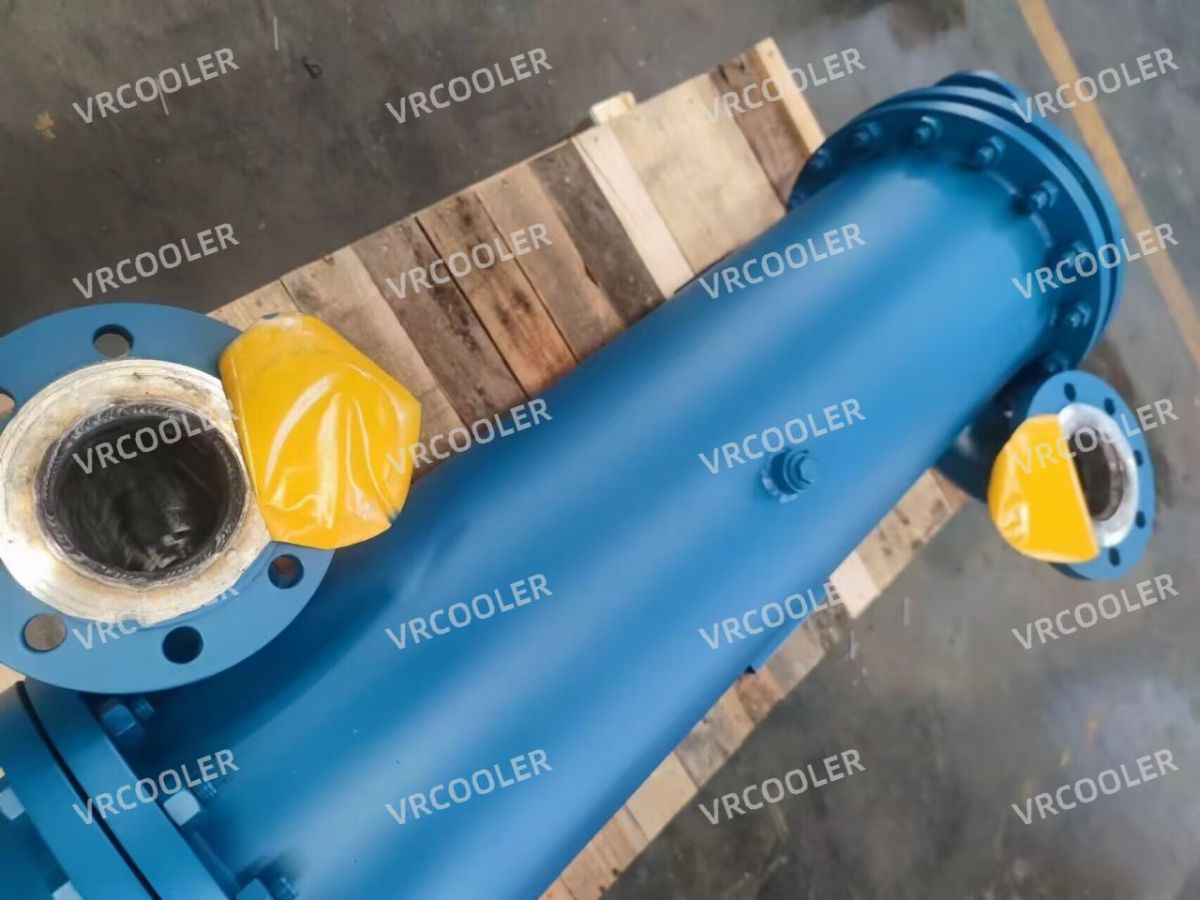
In this project, the client required a new oil cooler tube bundle to restore the cooling performance of an existing shell and tube heat exchanger used in their lubrication system.
Engineering the Tube Bundle to Match Existing Equipment
Producing a replacement tube bundle requires careful engineering to ensure compatibility with the existing exchanger shell.
The engineering team analyzed several technical parameters:
Original tube sheet dimensions
Tube layout and pitch arrangement
Operating pressure and temperature conditions
Oil flow characteristics
Based on this information, a customized tube bundle was designed to fit perfectly into the client’s existing heat exchanger housing.
This ensured seamless installation without requiring modifications to the system piping.
Heat Transfer Surfaces Designed for Efficient Oil Cooling
Oil cooling systems require careful design because oil typically has higher viscosity and lower thermal conductivity than water.
To maintain efficient heat transfer, the tube bundle design focused on:
Increasing effective heat transfer surface area
Optimizing tube spacing for proper oil flow
Ensuring uniform distribution of cooling medium
The optimized design helps remove heat effectively from lubricating oil while maintaining stable system temperatures.
Stable oil temperature is essential for protecting rotating equipment such as compressors, turbines, and gearboxes.
Precision Manufacturing of Tube Bundle Components
Once the engineering design was finalized, the tube bundle entered the fabrication stage.
Production involved several precise manufacturing processes:
Machining of the tube sheet according to exact hole patterns
Tube insertion and mechanical expansion
Welding where required for additional sealing strength
Installation of support plates to maintain tube alignment
Strict dimensional control ensured that the final tube bundle matched the required tolerances.
Accurate fabrication is essential for ensuring proper fit and reliable performance.
Quality Verification Ensuring Long Term Reliability
Before delivery, the completed oil cooler tube bundle underwent several quality inspections to confirm its performance and structural integrity.
Inspection procedures included:
Verification of raw material specifications
Dimensional checks of tube bundle assembly
Leak testing of tube-to-tube sheet joints
Visual inspection of welding and structural components
These inspections ensure that the tube bundle meets the operational requirements of the client’s cooling system.
Reliable manufacturing quality helps prevent operational failures and unplanned downtime.
