
Restoring System Efficiency Through Equipment Replacement
Industrial heat exchangers operate continuously in many processing systems such as refineries, chemical plants, and energy facilities. Over time, equipment may experience reduced performance due to fouling, corrosion, or mechanical wear.
Instead of redesigning the entire system, many operators prefer to replace the existing exchanger with a unit that matches the original design.
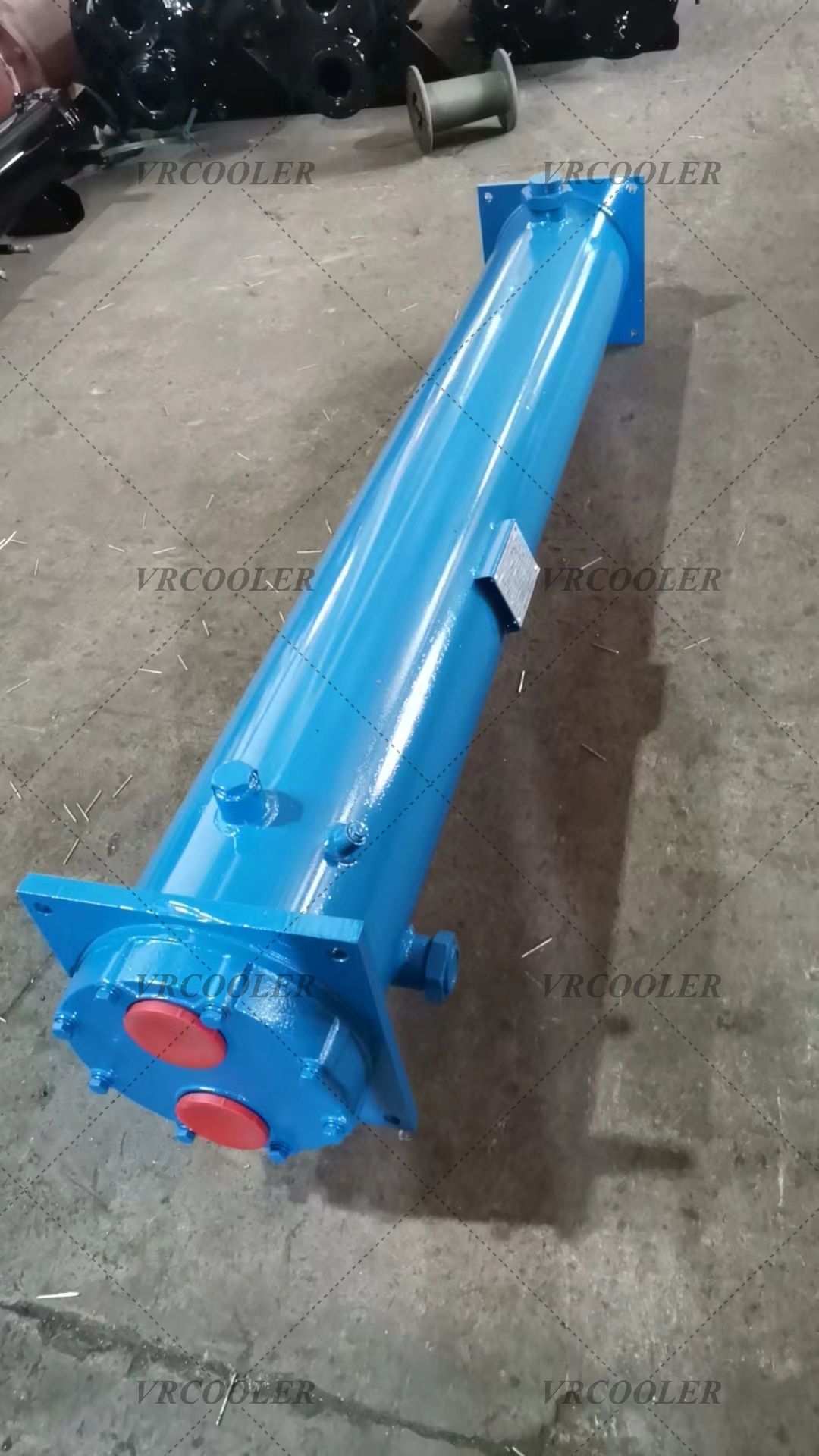
In this project, the client requested a replacement heat exchanger compatible with an existing unit originally supplied by Alfa Laval.
The objective was to restore cooling performance while ensuring seamless integration into the operating system.
This type of replacement project requires careful engineering evaluation and accurate manufacturing.
Reverse Engineering from Existing Equipment Specifications
Producing a replacement heat exchanger requires detailed technical analysis of the original equipment.
The engineering team reviewed the following parameters:
Overall shell dimensions
Tube bundle arrangement
Tube diameter and pitch
Operating pressure and temperature
Flow direction and connection layout
By studying these specifications, engineers created a compatible design that could match the original installation conditions.
Accurate reverse engineering ensures that the replacement exchanger can be installed without modifying the surrounding piping or structural supports.
This capability is particularly important when replicating equipment originally designed by manufacturers such as Alfa Laval.
Structural Design Ensuring Reliable Heat Transfer
The new shell and tube heat exchanger was designed to deliver stable heat transfer performance under the client’s operating conditions.
Key structural components include:
Pressure-resistant shell body
High-efficiency tube bundle
Tube sheets connecting the tubes to the shell structure
Internal baffles that guide fluid flow across the tubes
These components work together to create efficient heat exchange between the two process fluids.
Proper internal design improves turbulence, increases heat transfer efficiency, and ensures uniform temperature distribution throughout the exchanger.
Material Selection Supporting Long Service Life
Material selection plays a critical role in determining the reliability and lifespan of a heat exchanger.
For this project, materials were chosen according to the client’s process conditions.
Typical considerations included:
Resistance to corrosion from process fluids
Mechanical strength under operating pressure
Compatibility with existing system materials
Common material combinations may include carbon steel shells, stainless steel tubes, or copper alloy tubing depending on the application.
Careful material selection helps ensure stable long-term performance in demanding industrial environments.
Precision Manufacturing and Assembly Process
After the design stage was completed, the replacement exchanger entered the fabrication phase.
Manufacturing included several key production steps:
Rolling and welding of the shell body
Machining of tube sheets with precise hole patterns
Tube insertion and mechanical expansion
Installation of internal baffles and supports
Each step required strict dimensional control to guarantee compatibility with the client’s existing system.
High manufacturing precision ensures proper sealing, structural integrity, and efficient heat transfer.
Inspection and Testing Prior to Delivery
Before delivery, the finished shell and tube heat exchanger underwent comprehensive quality inspection.
Inspection procedures included:
Verification of raw material certificates
Welding inspection and visual examination
Dimensional checks for installation accuracy
Pressure testing to confirm structural safety
These procedures ensure that the equipment meets technical specifications and operational requirements.
Quality verification is especially important when producing replacement equipment that must integrate with an existing system.
Delivering a Practical Replacement Solution for Industrial Operations
After successful testing and final inspection, the completed heat exchanger was prepared for shipment to the client’s facility.
Once installed, the new exchanger will help the client:
Restore stable heat transfer performance
Improve cooling efficiency in the system
Extend the operational life of the processing unit
This project demonstrates the capability to manufacture high-quality replacement shell and tube heat exchangers compatible with equipment originally supplied by Alfa Laval.
Through careful engineering design and precise fabrication, replacement exchangers can provide reliable solutions for maintaining industrial heat transfer systems.
