
Engineered for high-pressure and high-temperature duty, industrial-grade shell and tube exchangers are built to withstand harsh conditions involving scale-laden fluids, abrasive particles, and extreme temperature fluctuations — common in steel production, rolling mills, and continuous casting processes.
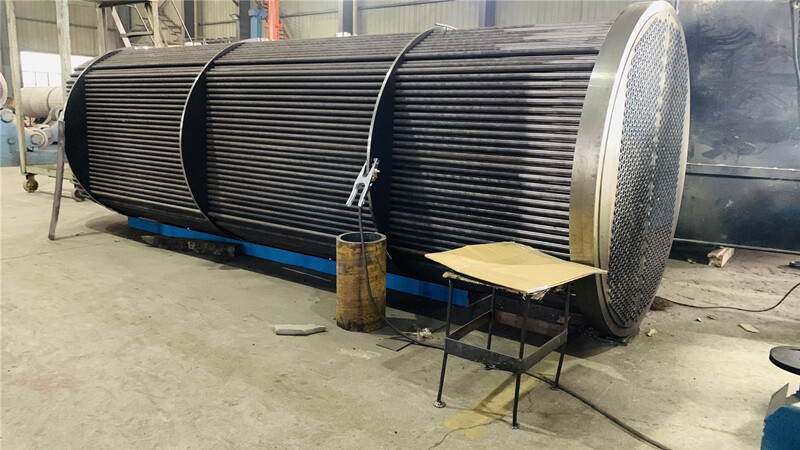
Function and Application in Steel Plants
Shell and tube heat exchangers are integrated across various stages of steel processing to optimize energy usage and control process temperatures. Typical applications include:
Cooling of quenching oils and hydraulic fluids in rolling mills
Heat recovery from furnace exhaust or hot flue gases
Preheating combustion air for reheating furnaces
Process water and cooling circuit heat exchange
Heating of lubrication oils for heavy-duty mechanical systems
Closed-loop cooling for continuous casting machine rolls and molds
By integrating these exchangers into thermal loops, plants can reduce fuel consumption, minimize energy losses, and achieve precise temperature control across critical production areas.
Technical Features
Integration in Steel Processing Systems
Shell and tube heat exchangers can be deployed in several key energy recovery and control loops:
Furnace Exhaust Heat Recovery: Transfers waste heat from furnace flue gas to preheat combustion air or process water.
Hydraulic Oil Cooling Systems: Maintains oil temperatures within optimal viscosity limits for continuous casting machinery.
Pickling Line Heating: Utilizes recovered heat to maintain acid bath temperatures for surface treatment.
Closed Water Cooling Systems: Protects sensitive equipment such as molds, rollers, and bearings by stabilizing water temperature.
Lubrication Oil Heating: Uses waste steam or hot oil to preheat heavy lubricants before pumping.
These integrations enable energy reuse, reduced fuel cost, and improved plant productivity, aligning with modern sustainability and decarbonization goals in heavy industry.
Industrial-grade shell and tube heat exchangers are indispensable components in steel processing and metallurgical systems, where durability, heat transfer efficiency, and maintenance accessibility are essential.
By integrating these exchangers for waste heat recovery, oil cooling, and process heating, steel producers can significantly improve energy efficiency, reduce carbon footprint, and increase system reliability.
