
In marine equipment, reliable cooling is essential, even for compact hydraulic systems. A 5 HP micro winch may be small in size, but during lifting, pulling, anchoring, mooring, or deck handling operations, its hydraulic power pack can generate a considerable amount of heat. If this heat is not removed in time, the hydraulic oil temperature will continue to rise, which may reduce oil viscosity, weaken lubrication performance, affect hydraulic pressure stability, and shorten the service life of pumps, seals, valves, and hydraulic motors.
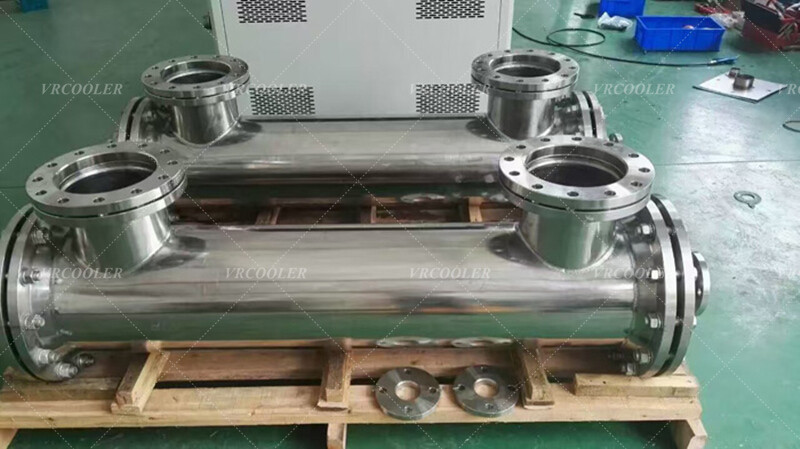
For this type of marine hydraulic power pack, a seawater-cooled shell and tube heat exchanger is a practical and efficient solution. It uses seawater as the cooling medium to remove heat from the hydraulic oil, helping the hydraulic system maintain a stable operating temperature during continuous or intermittent winch operation. Compared with air-cooled oil coolers, a seawater-cooled design is more compact and can provide strong cooling performance in limited shipboard installation space.
The working principle is simple and reliable. Hydraulic oil from the power pack flows through one side of the shell and tube heat exchanger, while seawater flows through the other side. Heat from the hydraulic oil is transferred through the tube wall and carried away by the seawater. The two fluids remain completely separated, so the hydraulic oil is protected from seawater contamination. This design is especially important for marine hydraulic systems, where clean oil and stable temperature are critical for safe operation.
The shell and tube structure is well suited for marine use because it offers strong mechanical strength, good pressure resistance, and convenient maintenance. For seawater applications, the tube material can be selected according to the project requirements. Copper-nickel tubes are commonly used in marine cooling systems because of their good resistance to seawater corrosion. Titanium tubes can be selected for more demanding seawater conditions, especially where chloride corrosion, biological fouling, or long service life is a major concern. Stainless steel may also be used in certain controlled seawater or freshwater-mixed systems.
For a 5 HP micro winch hydraulic power pack, the heat exchanger must be compact but dependable. It should be designed according to the hydraulic oil flow rate, seawater flow rate, inlet and outlet oil temperatures, seawater temperature, working pressure, allowable pressure drop, and available installation space. A properly sized heat exchanger helps prevent overheating during repeated winch operation and keeps the hydraulic system working smoothly.
In real marine environments, corrosion protection and easy cleaning are just as important as heat transfer performance. The seawater side may be exposed to salt, sand, mud, shells, marine organisms, and other impurities. Therefore, removable end covers, suitable tube materials, anti-corrosion construction, and accessible cleaning design are important features. Regular inspection and cleaning can help maintain heat transfer efficiency and extend the working life of the equipment.
This type of seawater-cooled shell and tube heat exchanger is widely used in marine hydraulic power packs, micro winches, deck machinery, steering systems, small cranes, anchor handling equipment, fishing vessels, workboats, offshore platforms, and other marine hydraulic applications. It provides stable cooling performance without taking up excessive space, making it a reliable choice for compact marine hydraulic systems.
Vrcoolertech can customize seawater-cooled shell and tube heat exchangers according to different marine operating conditions. The design can include copper-nickel, titanium, or stainless steel tubes, compact shell construction, marine-grade flanges or threaded connections, removable covers, and corrosion-resistant materials. Each unit can be designed to match the actual cooling duty, hydraulic oil specifications, seawater conditions, pressure requirements, and installation layout.
For a 5 HP marine micro winch hydraulic power pack, choosing the right heat exchanger is not only about cooling capacity. It is also about safety, reliability, service life, and maintenance convenience. A well-designed seawater-cooled shell and tube heat exchanger helps protect the hydraulic system, reduce downtime, and ensure dependable winch operation in demanding marine environments.
