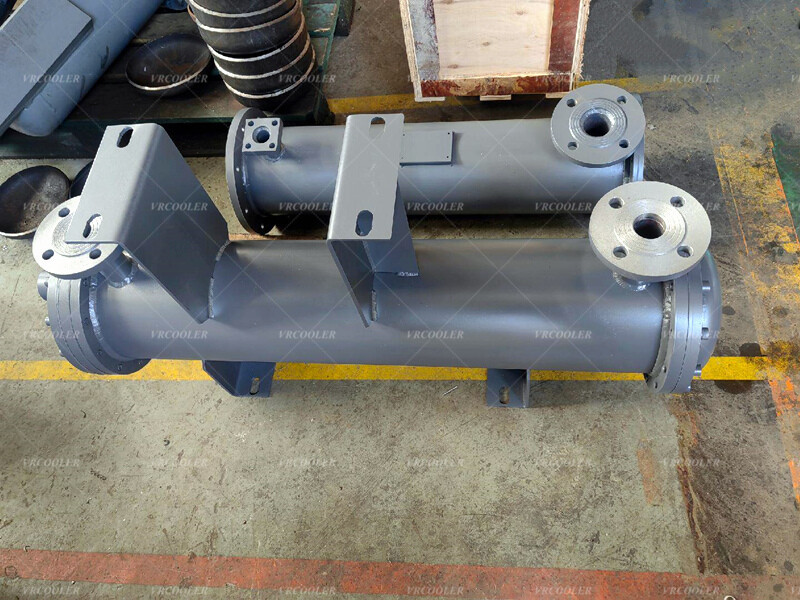
Shell Tube Heat Exchanger for Using Soybean Oil to Cool Down Water
Working Principle of Shell - Tube Heat Exchanger
A shell - tube heat exchanger consists of a bundle of tubes inside a shell. In the case of using soybean oil to cool down water, the water would typically flow through the tubes (the tube - side fluid), and the soybean oil would flow through the shell (the shell - side fluid). Heat is transferred from the warmer water to the cooler soybean oil through the walls of the tubes.
The temperature difference between the water and the soybean oil is the driving force for heat transfer. As the water, which is at a higher temperature, passes through the tubes, its heat is conducted through the tube walls and then convected to the soybean oil flowing in the shell. The rate of heat transfer is influenced by factors such as the temperature difference, the surface area of the tubes, the thermal conductivity of the tube material, and the flow rates of both fluids.
Advantages of Using a Shell - Tube Heat Exchanger for This Application
Efficient Heat Transfer: The design of the shell - tube heat exchanger provides a large surface area for heat transfer. The tubes can be arranged in different configurations (e.g., straight tubes, U - tubes) to optimize the heat transfer area. This allows for efficient cooling of the water using the soybean oil.
Versatility: It can handle a wide range of flow rates and temperature differences. Different tube diameters, lengths, and arrangements can be selected to meet the specific requirements of the cooling process. For example, if a high - volume of water needs to be cooled quickly, a larger number of tubes or a larger tube diameter can be used.
Separation of Fluids: The tube - shell design keeps the water and soybean oil separate, minimizing the risk of contamination. This is important when dealing with food - grade substances like soybean oil, as it ensures that the oil can be reused for other purposes (such as cooking) without being contaminated by water.