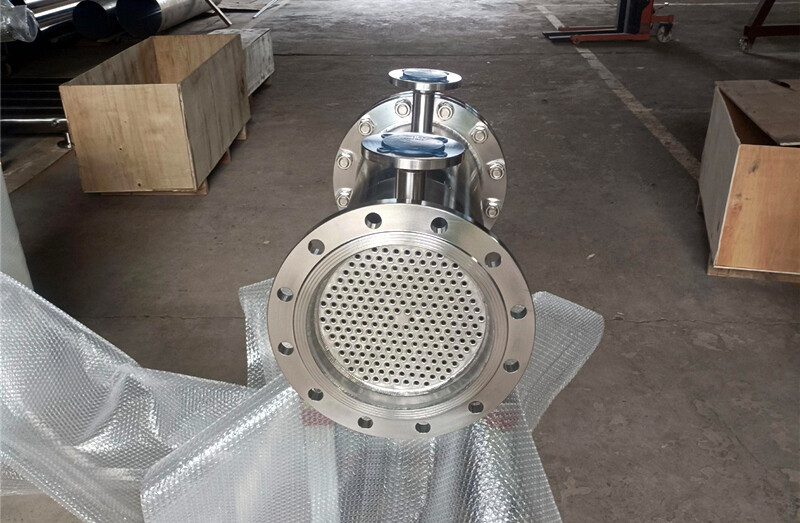
Shell Tube Type Turbine Bearing Oil Cooler
A Shell Tube Type Turbine Bearing Oil Cooler is a critical auxiliary device in turbine systems (e.g., steam turbines, gas turbines, hydro turbines). Its core function is to control the temperature of turbine bearing oil—a fluid that simultaneously lubricates the turbine’s high-speed bearings (reducing friction and wear) and dissipates the heat generated by bearing rotation. By maintaining oil temperature within a safe range (typically 35–55°C, depending on turbine type), it prevents oil degradation, bearing overheating, and potential turbine shutdowns.
As a type of Shell-and-Tube (S&T) Heat Exchanger, this cooler relies on indirect heat transfer between two isolated fluid circuits: the hot bearing oil (shell-side fluid) and the cooling medium (tube-side fluid, e.g., cooling water, glycol solution, or air-cooled thermal fluid).
The heat transfer process follows three key steps:
Heat Absorption: Turbine bearings (rotating at thousands of RPM) generate frictional heat, which is absorbed by the lubricating oil. The hot oil (typically 50–70°C) is pumped into the shell (the outer cylindrical chamber of the cooler).
Heat Transfer: The hot oil flows around the outer surface of the tube bundle (the core heat transfer component). Meanwhile, the low-temperature cooling medium (e.g., 20–30°C cooling water) flows inside the tubes. Heat is transferred through the tube walls from the hot oil to the cooling medium.
Heat Dissipation: The heated cooling medium exits the tubes and is sent to a secondary cooling system (e.g., a cooling tower for water) to release the absorbed heat. The cooled bearing oil (now at the target temperature) is recirculated back to the turbine bearings to repeat the cycle.
Key Advantage: The shell-and-tube design ensures complete fluid isolation—preventing cooling water contamination of the bearing oil (which would cause lubrication failure) and vice versa.