
A shell and tube heat exchanger for hydraulic oil cooling in an injection molding machine is a practical and durable solution for keeping hydraulic oil temperature stable during continuous production. In injection molding equipment, the hydraulic system works under repeated high-pressure cycles. Pumps, valves, actuators, and throttling losses generate heat, and if this heat is not removed properly, the oil temperature rises quickly.
When hydraulic oil overheats, its viscosity drops, lubrication becomes less stable, seals age faster, and machine movement accuracy may be affected. This can lead to unstable clamping force, inconsistent injection speed, longer cycle times, and higher maintenance cost. A properly selected shell and tube oil cooler helps control oil temperature and supports reliable machine operation.
For this project, the required heat exchanger is a horizontal shell and tube type, designed for approximately 15 kW heat duty with a heat transfer area of about 2.5–3.0 m². The oil side uses hydraulic oil with a flow rate of 219 L/min, inlet temperature of 51°C, and target outlet temperature of 45°C. The water side uses cooling water entering at 30–35°C and leaving at around 40°C.
Main Design Data
Oil Side Conditions
Water Side Conditions
One important engineering point should be checked before final design. The stated 15 kW heat duty does not fully match the oil flow rate and the stated oil temperature drop from 51°C to 45°C. With 219 L/min hydraulic oil, a 6°C oil temperature drop may represent a duty closer to 35–40 kW, depending on the oil density and specific heat. If the real duty is only 15 kW, the oil temperature drop at 219 L/min would typically be around 2–3°C, not 6°C. So the final quotation should confirm whether 15 kW is the required duty or whether the 51°C to 45°C oil cooling target is the real design basis.
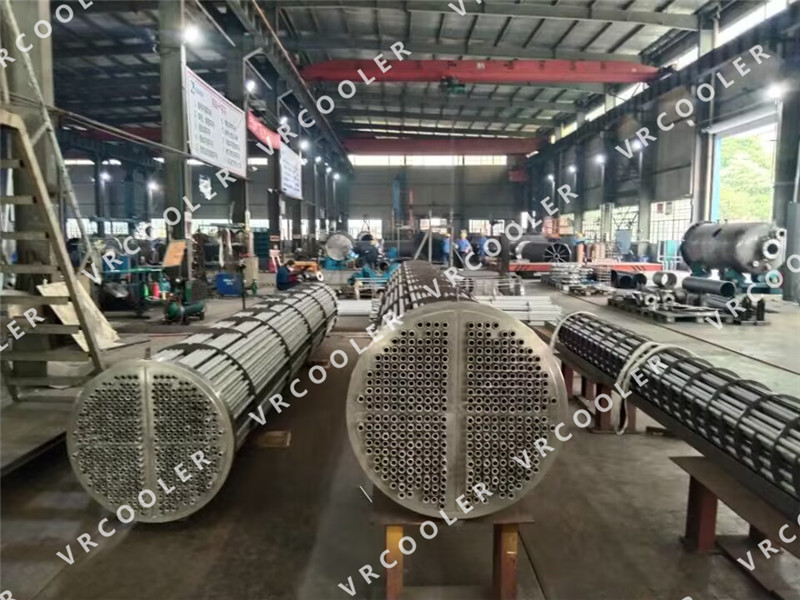
For injection molding machines, a removable tube bundle is a very useful feature. Cooling water can contain hardness, minerals, rust, or suspended particles, especially when supplied from a tower or plant water loop. Over time, fouling or scaling may reduce heat transfer. A removable bundle allows easier inspection, cleaning, and maintenance, helping extend the life of the oil cooler.
Material selection depends on water quality and site conditions. Copper tubes offer good heat transfer performance and are widely used with clean fresh water. SS316 tubes are better for more corrosive water, higher chloride content, or applications where longer corrosion resistance is required. For the shell, carbon steel is often economical for standard hydraulic oil service, while stainless steel can be selected for higher corrosion resistance or cleaner industrial environments.
The cooler should also be designed with a low oil-side pressure drop. Hydraulic systems are sensitive to flow resistance, and excessive pressure loss can affect pump operation or increase system energy consumption. The internal flow path should therefore be selected to balance heat transfer efficiency and smooth oil circulation.
A shell and tube hydraulic oil cooler offers several advantages for injection molding machines:
- Stable hydraulic oil temperature control
- Strong mechanical structure for industrial operation
- Easy maintenance with removable tube bundle
- Flexible material options for different water qualities
- Horizontal installation for simple integration
- Suitable for continuous production environments
- Long service life with proper water treatment and cleaning
In summary, this shell and tube heat exchanger for hydraulic oil cooling is suitable for injection molding machine applications where reliable oil temperature control and maintainable construction are required. Based on the given data, the unit can be designed with 2.5–3.0 m² heat transfer area, 1.5" oil connections, 1" water connections, minimum 10 bar working pressure, and optional copper or SS316 tubes. Before final manufacturing, the heat duty should be confirmed carefully because the stated 15 kW duty and the 219 L/min oil flow with 6°C cooling range indicate different thermal loads.
