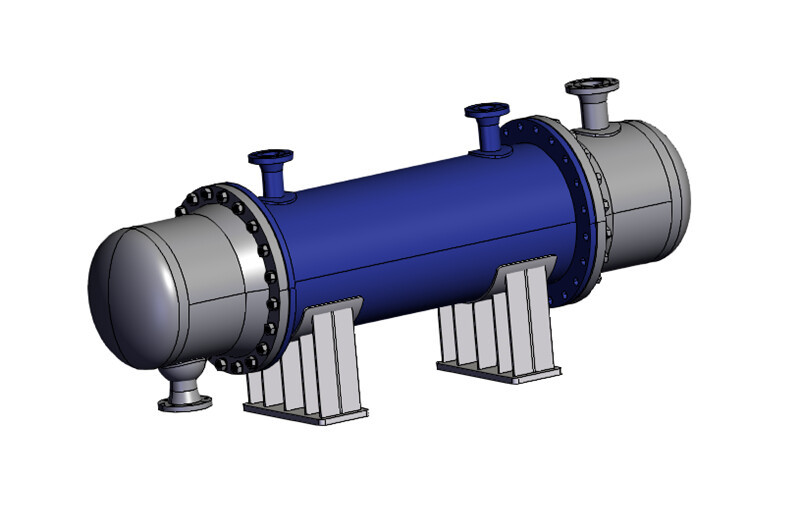
Shell-and-tube heat exchangers for steam-heated heavy oils
Shell and tube heat exchangers for steam-heated heavy oil are a common design in marine or industrial systems for indirectly heating heavy oil (fuel oil) via steam to reduce its viscosity for easy pumping and atomized combustion.
Core Uses
Reducing the viscosity of heavy oil:
Heavy oils (e.g., marine fuel oil HFO) have high viscosity and poor fluidity at room temperature, making direct combustion inefficient. When heated (typically to 90-120°C), the viscosity is reduced and stabilized for delivery to the boiler or engine combustion chamber.
Preheating of oil-fired boilers/marine engines:
Ensures that fuel is fully atomized when injected, improving combustion efficiency and reducing carbon buildup and emissions.
Component Function
Shell Side Steam (saturated or low pressure steam, typically 150-200°C) is fed as the heat source.
Tubes Heavy oil flows through the tubes and is indirectly heated by the shell side steam.
Folding plates increase the turbulence of the shell-side steam to improve heat transfer efficiency.
Condensate Outlet Condensate from the steam is discharged (can be recycled to the boiler system).
Workflow
Steam enters the shell side and releases latent heat to heat the tube wall.
Heavy oil flows through the tube, absorbing heat and raising the temperature.
Steam condenses to water and is discharged from the bottom (can be returned to the hot well or boiler).
The heated heavy oil is pumped to the boiler or engine combustion system.
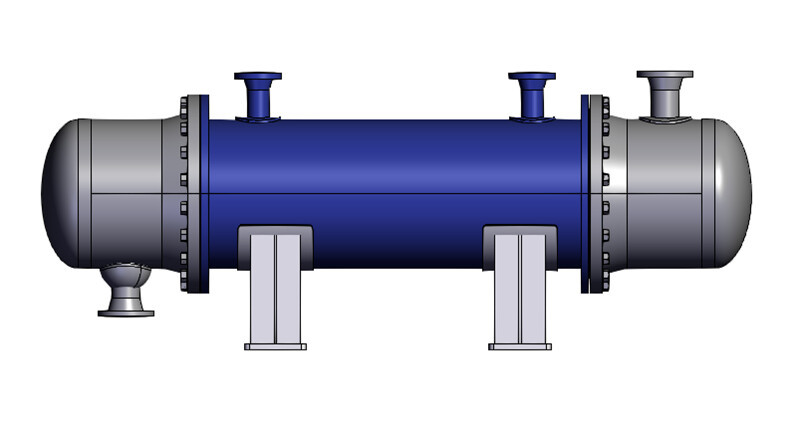
Key Design Parameters
Heat transfer area: Calculated based on heavy oil flow rate, temperature rise requirements (e.g., from 40°C to 110°C), and steam temperature.
Material selection:
Tube bundle: Corrosion-resistant material (e.g. 316 stainless steel, copper-nickel alloy) to prevent corrosion from sulfur in heavy oil.
Casing: Carbon steel (may be lined internally with an anti-corrosion coating).
Vapor Pressure Control:
Stable pressure (e.g. 4-8 bar) is required to ensure a constant heating temperature and to avoid localized overheating and coking of the heavy oil.
Special requirements for marine applications
Anti-vibration design: Ships need to withstand shaking during operation, heat exchangers need to be reinforced with support structures.
Compactness: Space is limited and multi-pass tube bundles (U-tube or floating head design) are often used.
Safety measures:
Temperature sensor + automatic regulating valve: to prevent overheating of heavy oil leading to cracking or fire.
Low flow protection: to avoid coking and clogging of heavy oil in the stagnant pipe.
Examples of practical applications (marine systems)
Fuel oil supply flow:
Heavy oil tank → Sedimentation cabinet (preliminary heating) → Centrifugal oil separator → Shell and tube steam heater → Day use cabinet → Boiler/Engine.
Steam Source:
Typically from ship's auxiliary boiler or main engine exhaust gas boiler (waste heat recovery)