
In a wastewater treatment plant, thermal equipment must do more than transfer heat. It has to work reliably in a harsh environment where moisture, fouling, and corrosive conditions are often part of daily operation. That is why a shell and tube heat exchanger is still one of the most practical choices for exhaust gas cooling in sludge drying and related treatment processes.
For this project, the heat exchanger is intended to cool dryer exhaust gas generated in a wastewater treatment plant. The gas flow is about 5.7 m³/min at 110°C, with a pressure condition of -30 kPa, and the exhaust is described as saturated with moisture. The target is to reduce the gas temperature to 42°C using cooling water at 374 L/min, with water entering at 38°C and leaving at 43°C. The specified heat exchanger material is SUS304.
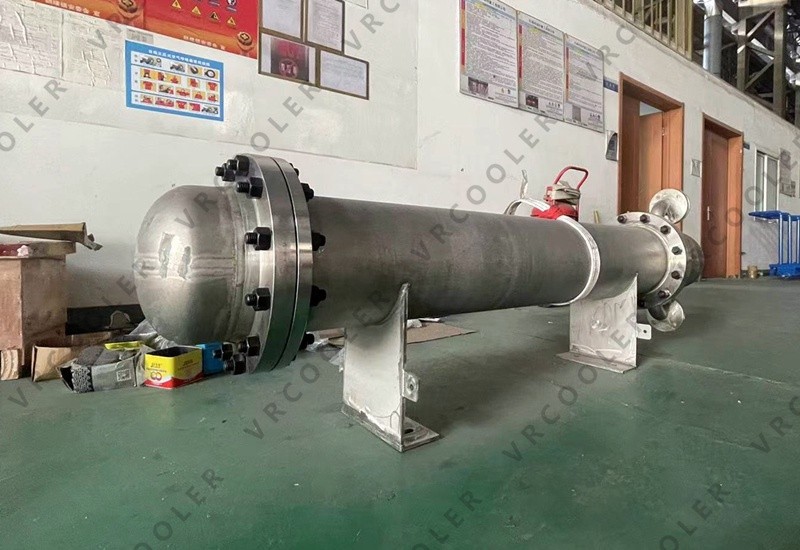
This kind of duty is a good example of where a shell and tube design performs well. On the gas side, the exhaust is hot, wet, and likely to contain contaminants carried over from the dryer process. On the water side, the cooling medium is stable and easy to control. A shell and tube heat exchanger provides a rugged structure that can tolerate industrial operating conditions better than many lighter exchanger types, especially when maintenance access and long-term durability matter.
One of the most important features of this application is the saturated moisture in the exhaust gas. When a gas stream at 110°C is cooled down to 42°C, condensation is very likely to occur inside the exchanger. That means the unit is not acting only as a sensible gas cooler. It may also operate partly as a condensing cooler. This has a direct impact on design, because the exchanger must allow proper condensate drainage, avoid liquid accumulation, and limit the risk of corrosion or fouling on the gas side.
That is why shell-side arrangement, nozzle orientation, and internal flow design are all important. The gas path must be designed to cool the exhaust effectively while also handling moisture separation and condensate removal. In wastewater treatment service, this is especially important because condensed liquid may contain aggressive compounds depending on the dryer process and gas composition. Even when SUS304 is specified, the vendor should still review the actual condensate characteristics to confirm material suitability for long-term operation.
The cooling water data also shows that the exchanger is expected to remove a meaningful amount of heat with a relatively narrow water temperature rise, from 38°C to 43°C. This usually indicates a steady cooling load and a need for dependable thermal performance rather than short intermittent service. In practical terms, the exchanger should be designed to maintain the target gas outlet temperature without creating excessive pressure loss on the gas side, especially since the exhaust system is already operating under negative pressure.
Because the user has asked the vendor to advise the pressure loss, overall heat transfer coefficient, and heat transfer area, these values should be determined by a proper thermal and mechanical design calculation rather than estimated casually. In an application like this, the final numbers depend on more than inlet and outlet temperatures. They also depend on gas composition, condensate behavior, fouling tendency, allowable gas-side resistance, tube arrangement, flow velocity, and cleaning requirements. That is why custom design is the correct approach.
In wastewater treatment plants, shell and tube heat exchangers used for dryer exhaust cooling are often valued for three reasons. First, they are mechanically strong and suitable for continuous industrial duty. Second, they can be designed for dirty or wet gas service more easily than many compact exchanger types. Third, they are easier to inspect and maintain when process conditions are demanding. These advantages make them a practical choice for exhaust cooling, heat recovery, or pre-treatment duty in sludge drying systems.
For this project, the most important design priorities are clear: reliable cooling from 110°C to 42°C, suitability for saturated exhaust gas, proper management of condensate, and durable SUS304 construction for plant service. When these factors are handled correctly, the exchanger can help improve process stability and protect downstream equipment in the wastewater treatment system.
In short, a shell and tube heat exchanger for wastewater treatment plant dryer exhaust cooling is a strong industrial solution where wet gas, stable cooling duty, and mechanical reliability all matter. With the right vendor design for pressure drop, U value, and surface area, it can provide dependable long-term performance in a difficult operating environment.
