
Project driven customization pathway
From drawing to manufacturable structure
In this project, the customer provided detailed technical drawings including dimensions, nozzle positions, and installation limitations. Engineers translated these drawings into a manufacturable design while ensuring compliance with mechanical and thermal requirements.
Parameter based engineering validation
Key operating parameters such as temperature, pressure, flow rate, and media type were analyzed to verify the feasibility of the tube bundle design. This ensured that the customized solution could meet real operating demands.
Addressing non standard constraints
Unlike standard models, the project involved limited space and specific connection requirements. The tube bundle structure was adjusted to fit seamlessly into the existing system.
Collaboration with customer engineering team
Continuous communication with the client allowed design optimization at each stage, reducing errors and improving final performance.
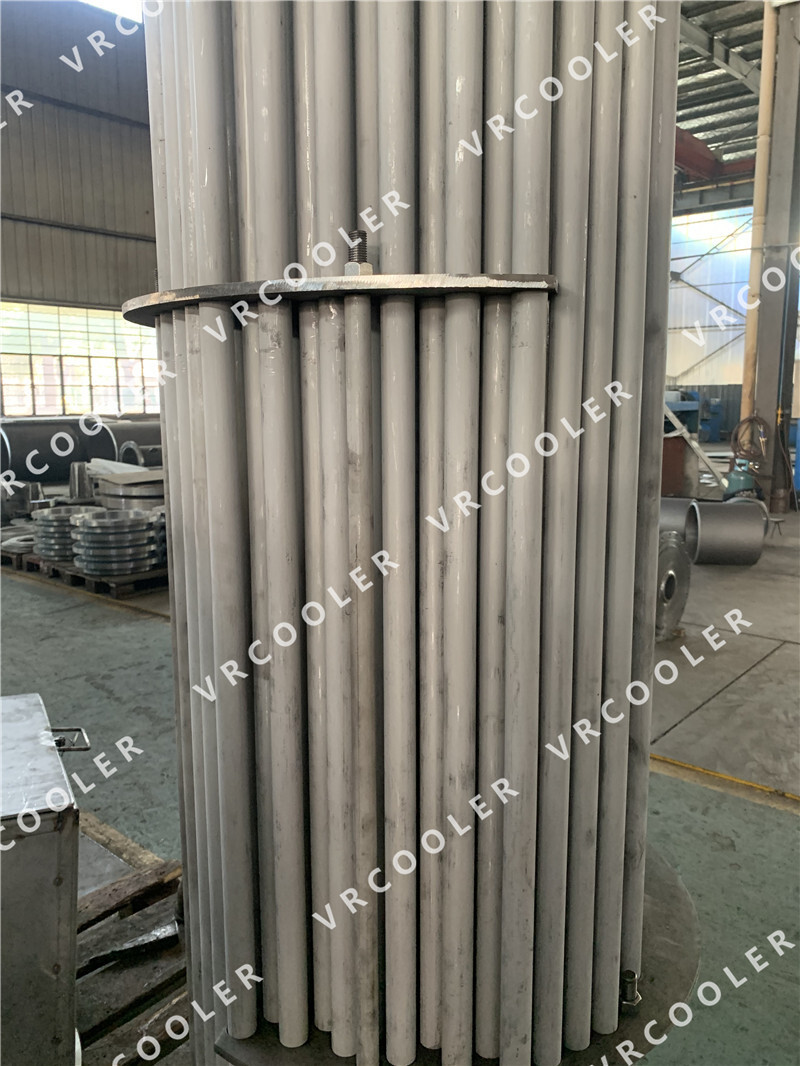
Tube bundle layout shaping heat performance
Selection of tube arrangement pattern
Different tube layouts such as triangular or square pitch were considered. The final selection balanced heat transfer efficiency and ease of cleaning.
Optimization of tube diameter and length
Tube size directly affects heat transfer area and pressure drop. Engineers selected appropriate dimensions to achieve optimal performance.
Balancing flow distribution
Uniform flow distribution across the tube bundle is critical to avoid dead zones and ensure consistent heat exchange.
Enhancing turbulence for efficiency
Design adjustments such as baffle spacing helped increase turbulence, improving heat transfer without excessive pressure loss.
Structural design beyond standard models
Custom support and fixing methods
The tube bundle required specially designed supports to maintain stability during operation and transportation.
Reinforcement under operating stress
Structural reinforcement was added to withstand pressure, vibration, and thermal expansion.
Adaptation to special installation positions
The exchanger was designed to be installed in a non-standard orientation, requiring careful structural consideration.
Integration with existing equipment
Connections and interfaces were customized to match the client’s system, ensuring smooth installation.
Material selection aligned with application
Choosing materials based on media
Depending on whether the working fluid was corrosive, materials such as stainless steel, copper alloys, or other metals were selected.
Ensuring durability and performance
Material selection balanced corrosion resistance, strength, and heat transfer efficiency.
Compatibility with operating temperature
Materials were chosen to maintain stability under the specified temperature range.
Long term reliability considerations
Proper material choice reduces the risk of failure and extends equipment service life.
Manufacturing process for custom designs
Precision fabrication of tube bundle
Custom tube bundles require high precision in cutting, bending, and assembly to meet design specifications.
Welding adapted to special structure
Non-standard designs often involve complex welding requirements, which must be carefully executed.
Quality control during production
Each stage of manufacturing was monitored to ensure compliance with design requirements.
Inspection before delivery
Comprehensive testing ensured that the customized exchanger met all performance and safety standards.
Project results and application value
Successful installation in limited space
The customized design allowed the exchanger to fit perfectly within the client’s restricted installation area.
Stable and efficient operation
After commissioning, the heat exchanger delivered consistent thermal performance.
Reduced maintenance challenges
The optimized tube bundle design improved accessibility and reduced fouling risks.
Demonstration of customization capability
This project showcased the flexibility of shell and tube heat exchanger design in meeting complex industrial needs.
