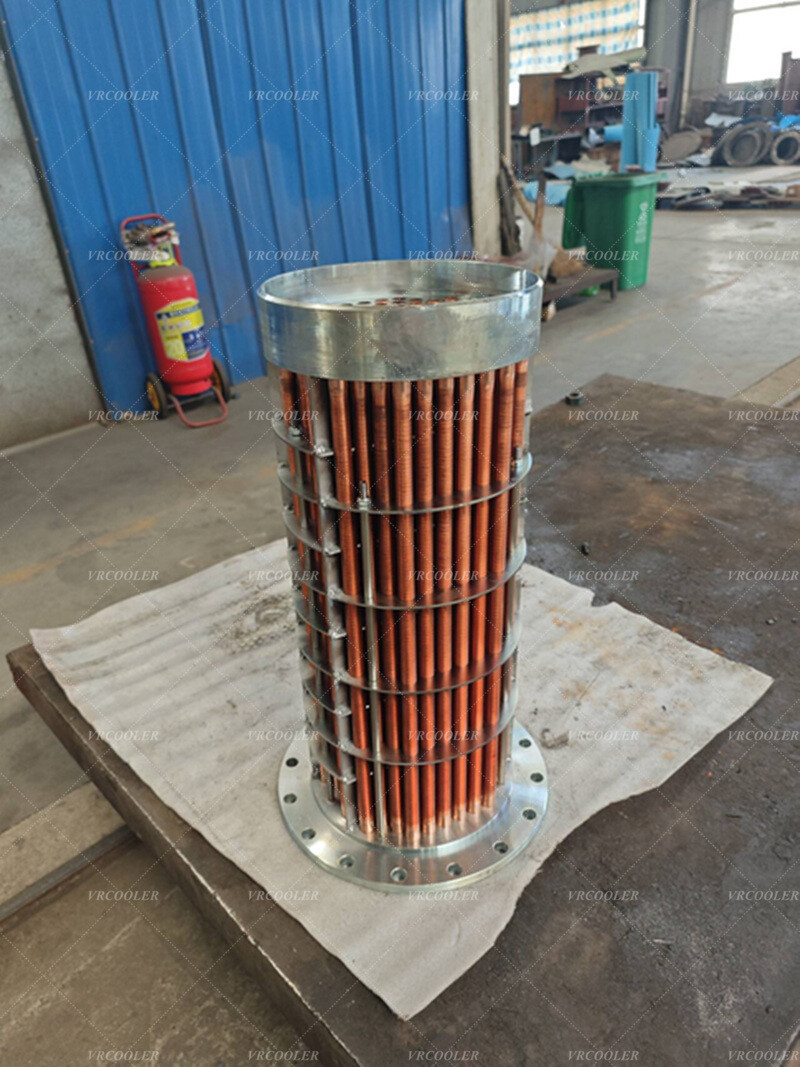
Tube Bundle Heat Exchangers to Cool the Turbine Lube Oil in Power Plants
During operation of steam turbine generator sets, friction in moving components such as bearings and gearboxes generates significant heat, causing the turbine oil temperature to rise. If oil temperatures exceed 45-55°C (slightly varying by unit model), it can trigger reduced oil viscosity, diminished lubrication performance, accelerated oxidation (the oxidation rate approximately doubles for every 10°C increase in oil temperature), and even sludge deposition. In severe cases, this may lead to major failures such as bearing burnout or unit shutdown.
The core function of the shell-and-tube heat exchanger is to rapidly transfer heat from the turbine oil to the cooling medium (typically circulating water or cold air) through forced heat exchange. This stabilizes oil temperature within a safe range, ensures oil performance meets specifications, and indirectly safeguards the operational integrity of critical turbine components.
Heat Exchange Process Flow
Tube side (oil side): High-temperature turbine oil requiring cooling (typically 60-80°C) enters through the tube side inlet. It flows through each tube within the tube bundle. During this flow, the oil's heat is transferred through the tube walls to the shell-side cooling medium.
Shell Side (Cooling Side): Cooling medium (e.g., circulating water at 30-40°C) enters through the shell inlet. Guided by baffles, it flows turbulently across the outer walls of the tube bundle, continuously absorbing heat transferred from the tubes. The heated cooling medium exits through the shell outlet (requiring subsequent cooling in a cooling tower before recirculation).
Heat exchange outcome: High-temperature turbine oil flows through the tube side, its temperature dropping to the safe range of 40-50°C. It then exits the tube side and returns to the turbine oil system, completing one cooling cycle.
Primarily used in power plant turbine generator units, including:
Thermal power plants: Turbine oil systems for conventional coal-fired turbine units and combined cycle power plants (CCPP).
Hydroelectric plants: Thrust bearing and guide bearing oil cooling for hydro turbine generator units.
Nuclear power plants: Turbine units outside the nuclear island (requiring heat exchangers made of radiation-resistant materials).