
A Distinctive Curved Geometry Designed for Thermal Expansion
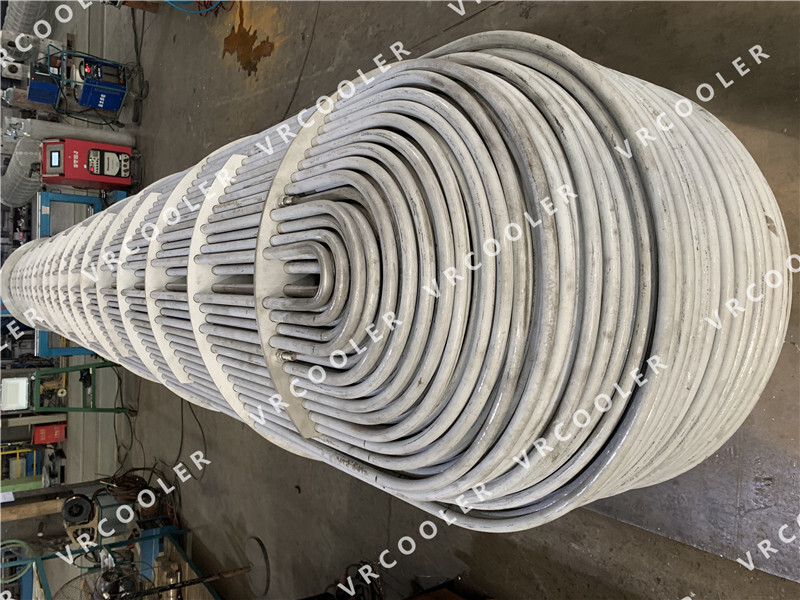
One of the defining structural characteristics of a U-tube shell and tube heat exchanger is the curved tube configuration. Unlike straight-tube designs, the tubes bend into a U-shape and connect to a single tube sheet.
This configuration provides several structural advantages:
The U-shaped tubes allow natural expansion and contraction when temperature differences occur between the shell side and tube side fluids.
Thermal stress is significantly reduced because the tubes can flex slightly during operation.
The design eliminates the need for an additional floating tube sheet, simplifying certain mechanical components.
Because of these characteristics, U-tube heat exchangers are particularly suitable for high-temperature services such as petrochemical processing, power plants, and refining systems.
Cleaning Considerations That Require Smart Maintenance Planning
While the U-tube configuration provides excellent thermal flexibility, it also introduces specific maintenance considerations.
Unlike straight-tube exchangers, the curved section of the tube cannot always be mechanically cleaned with traditional straight cleaning rods. This leads to several operational considerations:
Mechanical cleaning tools may only reach the straight sections of the tube.
The curved section can be more difficult to access directly.
Chemical cleaning or high-pressure flushing is often used for internal cleaning.
However, this does not necessarily create a major operational limitation. In many industrial processes, fluids inside the tubes are relatively clean, while fouling tends to occur on the shell side. Proper design, filtration, and periodic chemical cleaning can effectively manage this issue.
Where the U Tube Design Demonstrates Its True Strength
U-tube shell and tube heat exchangers are commonly selected for applications where temperature differences between two fluids are large and structural flexibility is required.
Typical applications include:
Petroleum refining units
Chemical processing plants
Power generation systems
Gas processing facilities
High-pressure industrial heating and cooling systems
In these environments, the ability of the tubes to absorb thermal expansion helps prevent structural damage, leakage, and long-term fatigue.
Precision Tube Bending and Bundle Assembly Challenges
Manufacturing a U-tube heat exchanger requires specialized production techniques that differ from standard straight-tube exchangers.
Key production steps include:
Precision tube bending to ensure uniform curvature without material deformation.
Careful control of bending radius to maintain tube wall integrity.
Accurate tube insertion and expansion into the tube sheet.
Installation of support plates and baffles to maintain proper tube spacing.
During production, strict dimensional control ensures that all tubes align correctly and that the tube bundle fits precisely inside the shell.
These manufacturing requirements demand experienced fabrication teams and advanced equipment.
ASME U Stamp Certification Demonstrating International Quality Standards
For this project, the U-tube shell and tube heat exchanger was manufactured according to ASME standards and successfully obtained the ASME “U” stamp certification.
The ASME U stamp represents:
Compliance with the ASME Boiler and Pressure Vessel Code.
Strict inspection and documentation requirements.
Qualified welding procedures and certified welders.
Verified pressure resistance and safety performance.
Obtaining the ASME U certification ensures that the equipment can be used in international projects requiring high safety and engineering standards.
This certification also demonstrates the manufacturer’s capability to meet global regulatory and industrial requirements.
Delivering a Reliable Customized Solution for the Client
The completed U-tube shell and tube heat exchanger was produced according to the client’s technical specifications and operating parameters.
The customized solution included:
Material selection suitable for the operating environment
Optimized heat transfer design
Accurate fabrication and assembly
Comprehensive inspection and pressure testing before delivery
Through close engineering collaboration with the client, the final equipment achieved both performance reliability and structural durability.
The successful completion of this project highlights the advantages of U-tube heat exchanger design and demonstrates strong capabilities in customized ASME-certified manufacturing.
U-tube shell and tube heat exchangers remain an important solution in modern industrial heat transfer systems. Their ability to accommodate thermal expansion, maintain structural stability, and operate under demanding conditions makes them a reliable choice for many industries. With advanced manufacturing processes and ASME-certified production capabilities, customized U-tube heat exchangers can provide efficient, safe, and long-lasting performance for complex industrial applications.