
Process Cooling Requirement
Temperature control before the next stage
In the customer’s production line, the process medium needed to be cooled before entering the next processing stage. Without effective temperature control, the downstream equipment could be affected by excessive heat.
Continuous operation conditions
The system operates continuously for long periods, which requires the heat exchanger to maintain stable thermal performance and reliable sealing during extended service.
Pressure equipment compliance demand
Because the equipment works under pressure conditions, the client required that the shell and tube heat exchanger follow ASME design and manufacturing standards to ensure safety and reliability.
Integration into existing system
The heat exchanger was designed to fit into the existing pipeline layout of the plant, allowing easy installation and efficient connection with the cooling water system.
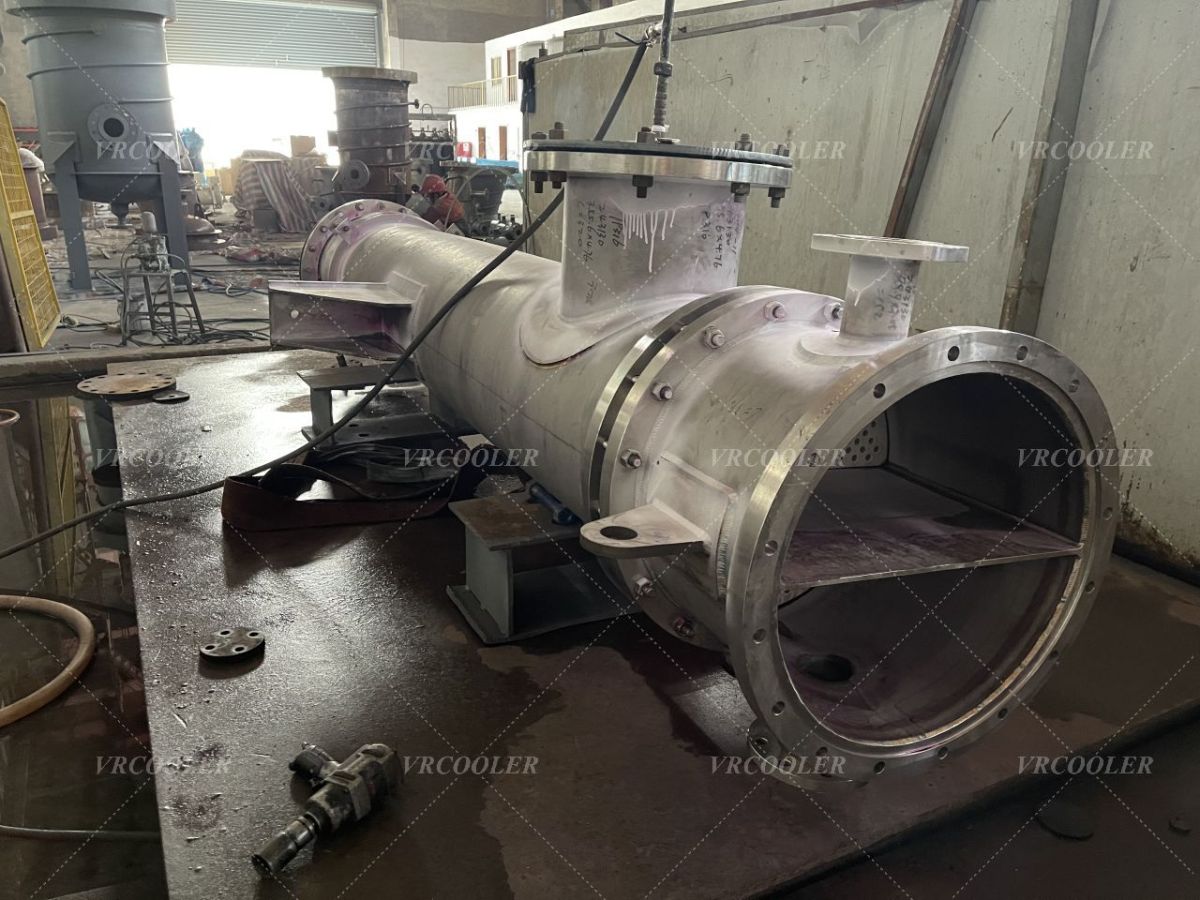
Tube Bundle Arrangement
Multi-tube structure for higher efficiency
The exchanger adopted a multi-tube bundle structure to increase the heat transfer surface area between the two fluids.
Balanced fluid distribution
Proper tube spacing and layout allow the cooling water on the shell side to flow evenly around the tubes, preventing local overheating or inefficient heat transfer.
Improved heat exchange stability
The optimized arrangement helps maintain stable thermal performance even when the process flow fluctuates slightly during production.
Easier maintenance structure
The tube bundle design also allows easier inspection and maintenance, which is important for long-term industrial operation.
Tube Sheet Strength Design
Key structural component in the exchanger
The tube sheet connects the tubes with the shell and separates the tube side from the shell side fluid.
Strength calculation based on ASME rules
Engineers performed detailed mechanical calculations according to ASME design guidelines to ensure the tube sheet can withstand operating pressure.
Prevention of deformation and leakage
A properly designed tube sheet prevents structural deformation during operation and maintains tight sealing between the two sides.
Material selection for durability
Appropriate materials were selected to provide both mechanical strength and corrosion resistance under the project’s operating conditions.
Welding Process Control
Qualified welding procedures
All welding work followed approved welding procedure specifications to maintain consistent fabrication quality.
Experienced welding operators
Certified welders carried out the welding tasks for pressure-bearing parts of the exchanger.
Non-destructive inspection methods
Inspection techniques such as penetrant testing and radiographic inspection were applied to verify the integrity of critical welds.
Compliance with pressure equipment standards
These quality control steps ensured that the exchanger meets the safety expectations for ASME-standard equipment.
Hydrostatic Pressure Testing
Pre-delivery safety verification
Before shipment, the completed heat exchanger underwent hydrostatic pressure testing.
Simulation of operating pressure
During the test, water pressure was applied to simulate the working pressure of the equipment.
Detection of potential leakage points
The test process helps identify any possible leakage from welded joints or tube connections.
Confirmation of structural reliability
Successful pressure testing confirmed that the exchanger could operate safely under the specified conditions.
Stable Operation in Customer Facility
Smooth commissioning after installation
After delivery, the heat exchanger was installed and commissioned as part of the plant cooling system.
Consistent cooling performance
The equipment successfully reduced the temperature of the process fluid to the required level.
Reliable sealing during operation
No leakage occurred during operation, indicating strong sealing performance of the exchanger.
Support for continuous production
With stable cooling capability, the heat exchanger helps maintain steady production conditions for the customer’s facility.