
An Air Compressor Heat Recovery System is an energy-efficient solution that captures waste heat generated during air compression and reuses it for food drying and cleaning processes. In food processing plants, compressors typically reject a large amount of thermal energy to the environment. By integrating a shell and tube heat exchanger, this waste heat can be recovered and converted into useful hot water or hot air.
The system shown above is a heavy-duty shell and tube heat exchanger, specifically designed for continuous industrial operation and hygienic applications.
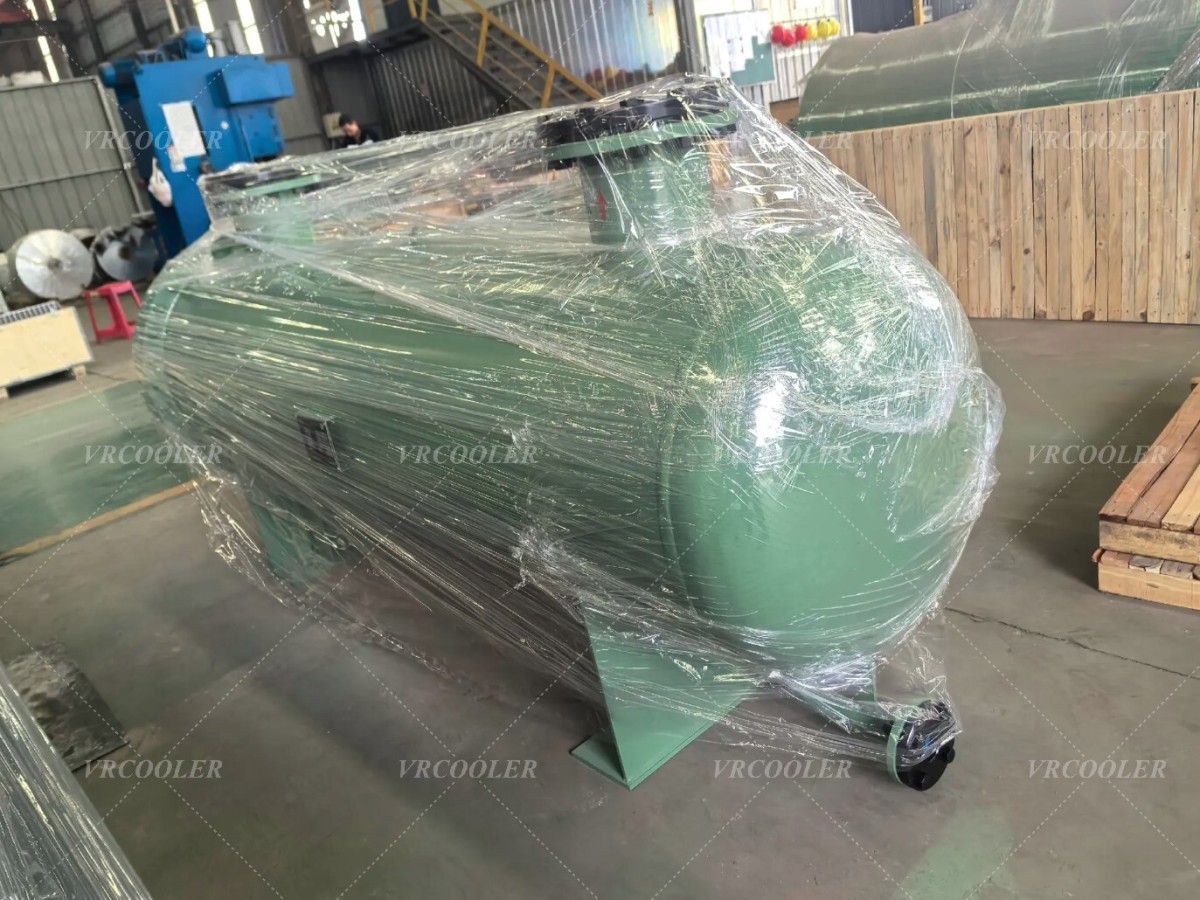
How It Works
During normal operation, air compressors convert electrical energy into compressed air, with up to 90% of the input energy released as heat. Instead of dissipating this heat:
Hot compressor oil or discharge air flows through the shell side of the heat exchanger
Process water flows through the tube side
Heat is transferred efficiently without fluid mixing
Heated water or air is reused for food drying, washing, or sanitation
This process significantly reduces energy consumption from boilers or electric heaters.
Applications in Food Industry
Recovered heat can be used for:
Food drying systems (fruits, vegetables, grains, seafood)
Hot water generation for equipment cleaning (CIP systems)
Pre-heating wash water for food processing lines
Air pre-heating for drying tunnels or ovens
Sanitation and hygiene processes
The indirect heat transfer design ensures compliance with food safety requirements.
Shell and Tube Heat Exchanger Design
The heat recovery unit features:
Robust shell and tube construction for compressor waste heat
High thermal efficiency for maximum energy recovery
Carbon steel or stainless steel options depending on hygiene needs
Flanged connections for easy integration
Compact horizontal design suitable for compressor rooms
Long service life under continuous load
This design is ideal for handling fluctuating temperatures and flow rates common in compressor systems.
Key Benefits
Up to 70–80% heat recovery from compressor waste heat
Reduced fuel or electricity consumption
Lower operating costs for food drying and cleaning
Reduced carbon emissions
Improved overall plant energy efficiency
Fast return on investment (ROI)
Why Shell and Tube for Heat Recovery?
Compared to plate heat exchangers, shell and tube units offer:
Better resistance to fouling from compressor oil or particulates
Higher mechanical strength
Easier maintenance and cleaning
Stable performance under continuous industrial duty
These advantages make them especially suitable for food processing environments where reliability is critical.
Custom Engineering for Food Processing Plants
Each air compressor heat recovery system is custom-designed based on:
Compressor capacity and heat output
Required water or air outlet temperature
Food drying or cleaning process demands
Space and installation constraints
The result is a tailored solution that maximizes energy reuse while maintaining hygienic and operational standards.
Conclusion
An Air Compressor Heat Recovery System using a Shell and Tube Heat Exchanger is a smart and sustainable solution for food drying and cleaning applications. By converting waste heat into valuable process energy, food manufacturers can significantly reduce costs, improve efficiency, and support environmentally responsible operations.