
Turning Vapor into Liquid with Natural Cooling Power
The working principle of an atmospheric condenser is based on indirect heat exchange. High-temperature vapor flows through the tube side, while cooling medium such as seawater or ambient air flows on the shell side.
As heat transfers through the tube wall:
Vapor releases latent heat
Phase changes from gas to liquid
System pressure gradually decreases
This process stabilizes the entire system and allows continuous operation without complex mechanical refrigeration systems.
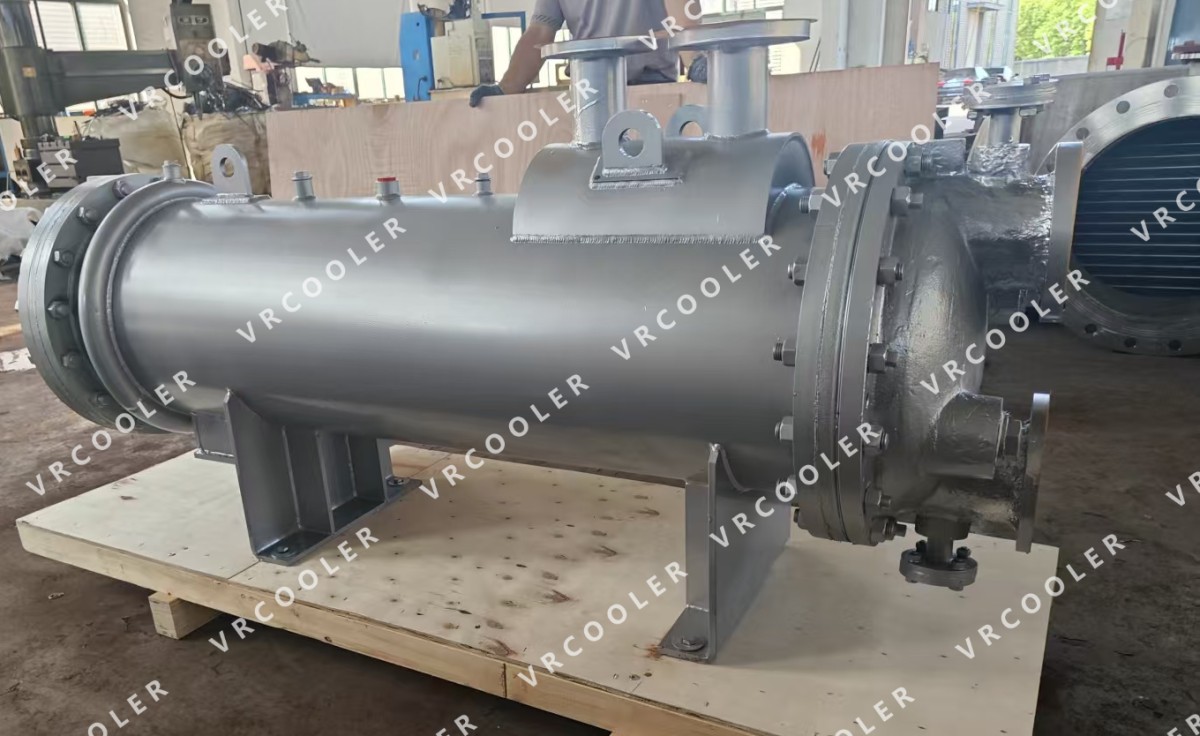
Engineered for Marine and High-Corrosion Conditions
Atmospheric condensers are commonly exposed to:
High salt content
Moist air
Continuous thermal cycling
To ensure durability, they are typically designed with:
Stainless steel or Cu-Ni tubes
Corrosion-resistant shell coatings
Thick tube walls and reinforced tube sheets
These structural features significantly extend service life and minimize maintenance frequency.
More Than Just Condensation Equipment
Atmospheric condensers play a multifunctional role in industrial systems. Besides condensation, they also:
Recover waste heat from exhaust steam
Stabilize downstream pressure
Protect pumps and compressors from vapor lock
Improve overall thermal balance of the system
They often serve as the final thermal control point in open or semi-open process systems.
Energy Efficiency and Sustainable Cooling
By using natural cooling sources, atmospheric condensers reduce:
Electricity demand for chillers
Freshwater consumption
Overall carbon footprint
This makes them ideal for:
Energy-saving retrofits
Low-carbon industrial projects
Marine systems with limited energy supply
Their passive cooling nature aligns perfectly with modern sustainability strategies.
A Proven Solution Across Global Industries
Atmospheric condensers are widely used in:
Marine engine cooling systems
Offshore platforms
Desalination plants
Thermal power stations
Chemical and petrochemical plants
Their simple structure, high reliability, and strong adaptability make them one of the most cost-effective cooling solutions available.
Long-Term Thermal Stability for Critical Cooling Systems
Atmospheric condensers are not merely auxiliary devices, but critical components that determine system safety, efficiency, and operational continuity. By combining robust mechanical design with natural cooling mechanisms, they provide long-term thermal stability for complex industrial systems. For applications involving seawater cooling and vapor condensation, atmospheric condensers remain one of the most cost-effective, reliable, and sustainable heat exchange solutions available today.
