
In an oil refinery, the overhead condenser is a key heat exchanger used in atmospheric distillation units and vacuum distillation units. Its main function is to cool and condense the vapor leaving the top of the distillation column, so that light hydrocarbons, water vapor, and other overhead components can be separated, recovered, or routed to downstream processing.
For a crude distillation unit, the atmospheric overhead condenser normally handles light naphtha vapor, steam, sour water vapor, and acid gas components from the top of the atmospheric tower. The condenser cools the overhead vapor and changes part of it into liquid. The condensed liquid then enters the overhead receiver, where hydrocarbon, water, and gas phases are separated.
For a vacuum distillation unit, the vacuum overhead condenser works under lower pressure conditions. It is commonly used together with a vacuum ejector or vacuum system to condense steam and light hydrocarbon vapor, helping maintain stable vacuum pressure inside the column. Good condenser performance is essential because poor condensation can increase vacuum system load, reduce column efficiency, and affect product yield.
The working environment of an overhead condenser is often severe. The vapor stream may contain H₂S, HCl, NH₃, chlorides, water, and light hydrocarbons. When water condenses, acid corrosion and ammonium salt deposition may occur, especially in low-temperature zones. For this reason, material selection, corrosion allowance, tube arrangement, velocity control, and proper drainage are very important.
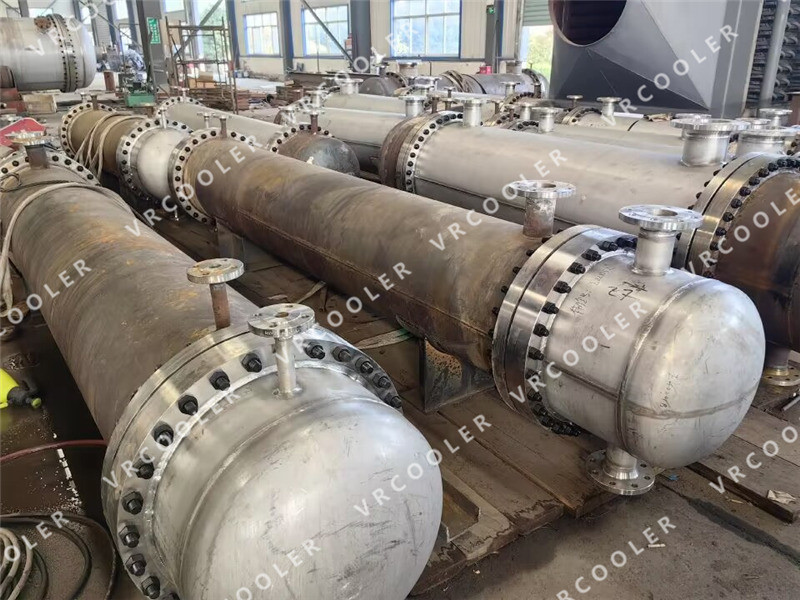
Shell and tube condensers are widely used for refinery overhead service because they are strong, reliable, and easy to inspect. Depending on the process requirement, the vapor may be arranged on the shell side and cooling water inside the tubes, or the design may be adjusted according to fouling, pressure drop, cleaning, and maintenance requirements. For some refinery units, air-cooled condensers may also be used before or after water-cooled exchangers to reduce cooling water consumption.
A high-quality atmospheric or vacuum overhead condenser must provide stable heat transfer while controlling pressure drop. In vacuum service, pressure drop is especially important because even a small resistance increase can affect vacuum level and column operation. The condenser should also be designed to avoid liquid accumulation, vibration, non-condensable gas blanketing, and poor flow distribution.
Material options can include carbon steel, stainless steel 304/316L, duplex stainless steel, titanium, Cu-Ni, or special alloys such as Hastelloy, depending on the crude oil composition, cooling water quality, chloride content, sulfur content, and corrosion risk. For seawater cooling or highly corrosive cooling water, titanium or Cu-Ni tubes are often considered. For aggressive process-side corrosion, stainless steel, duplex, or nickel alloy materials may be required.
Main Applications
Atmospheric and vacuum overhead condensers are commonly used in:
Crude distillation units, vacuum distillation units, refinery fractionation columns, naphtha recovery systems, sour water condensation systems, vacuum ejector condenser systems, hydrocarbon vapor recovery systems, and refinery heat recovery systems.
Key Design Considerations
For refinery overhead condenser design, the following points should be carefully checked: vapor flow rate, condensation load, cooling water temperature, allowable pressure drop, non-condensable gas content, corrosion risk, fouling tendency, chloride content, acid dew point, tube cleaning method, nozzle orientation, and maintenance access.
If the condenser is used in atmospheric tower overhead service, corrosion control is one of the most important issues. Proper water wash, neutralizer injection, corrosion inhibitor injection, and temperature control may be required in the process system. If the condenser is used in vacuum overhead service, stable vacuum performance and low pressure drop should be given higher priority.
Vrcooler Customized Solution
Vrcooler can design and manufacture customized atmospheric and vacuum overhead condensers for oil refinery applications. We can provide shell and tube condensers, air-cooled condensers, water-cooled condensers, and special material heat exchangers according to customer process data and site requirements.
Our condensers can be customized for heat duty, vapor composition, operating pressure, design temperature, cooling medium, material grade, tube size, tube length, tube layout, shell diameter, nozzle orientation, pressure drop limit, and inspection standard.
With more than 20 years of heat exchanger design and manufacturing experience, Vrcooler supports refinery customers with reliable overhead condenser solutions for new projects, equipment replacement, process upgrades, and maintenance shutdown projects.
A properly designed overhead condenser improves vapor condensation efficiency, stabilizes column pressure, reduces vacuum system load, protects downstream equipment, and supports safe long-term refinery operation.
