
Understanding the Basic Structure of a Shell and Tube Exchanger
A typical shell and tube heat exchanger consists of several key structural elements:
Shell (outer pressure vessel)
Tube bundle (main heat transfer surface)
Tube sheets (tube fixing plates)
Channel heads or covers
Baffles (flow directing and support plates)
Among these components, baffles are the only internal structures that directly control how fluid moves inside the shell side. Without baffles, the shell-side fluid would flow in a straight line, resulting in extremely poor heat transfer efficiency.
Flow Redirection as the First Mission of Baffles
The primary role of baffles is to change the flow direction of the shell-side fluid. Instead of flowing axially from inlet to outlet, baffles force the fluid to:
Flow transversely across the tube bundle
Repeatedly change direction
Create turbulence
This cross-flow pattern increases the contact between fluid and tube surface, dramatically improving heat transfer performance. The more effectively the fluid is forced to interact with the tubes, the higher the thermal efficiency.
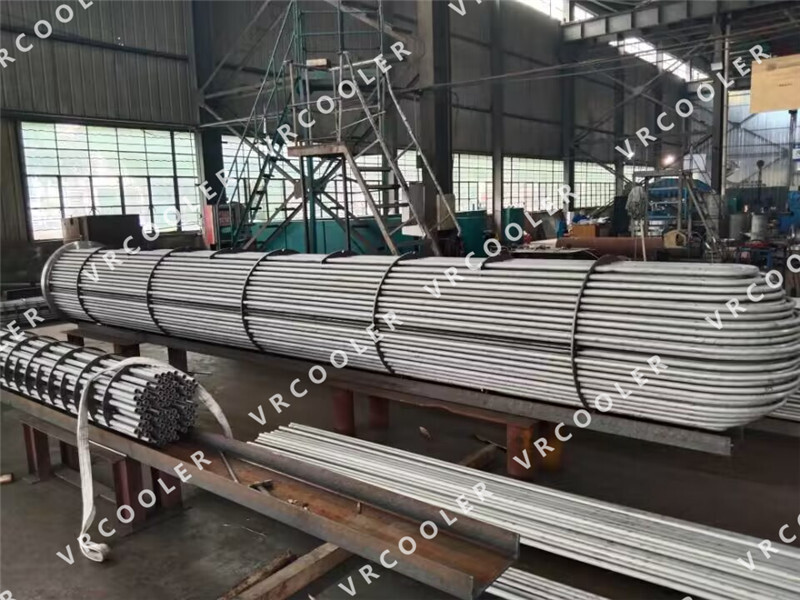
Structural Support and Vibration Control
Besides flow guidance, baffles also serve as mechanical support for the tube bundle.
They help to:
Fix tube positions
Prevent tube sagging
Reduce vibration caused by fluid flow
In high-flow or high-velocity systems, vibration can lead to tube wear, fatigue, or even rupture. Baffles act as stabilizers that protect the mechanical integrity of the entire heat exchanger.
Why Baffle Design Is Not One-Size-Fits-All
Baffles come in different forms, such as:
Segmental baffles
Double-segmental baffles
Disk and donut baffles
Helical baffles
Each design is selected based on:
Required heat transfer rate
Allowable pressure drop
Fouling tendency
Flow velocity
Improper baffle design may result in excessive pressure loss, dead zones, or fouling accumulation, reducing overall performance.
The Hidden Influence on Energy Consumption
Baffle spacing and cut ratio directly affect energy efficiency.
Closer baffle spacing:
Increases turbulence and heat transfer
But raises pressure drop and pumping power
Wider spacing:
Reduces pressure loss
But lowers heat transfer efficiency
Therefore, baffle design is always a balance between thermal performance and energy consumption. Well-optimized baffles achieve the best possible efficiency with the lowest operating cost.
