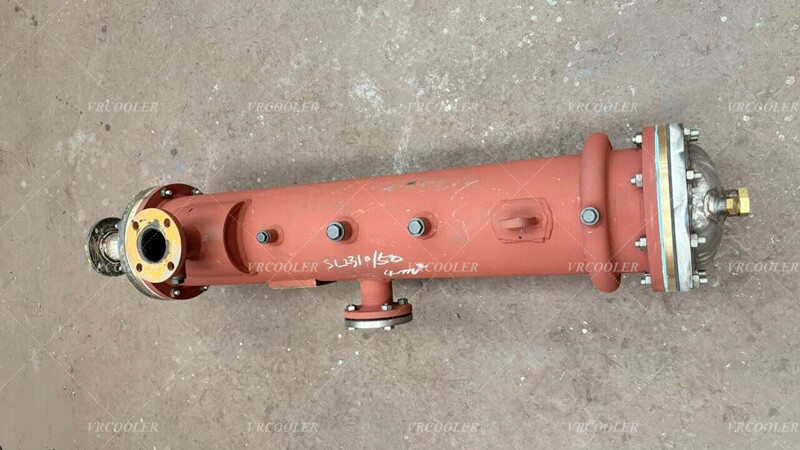
Can a Drain Cooler Be Used in Combination with Other Heat Exchangers?
Drain Cooler can absolutely be used in combination with other heat exchangers in industrial systems—this is actually a common practice to optimize energy efficiency, process stability, and overall system performance. Its role as a specialized heat exchanger (focused on cooling and recovering heat from condensate) complements the functions of other heat exchangers (e.g., condensers, evaporators, heaters), creating a more integrated and cost-effective system.
1. Core Rationale for Combining with Other Heat Exchangers
The primary goal of pairing a Shell Tube Type Drain Cooler with other heat exchangers is energy recovery and process optimization:
Condensate from steam systems is typically high-temperature (close to the steam’s saturation temperature) but low-pressure. Instead of wasting this heat by cooling the condensate with ambient air or cold water directly, the drain cooler transfers its heat to a "useful" process stream (e.g., feedwater, raw materials). By combining it with other heat exchangers, this recovered heat can be further utilized to reduce the load on fuel or electricity-driven heating/cooling equipment.
2. Common Combinations with Other Heat Exchangers
Below are typical scenarios where a Shell Tube Type Drain Cooler is integrated with other heat exchangers, along with their functional synergy:
A. Pairing with Shell-and-Tube Condensers (Steam Systems)
Role of the Condenser: Converts high-pressure steam (e.g., from turbines, boilers) into liquid condensate by transferring heat to a cooling medium (e.g., cooling water, air).
Role of the Drain Cooler: Takes the high-temperature condensate from the condenser and cools it further—while recovering its residual heat.
Synergy:
The condenser produces hot condensate (e.g., 150°C at 5 bar). The drain cooler then uses this condensate to preheat boiler feedwater (a critical stream that needs heating before entering the boiler). This preheating reduces the boiler’s fuel consumption (since the feedwater is already warm).
In this setup, the drain cooler acts as a "pre-heater" for the feedwater, working upstream of the boiler’s main heating system (e.g., a fire-tube heater).
B. Pairing with Plate Heat Exchangers (Food/Pharmaceutical Industries)
Role of the Plate Heat Exchanger: Efficiently heats/cools low-viscosity process fluids (e.g., milk, 果汁,pharmaceutical solutions) due to its large surface area and turbulent flow.
Role of the Drain Cooler: Recovers heat from steam condensate (a byproduct of the plant’s steam system) and uses it to preheat the cold process fluid before it enters the plate heat exchanger.
Synergy:
For example, in a dairy plant: Cold milk (5°C) first passes through the drain cooler, where it is preheated to 30°C using 90°C condensate. The preheated milk then enters the plate heat exchanger, where it only needs to be heated to 75°C (for pasteurization) instead of 70°C from 5°C. This reduces the plate exchanger’s heat load and the energy required to heat the milk (e.g., less steam or electricity for the plate exchanger’s heating medium).
C. Pairing with Air-Cooled Heat Exchangers (ACHEs) (Remote/Water-Scarce Areas)
Role of the ACHE: Cools process fluids or condensate using ambient air (no water required), making it ideal for deserts or remote sites. However, ACHEs are less efficient than water-cooled exchangers, especially in high-temperature environments.
Role of the Drain Cooler: Pre-cools the hot condensate (e.g., 120°C) using a cooler process stream (e.g., 40°C recirculating water) before the condensate enters the ACHE.
Synergy:
If the condensate is pre-cooled to 70°C in the drain cooler, the ACHE only needs to cool it further to 30°C (instead of cooling from 120°C to 30°C). This reduces the ACHE’s size, fan power consumption, and operating costs—critical for areas where electricity is expensive.
D. Pairing with Economizers (Boiler Systems)
Role of the Economizer: A heat exchanger that preheats boiler feedwater using flue gas heat (from the boiler’s exhaust), improving boiler efficiency.
Role of the Drain Cooler: Works in parallel or series with the economizer to further preheat feedwater. For example:
Series Configuration: Cold feedwater (25°C) first flows through the drain cooler (heated to 50°C by condensate), then through the economizer (heated to 90°C by flue gas), before entering the boiler.
Parallel Configuration: Some feedwater is heated by the drain cooler, and the rest by the economizer; the two streams merge before entering the boiler.
Synergy:
This dual preheating maximizes heat recovery (from both condensate and flue gas), reducing the boiler’s fuel demand even more than using an economizer alone. It also protects the economizer: if condensate is acidic (a common issue in some steam systems), the drain cooler acts as a "buffer" to prevent acidic condensate from contacting the economizer’s flue gas-side surfaces (which are prone to corrosion).