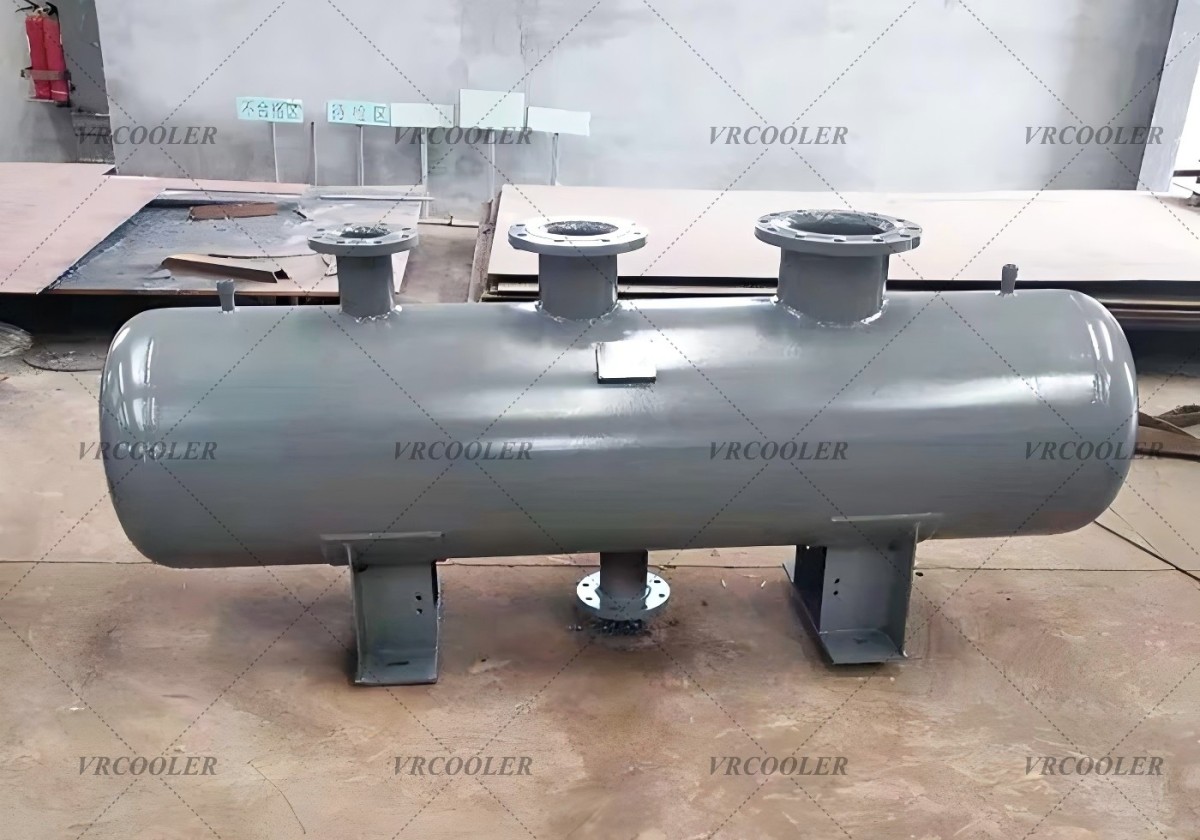
Installing a steam-water separator upstream can improve the effective performance of a steam-heated heat exchanger by supplying drier, more consistent steam.
Wet steam contains entrained water droplets. These droplets reduce the useful latent heat available per kilogram of the steam-water mixture and can accumulate inside the heat exchanger. The resulting condensate film or flooding restricts steam contact with the heat-transfer surface, causes uneven heating and reduces the exchanger’s usable capacity.
By removing entrained water before the steam enters the exchanger, a separator can provide:
- More consistent steam temperature and heat input
- Faster heat transfer and shorter heating time
- Improved temperature-control accuracy
- Reduced condensate flooding and waterlogging
- Lower risk of water hammer, vibration and tube damage
- Less erosion of valves, tube inlets and fittings
- More accurate steam-flow measurement
- Longer service life for control valves and steam traps
However, a separator does not increase the exchanger’s physical surface area or its basic heat-transfer coefficient. Its benefit comes from restoring proper operating conditions and ensuring that the exchanger receives high-quality steam.
For reliable performance, the system must also include correctly sized steam piping, effective insulation, properly positioned drip legs, air vents and a suitable steam trap. If the exchanger is already receiving dry steam and draining condensate correctly, adding a separator may produce only a limited improvement.