
Material selection shaping performance foundation
High thermal conductivity advantage
Copper is well known for its excellent thermal conductivity compared to many other metals. When used as tube material in a shell and tube heat exchanger, it allows heat to transfer more quickly between fluids, improving overall efficiency and reducing energy consumption in the system.
Compatibility with cooling applications
Copper tubes are especially suitable for water cooling, refrigeration, and HVAC systems where efficient heat exchange is required. Their performance remains stable under typical industrial cooling conditions.
Balance between cost and efficiency
Although copper is more expensive than carbon steel, its superior heat transfer capability often allows for more compact designs, reducing overall system size and offsetting part of the cost.
Proven material in industrial use
Copper has been widely used in heat exchangers for decades, making it a reliable and well-understood material choice for many applications.
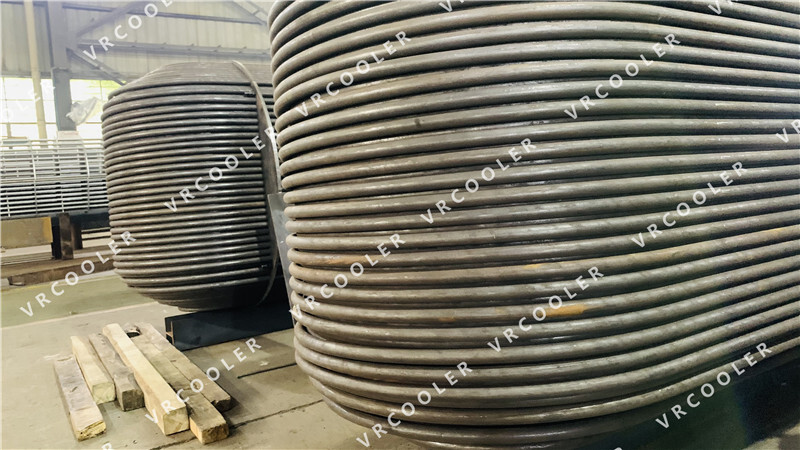
Internal tube structure optimization
Smooth inner surface for fluid flow
Copper tubes typically have smooth internal surfaces, which help reduce flow resistance and improve fluid movement inside the tubes.
Enhanced heat transfer contact area
By optimizing tube diameter and arrangement, the effective heat transfer area can be maximized, further improving exchanger efficiency.
Flexible tube expansion and fixing
Copper tubes are easier to expand and fix into tube sheets, ensuring tight sealing and reducing the risk of leakage between shell side and tube side.
Adaptability in compact designs
Due to its material properties, copper allows for tighter bending and more compact layouts, which is beneficial for space-limited installations.
Corrosion resistance in real environments
Good resistance to water corrosion
Copper performs well in many water-based environments, resisting general corrosion and maintaining long-term stability.
Reduced scaling tendency
Compared with some other materials, copper surfaces are less prone to heavy scaling, which helps maintain heat transfer efficiency over time.
Suitability for treated water systems
In systems where water quality is controlled, copper tubes can provide excellent durability with minimal degradation.
Limitations in certain media
However, copper may not be suitable for highly acidic or ammonia-containing environments, which must be considered during design.
Comparison with other tube materials
Versus stainless steel tubes
Stainless steel offers higher corrosion resistance in aggressive environments, but its thermal conductivity is lower than copper, which may reduce efficiency.
Versus carbon steel tubes
Carbon steel is more economical but requires additional corrosion protection and maintenance, especially in water systems.
Trade-off between durability and efficiency
Choosing between materials involves balancing heat transfer performance, corrosion resistance, and cost.
Selection based on application scenario
Copper tubes are often selected when efficiency and compact design are prioritized over extreme corrosion resistance.
Installation and maintenance considerations
Ease of installation due to material flexibility
Copper’s ductility makes it easier to handle during installation, reducing the risk of damage.
Simplified maintenance requirements
Because of its resistance to scaling and corrosion, copper tube exchangers often require less frequent cleaning.
Accessibility for inspection
Tube bundles can be designed for easy removal, allowing inspection and maintenance when needed.
Long-term operational stability
With proper system design, copper tubes can provide stable performance over long service periods.
Project results and operational benefits
Improved heat exchange efficiency
After installation, the heat exchanger achieved faster and more efficient cooling compared to previous designs.
Stable temperature control performance
The system maintained consistent outlet temperatures, supporting reliable process operation.
Reduced maintenance frequency
Lower fouling and corrosion resulted in fewer maintenance interventions.
Enhanced overall system reliability
The use of copper tubes contributed to a durable and efficient solution, meeting the customer’s expectations for performance and longevity.
