
In natural gas production and processing facilities, glycol dehydration is one of the most common methods used to remove water vapor from gas streams. The purpose is simple but critical: dry the gas before it enters pipelines, compressors, LNG pretreatment systems, or downstream processing units. If water is not removed properly, it can cause hydrate formation, corrosion, freezing, and operational problems throughout the gas system. In this process, the rich/lean glycol exchanger plays an important role in energy recovery and stable operation.
A rich/lean glycol exchanger is normally installed between the glycol contactor and the regeneration system. Rich glycol, which has absorbed water from the wet gas, leaves the contactor and flows toward the regeneration package. Lean glycol, which has already been regenerated in the reboiler and still carries high temperature, flows back toward the contactor. The exchanger transfers heat from the hot lean glycol to the cooler rich glycol. This arrangement preheats the rich glycol before it enters the still column or reboiler system, while also cooling the lean glycol before it returns to the absorber.
This heat recovery is very useful for oil-and-gas facilities because it reduces the heat load on the reboiler. When the rich glycol is preheated before regeneration, less fuel gas or electric heating is required to remove water from the glycol. At the same time, cooling the lean glycol helps improve absorption performance in the contactor. If the lean glycol temperature is too high, its ability to absorb water vapor decreases, which can affect the gas outlet dew point. For this reason, the rich/lean glycol exchanger is not only an energy-saving component but also a key part of dehydration performance control.
Triethylene glycol, or TEG, is the most widely used glycol in natural gas dehydration systems. The exchanger must be designed for continuous operation with glycol that may contain water, dissolved gases, hydrocarbons, corrosion products, and small amounts of contaminants from the process. In real oilfield service, the operating condition is rarely perfectly clean. A good exchanger design must consider fouling, viscosity, pressure drop, maintainability, and corrosion resistance.
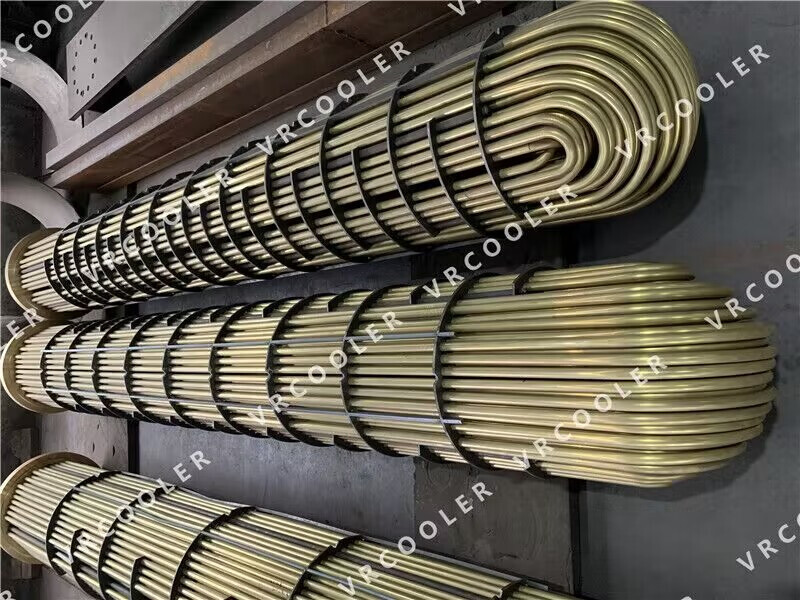
Shell and tube heat exchangers are commonly selected for rich/lean glycol service because they offer strong mechanical construction and good tolerance to industrial operating conditions. Depending on the project requirements, the exchanger can be designed as a fixed tubesheet, U-tube, floating head, or removable bundle type. For compact dehydration skids, plate-type exchangers may also be used, but shell and tube units are often preferred when the facility requires easier inspection, higher pressure capability, longer service life, or better resistance to dirty service.
Material selection depends on the glycol quality, water content, operating pressure, gas composition, and site environment. Carbon steel may be suitable for many standard TEG systems, while stainless steel can be selected when better corrosion resistance is required. For offshore platforms, coastal gas plants, sour gas units, or facilities with more aggressive service, materials such as 316L stainless steel, duplex stainless steel, or other corrosion-resistant alloys may be considered. The final selection should match the actual process conditions instead of using a general standard without review.
In a well-designed glycol dehydration unit, the rich/lean glycol exchanger must maintain a stable balance between heat recovery and pressure drop. Excessive pressure loss can disturb glycol circulation and affect pump performance. Insufficient heat transfer can increase reboiler fuel consumption and reduce system efficiency. The exchanger also needs proper nozzle orientation, drain and vent connections, support design, and access space for maintenance, especially when installed inside a packaged dehydration skid.
For offshore and remote oil-and-gas facilities, reliability is especially important. Maintenance access may be limited, spare parts may take time to arrive, and shutdown costs can be high. A removable bundle design can be very useful in these cases because the tube bundle can be pulled for inspection, cleaning, or repair. This helps operators manage fouling and extend the operating life of the equipment without replacing the complete exchanger.
Vrcooler can design and manufacture custom rich/lean glycol exchangers for onshore gas plants, offshore platforms, wellhead dehydration packages, compressor stations, gas gathering systems, and refinery or petrochemical gas treatment units. Each exchanger can be engineered according to glycol flow rate, heat duty, operating pressure, temperature profile, allowable pressure drop, material requirement, installation space, and applicable standards.
A high-quality rich/lean glycol exchanger helps the dehydration unit operate more efficiently, saves energy in the regeneration process, protects the contactor performance, and improves long-term system reliability. For oil-and-gas facilities where stable gas drying is essential, this exchanger is a small but highly important part of the complete glycol dehydration system.
