
Cooling Challenges in Modern Industrial Equipment
Industrial equipment such as compressors, turbines, hydraulic systems, and gearboxes generate a significant amount of heat during operation. Without proper cooling, excessive temperatures can lead to performance degradation, lubrication failure, and even mechanical damage.
Shell and tube heat exchangers are commonly selected to manage these thermal loads because of their durability and efficient heat transfer capabilities. In particular, oil cooling and water cooling systems require different design strategies depending on the characteristics of the working fluids.
For example:
Lubricating oil usually has higher viscosity and lower thermal conductivity compared with water.
Cooling water is often used as the secondary medium to remove heat from oil or process fluids.
Stable temperature control is essential to maintain equipment reliability and operational safety.
These factors make customized heat exchanger design an essential part of industrial thermal management systems.
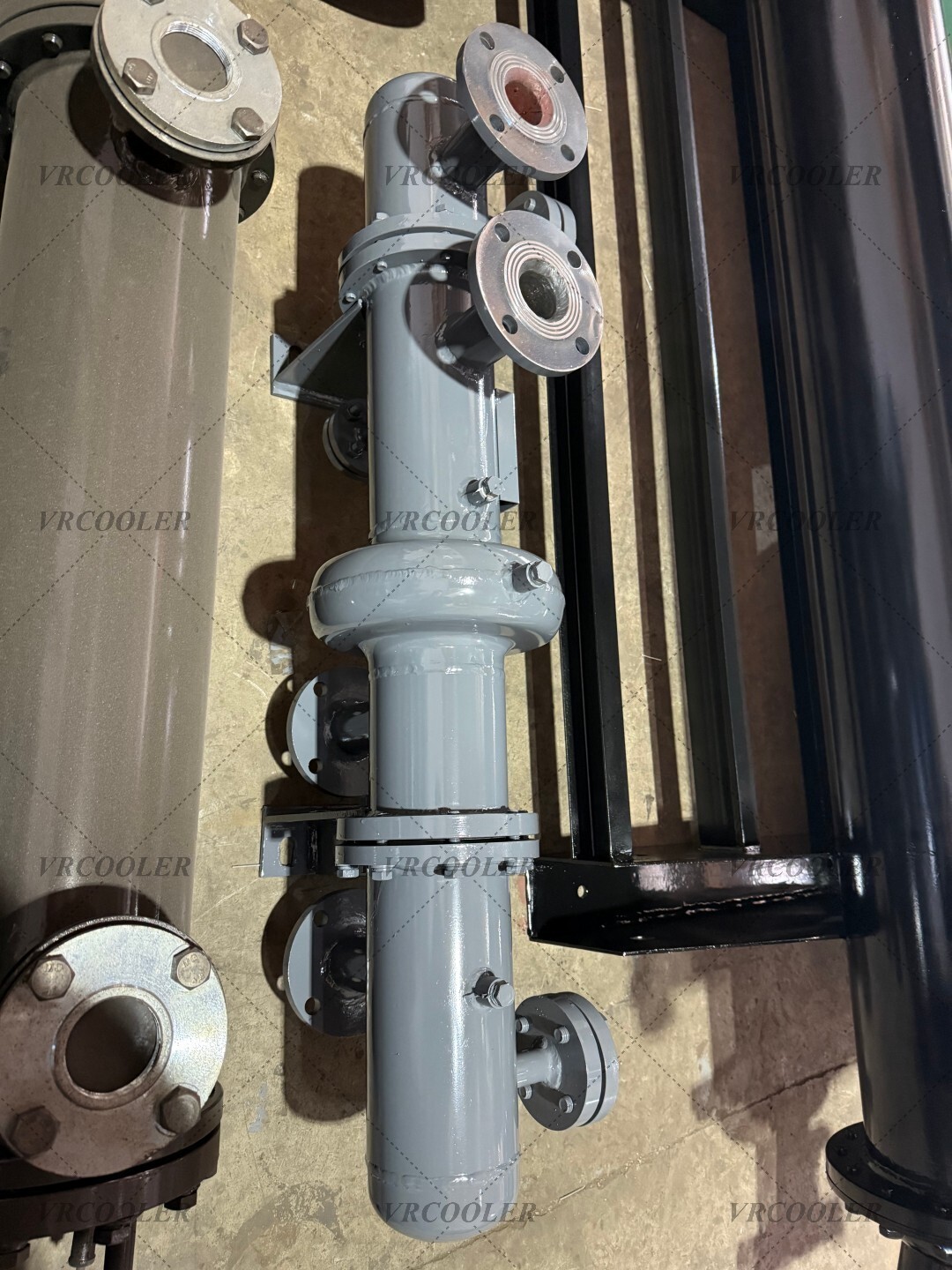
Oil Cooling Shell and Tube Exchangers Built for Viscous Fluids
Oil-cooled shell and tube heat exchangers are typically used to remove heat from lubricating oil, hydraulic oil, or transformer oil. Because oil has higher viscosity than water, the internal design must be optimized to maintain effective heat transfer.
Key design features often include:
Larger tube diameters to reduce flow resistance.
Optimized tube arrangement to enhance heat transfer surface area.
Carefully designed baffle spacing to increase turbulence on the shell side.
In many systems, oil flows through the tube side while cooling water circulates through the shell side. This configuration protects the oil circuit and simplifies maintenance.
Oil cooling shell and tube exchangers are commonly used in:
Turbine lubrication systems
Industrial gearbox cooling
Hydraulic power units
Compressor lubrication circuits
Transformer oil cooling systems
By maintaining stable oil temperature, these heat exchangers help extend equipment life and improve operational stability.
Water Cooling Solutions for Efficient Heat Removal
Water-cooled shell and tube heat exchangers play a critical role in many industrial cooling systems due to water’s excellent heat transfer properties.
Compared with oil cooling, water cooling systems can remove heat more rapidly because water has higher thermal conductivity and heat capacity.
Typical design characteristics include:
Dense tube bundles to maximize heat transfer area
High flow velocity to improve heat transfer efficiency
Corrosion-resistant materials when necessary
Water-cooled shell and tube exchangers are widely applied in industries such as:
Power generation plants
Chemical processing facilities
Marine cooling systems
Petrochemical production units
Large industrial refrigeration systems
In many cases, water acts as the final heat rejection medium, transferring heat from industrial processes to cooling towers or external cooling systems.
Engineering Flexibility in Customized Heat Exchanger Design
One of the major advantages of shell and tube heat exchangers is their adaptability to different operating conditions.
During the design phase of this project, our engineering team evaluated several critical parameters:
Flow rates of both oil and cooling water
Operating temperatures and pressure conditions
Fluid properties such as viscosity and fouling tendency
Available installation space
Based on these factors, the heat exchangers were customized with appropriate tube bundle configurations, shell diameters, and material selections.
Customization options can include:
Carbon steel or stainless steel construction
Different tube layouts and pitch arrangements
Fixed tube sheet or removable bundle designs
Horizontal or vertical installation structures
This flexibility allows shell and tube heat exchangers to meet the specific requirements of diverse industrial systems.
From Fabrication to Inspection Ensuring Reliable Performance
The manufacturing process of these customized oil and water cooling shell and tube heat exchangers followed strict production procedures to ensure product quality and reliability.
Key production steps included:
Precision fabrication of the shell and tube components
Accurate tube expansion and welding into the tube sheet
Installation of internal baffles to optimize fluid flow
Assembly of the tube bundle and shell structure
After fabrication, the equipment underwent several inspection and testing procedures, such as:
Pressure testing to verify structural integrity
Leak testing to ensure sealing performance
Dimensional inspections to confirm design accuracy
These quality control processes help guarantee that the heat exchangers can operate safely and efficiently under real industrial conditions.
