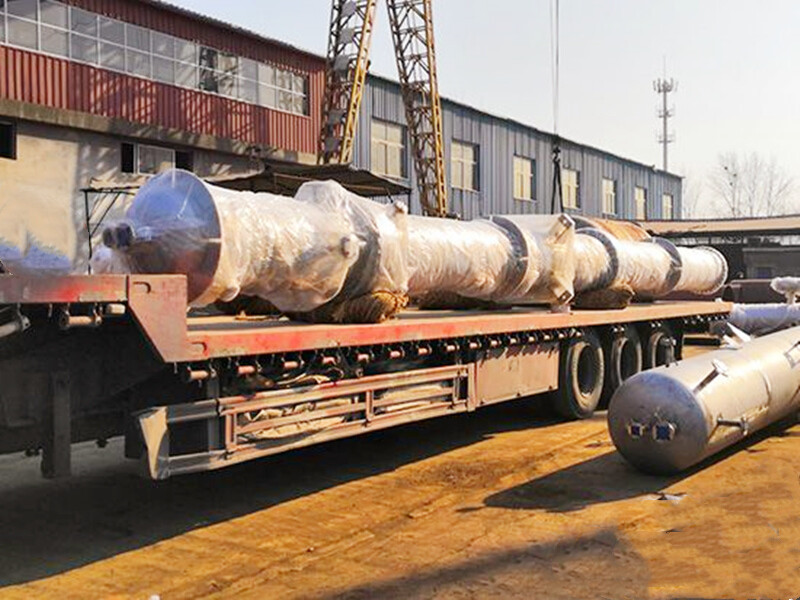
Customized Process Shell-and-Tube Heat Exchanger for Crude Oil Refinery
Shell-and-tube heat exchangers (STHEs) are the workhorses of crude oil refineries, where they facilitate essential heat transfer operations across nearly every unit process. Crude oil refining involves complex, high-temperature, and corrosive streams—from raw crude feedstocks to refined products like gasoline, diesel, and lubricants—and STHEs are uniquely suited to handle these challenges due to their robustness, scalability, and ability to accommodate wide variations in pressure, temperature, and fluid properties. They account for 60–70% of all heat exchangers used in refineries, playing a pivotal role in improving energy efficiency, reducing fuel consumption, and ensuring process safety.
Refineries rely on STHEs to transfer heat between two or more process streams (e.g., heating cold crude with hot reactor effluent, cooling high-temperature products before storage). Their primary functions align with key refinery unit operations, as outlined below:
| Refinery Unit Process | STHE Application | Heat Transfer Objective |
|---|
| Crude Distillation Unit (CDU) | - Preheating crude oil before distillation
- Cooling overhead distillate (naphtha)
- Condensing steam from reboilers | - Raise crude temperature from ~25°C (ambient) to 350–400°C (before furnace) using hot CDU products/waste heat, reducing furnace fuel use.
- Cool naphtha to 40–60°C for storage or further processing. |
| Vacuum Distillation Unit (VDU) | - Preheating vacuum residue
- Condensing light vacuum gas oil (LVGO) | - Recover heat from hot VDU streams to preheat feed, minimizing energy input.
- Cool LVGO for downstream processing (e.g., hydrocracking). |
| Hydroprocessing Units (Hydrocracker, Hydrotreater) | - Heating feedstock (e.g., gas oil) with reactor effluent
- Cooling reactor effluent (post-hydrogenation)
- Preheating hydrogen before mixing with feed | - Recover heat from high-temperature (300–450°C) reactor effluent to reduce heater load for feed preheating.
- Cool effluent to 40–80°C to separate oil, water, and hydrogen. |
| Catalytic Cracking Unit (FCCU) | - Cooling FCC reactor products (e.g., gasoline, LPG)
- Preheating feed to the FCC riser | - Cool hot cracking products to condense liquids and separate vapors.
- Use waste heat from FCC products to reduce riser heater fuel demand. |
| Heat Recovery Networks (HRNs) | - Integrating heat between multiple units (e.g., CDU → Hydrotreater) | - Maximize overall refinery energy efficiency by "cascading" heat from high-temperature streams to low-temperature needs, reducing reliance on utility boilers. |