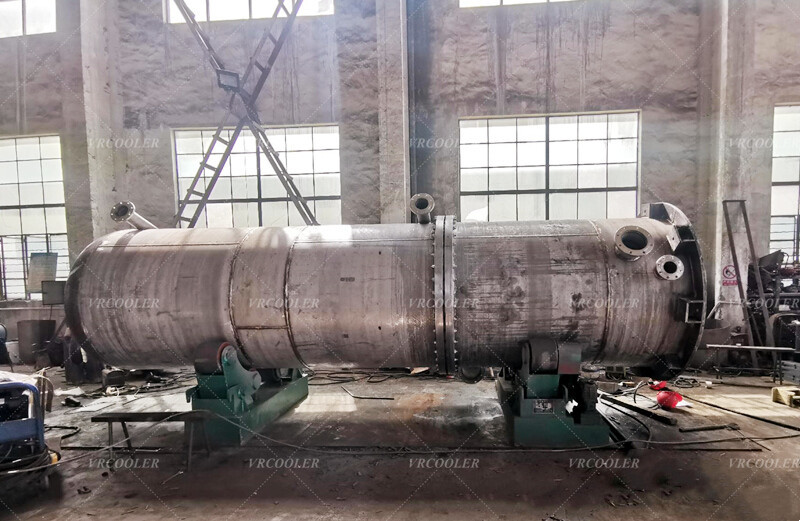
Flue Gas Waste Heat Recovery Shell Tube Heat Exchanger for Water Heating
A flue gas waste heat recovery shell and tube heat exchanger for water heating is a device designed to capture and utilize the waste heat from flue gas to heat water.
Structure
Shell: The shell is a large cylindrical body that serves as the outer casing of the heat exchanger. It is typically made of steel or other high-strength, heat-resistant materials to withstand the high temperatures and pressures of the flue gas and the water.
Tubes: The tubes are arranged inside the shell. The flue gas usually flows through the tubes, while the water to be heated flows on the shell side. The tubes are made of materials with good thermal conductivity, such as stainless steel or copper alloys, to facilitate efficient heat transfer.
Tube Sheets: These are located at both ends of the tubes and are used to fix the tubes in place and separate the tube side and the shell side. They ensure the structural integrity of the heat exchanger and prevent leakage between the two sides.
Baffles: Baffles are installed on the shell side to direct the flow of water. They increase the turbulence of the water flow, which enhances the heat transfer efficiency by increasing the contact area and time between the water and the tube surface.
Inlets and Outlets: There are dedicated inlets and outlets for the flue gas and the water. The flue gas inlet is connected to the source of flue gas, and the outlet discharges the cooled flue gas. The water inlet allows the cold water to enter the heat exchanger, and the outlet delivers the heated water to the desired location.
Working Principle
Heat Transfer: When the high-temperature flue gas enters the tubes, it transfers heat to the tube walls through convection and radiation. The heat is then conducted through the tube walls to the outer surface. On the shell side, the relatively cold water comes into contact with the outer surface of the tubes and absorbs the heat, increasing its temperature.
Waste Heat Recovery: As the flue gas passes through the tubes, its temperature gradually decreases as it releases heat to the water. This process recovers the waste heat that would otherwise be lost to the environment, improving the overall energy efficiency. The cooled flue gas is then discharged from the outlet.
Advantages
High Heat Recovery Efficiency: The large heat transfer area provided by the tubes and the efficient heat transfer mechanism enable a high percentage of the flue gas waste heat to be recovered and used to heat the water.
Durability: Made of high-quality materials, these heat exchangers can withstand the harsh conditions of high-temperature flue gas and corrosive substances in the flue gas, ensuring a long service life.
Stable Performance: The well-designed structure and reliable components ensure stable operation of the heat exchanger, providing a consistent supply of heated water.
Versatility: It can be customized to meet different requirements in terms of flue gas volume, temperature, and water heating capacity, making it suitable for a wide range of applications in various industries.
Applications
Industrial Boilers: In industrial settings where boilers are used for steam generation or other processes, the flue gas waste heat recovery shell and tube heat exchanger can be installed to preheat the boiler feed water, reducing energy consumption and improving boiler efficiency.
Power Plants: Power plants generate a large amount of flue gas. By using such heat exchangers, the waste heat from the flue gas can be used to heat water for various purposes, such as in the condenser cooling system or for district heating if the power plant is connected to a district heating network.
Chemical Plants: In chemical production processes, there are often processes that produce high-temperature flue gas. The heat exchanger can be used to recover this waste heat and heat water for use in other chemical processes or for heating the plant premises.