
Welding Is Not Just a Process but a Safety Guarantee
In shell and tube heat exchangers, almost all key components are connected by welding, including shells, tube sheets, nozzles, channel covers, and support structures. Welding is not merely a manufacturing step, but the foundation of the entire equipment’s mechanical integrity.
If welding quality is insufficient, the exchanger may suffer from:
Internal or external leakage
Loss of pressure resistance
Structural fatigue or cracking
Unexpected shutdowns
Therefore, welding is directly related to operational safety and system stability.
How Welding Affects Pressure and Sealing Performance
Shell and tube heat exchangers often operate under high pressure and high temperature. Welding seams must withstand:
Internal fluid pressure
Thermal expansion and contraction
Vibration and mechanical stress
Poor welding can result in micro-cracks or incomplete fusion, which may not be visible during early operation but will gradually expand under cyclic loads, eventually leading to leakage or pressure failure.
This directly compromises:
Process safety
Environmental compliance
Equipment lifespan
Welding Quality and Heat Transfer Efficiency
Although welding is mainly associated with mechanical strength, it also has a significant impact on thermal performance.
Improper welding may cause:
Tube misalignment
Blocked flow channels
Uneven flow distribution
These issues reduce effective heat transfer area and increase pressure drop, leading to lower efficiency and higher energy consumption. In extreme cases, localized overheating may occur, accelerating material degradation.
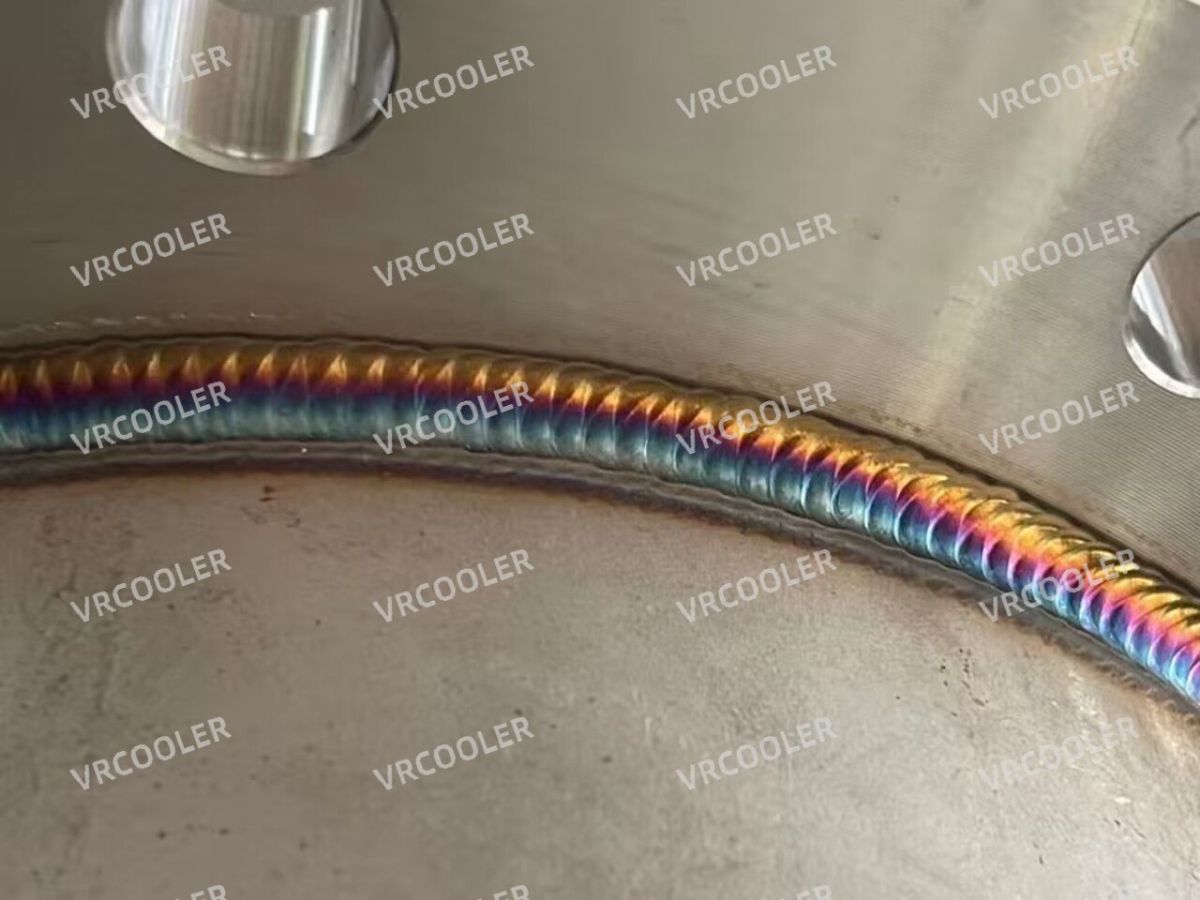
From Welding Technique to Professional Workforce
High-quality welding depends not only on equipment, but also on skilled personnel and standardized procedures.
Key factors include:
Certified welders with industry experience
Suitable welding methods (TIG, MIG, submerged arc)
Controlled welding parameters
Preheating and post-weld heat treatment
Each welding seam must follow strict specifications to ensure uniform strength and durability across the entire structure.
Inspection and Testing Are as Important as Welding Itself
Even perfect-looking welds must undergo professional inspection. Common testing methods include:
Radiographic testing (RT)
Ultrasonic testing (UT)
Dye penetrant testing (PT)
Hydrostatic pressure testing
These inspections ensure that hidden defects are detected before delivery. Without proper inspection, defective welding may enter service and cause serious operational risks.
