How Does A Shell Tube Heat Exchanger Work In A Power Plant Boiler Unit?
In a power plant boiler unit, a shell-and-tube heat exchanger facilitates efficient heat transfer between two distinct fluid streams (e.g., hot flue gases and cold feedwater, or steam and condensate) to optimize energy use, preheat critical fluids, and recover waste heat. Its operation relies on a simple but effective principle: separating the fluids while allowing heat to pass through a conductive surface (the tube walls).
1. Core Design & Fluid Separation
A shell-and-tube heat exchanger consists of two key compartments:
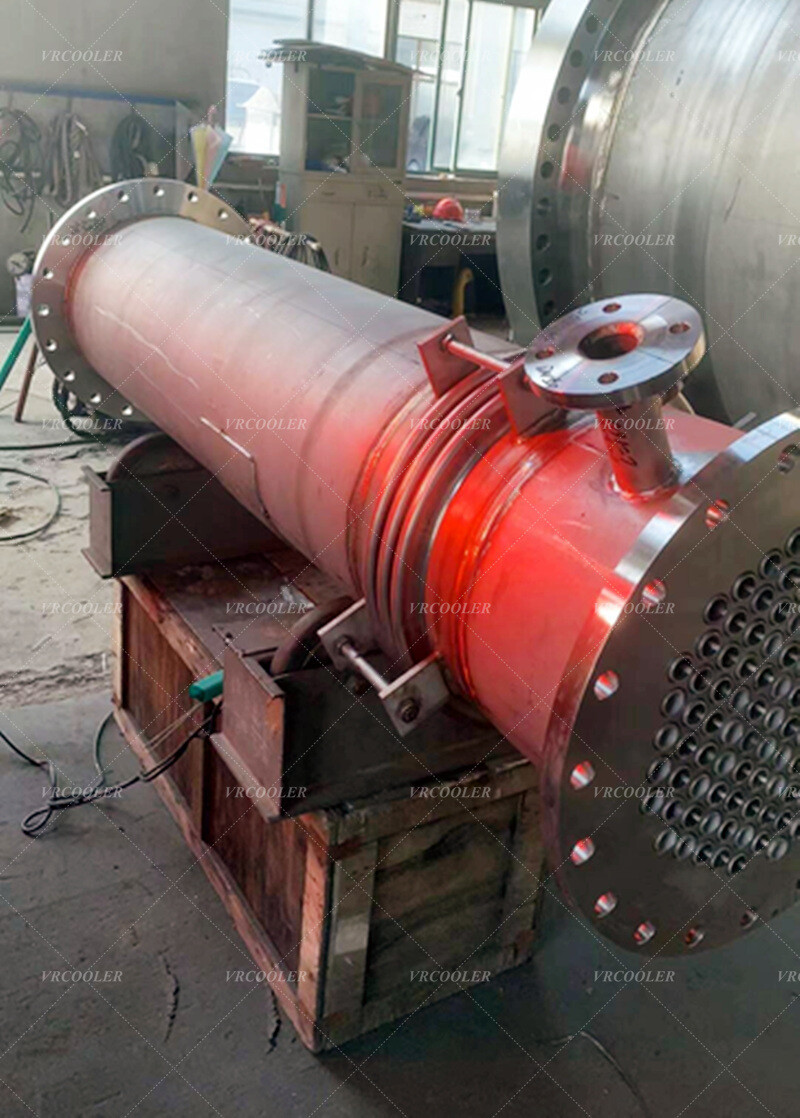
Shell side: A large, cylindrical pressure vessel (the "shell") that holds one fluid (often the hotter or lower-pressure stream, like flue gases or steam).
Tube side: A bundle of small-diameter tubes (housed inside the shell) that carry the second fluid (often the cooler or higher-pressure stream, like feedwater or condensate).
The fluids never mix: they are physically separated by the tube walls and sealed by thick tube sheets at both ends of the shell, which secure the tubes and prevent cross-contamination.
2. Heat Transfer Mechanism
Heat transfer occurs through three primary modes, but in shell-and-tube exchangers, conduction and convection dominate:
Convection: The hotter fluid transfers heat to the outer surface of the tubes via turbulent flow (enhanced by baffles in the shell). Similarly, the cooler fluid absorbs heat from the inner surface of the tubes as it flows through them.
Conduction: Heat passes through the tube walls (made of conductive materials like carbon steel or stainless steel) from the hotter shell-side fluid to the cooler tube-side fluid.
The goal is to maximize this heat transfer: the hotter fluid exits cooler, and the cooler fluid exits warmer, with minimal energy loss.
3. Key Applications in Boiler Units: How It Works in Practice
Shell-and-tube heat exchangers are used in several critical boiler sub-systems. Here’s how they operate in two common roles:
Example 1: Economizer (Waste Heat Recovery from Flue Gases)
The economizer is a shell-and-tube exchanger that recovers heat from boiler flue gases to preheat feedwater (the water supplied to the boiler).
Shell-side fluid: Hot flue gases (200–400°C) from the boiler’s combustion process, carrying waste heat that would otherwise escape through the chimney.
Tube-side fluid: Cold feedwater (e.g., 50–150°C) from the plant’s water treatment system, needing preheating before entering the boiler.
Operation:
Hot flue gases enter the shell through an inlet nozzle and flow around the tube bundle. Baffles (metal plates inside the shell) force the gases to zigzag across the tubes, increasing turbulence and ensuring they contact more tube surface area.
As the hot gases flow over the tubes, heat transfers via convection to the outer tube walls, then conducts through the tube material (e.g., carbon steel).
Cool feedwater flows through the tubes (in the opposite direction of the flue gases, a design called "counterflow" to maximize heat transfer). The feedwater absorbs heat from the inner tube walls, warming up (e.g., to 200–250°C) before exiting into the boiler.
The now-cooler flue gases (reduced to 100–200°C) exit the shell and are released through the chimney, with much of their waste heat recovered.
Example 2: Feedwater Heater (Preheating with Turbine Steam)
Feedwater heaters use steam extracted from turbines to further preheat feedwater, boosting boiler efficiency.
Shell-side fluid: Low/medium-pressure steam (150–300°C) extracted from the turbine (a byproduct of electricity generation that would otherwise be wasted).
Tube-side fluid: Feedwater (already preheated by the economizer, e.g., 200–250°C), needing additional warming before entering the boiler.
Operation:
Extracted steam enters the shell and flows around the tube bundle. As it contacts the cooler tube walls, the steam condenses into liquid (releasing latent heat, a highly efficient form of heat transfer).
This latent heat conducts through the tube walls into the feedwater flowing inside the tubes. The feedwater absorbs the heat, increasing in temperature (e.g., to 250–300°C).
The condensed steam (now hot water, called "condensate") collects at the bottom of the shell and is returned to the plant’s water cycle for reuse.
The preheated feedwater exits the tubes and flows into the boiler, requiring less fuel to convert into high-pressure steam.