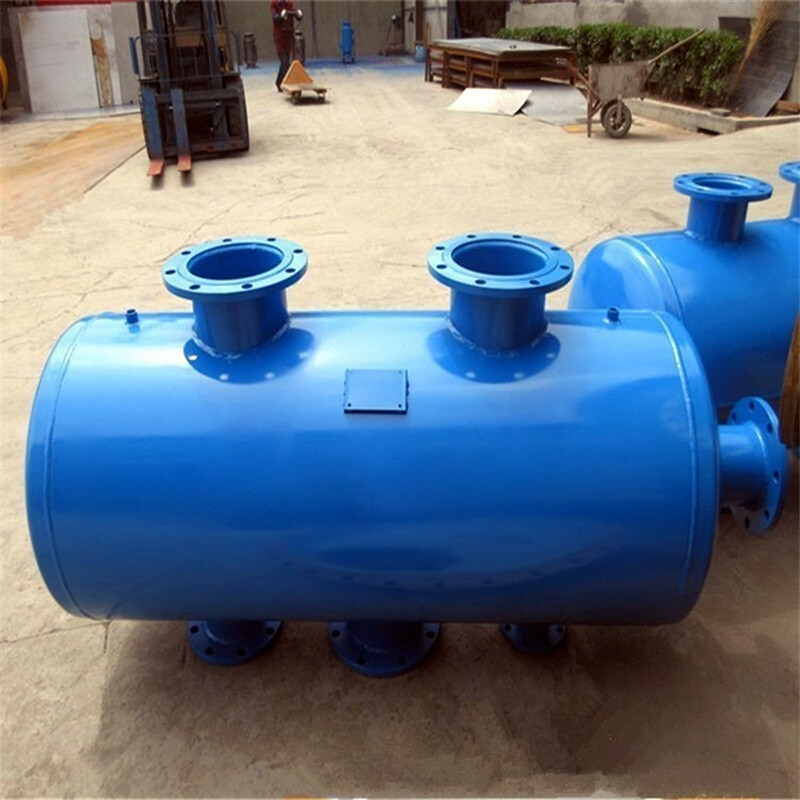
How Does A Steam Water Separator Work In Industrial Boiler?
A steam water separator is crucial in industrial boilers for ensuring high-quality steam production.
The primary goal is to separate water droplets from steam to prevent any liquid water from entering the steam distribution system. This protects equipment and ensures efficient operation.
The separator typically consists of a cylindrical vessel where steam and water mix. The design promotes the separation of phases based on density differences.
Operation:
Separation Process: As the steam-water mixture enters the separator, the velocity decreases, allowing water droplets to coalesce and settle due to gravity.
Steam Exit: The now drier steam exits from the top of the separator, while the heavier water accumulates at the bottom.
Water Removal: The separated water is drained periodically or continuously, depending on the design. This can involve a blowdown mechanism to remove impurities.
Benefits
Efficiency: Improves thermal efficiency by ensuring only steam enters the system.
Equipment Protection: Reduces wear and tear on turbines, valves, and other components due to less water carryover.
Quality Control: Maintains steam quality for processes requiring high purity.