
Shell-and-tube heat recovery improves power plant efficiency by capturing heat that would otherwise be wasted and returning it to a useful part of the power cycle. In a power plant, fuel is not converted into electricity with perfect efficiency. A significant amount of energy leaves the system as exhaust heat, condenser losses, hot drain flows, cooling water losses, or low-grade process heat. Heat recovery reduces that waste by moving part of this unused thermal energy back into the cycle.
A shell-and-tube heat exchanger is well suited for this job because it can handle high temperatures, high pressures, large flow rates, and continuous operation. One fluid flows through the tubes, while another fluid flows around the tubes inside the shell. The two fluids remain separated, but heat passes through the tube walls. This allows the plant to recover useful heat without mixing steam, condensate, feedwater, flue gas-related fluids, cooling water, or other process streams.
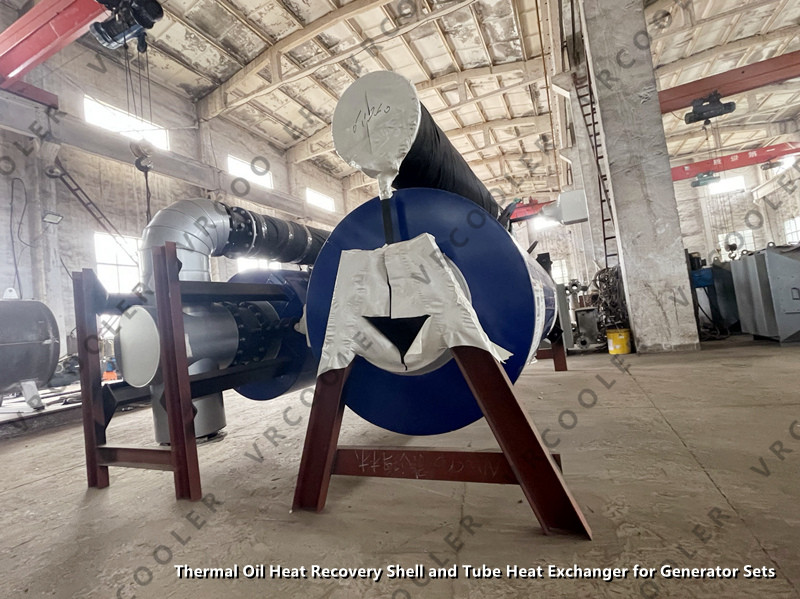
In steam power plants, one of the most important applications is feedwater heating. Before water enters the boiler or steam generator, it must be heated to a high temperature. If cold feedwater enters the boiler, the boiler must supply more fuel energy to raise that water to the required temperature. By using recovered heat to preheat the feedwater, the boiler does less work, fuel consumption is reduced, and the overall heat rate of the plant improves.
This principle is closely related to the regenerative Rankine cycle. Regenerative feedwater heating raises the average temperature at which heat is added to the cycle, which improves thermal efficiency. In many plants, closed feedwater heaters are shell-and-tube heat exchangers, where extracted steam from the turbine condenses on one side and transfers heat to boiler feedwater on the other side. Educational thermodynamics references describe this as a way to increase the average temperature of heat addition and improve cycle efficiency.
The benefit is not only theoretical. When feedwater enters the boiler at a higher temperature, less fuel is needed to produce the same amount of steam. This reduces the energy input required per unit of electricity generated. In practical terms, the plant can produce the same electrical output with lower fuel use, or it can improve output under certain operating conditions without increasing fuel input proportionally.
Shell-and-tube heat recovery also reduces thermal stress. Large temperature differences inside boilers, steam generators, and connected piping can create expansion stress and fatigue over time. Preheating feedwater makes the temperature change more gradual, which helps protect equipment and supports more stable operation. This is especially important in power plants that operate for long periods or experience load changes.
Another efficiency gain comes from reducing rejected heat. In a simple steam cycle, a large amount of heat is removed in the condenser and discharged to cooling water or the atmosphere. Regenerative heating does not eliminate condenser losses, but it reduces the amount of heat that must be added later in the boiler. In other heat recovery arrangements, shell-and-tube exchangers may also recover heat from hot drains, blowdown, jacket water, auxiliary systems, or process streams and reuse it for feedwater, district heating, fuel preheating, or plant service heating.
In combined heat and power systems, the efficiency benefit can be even more visible because recovered heat is used for a practical thermal demand instead of being rejected. The U.S. EPA notes that combined heat and power systems can achieve efficiencies above 80 percent by capturing useful heat that would otherwise be wasted, compared with much lower overall efficiency when electricity and heat are produced separately. The U.S. Department of Energy also describes combined heat and power as a system that improves efficiency by producing electricity and useful thermal energy together.
Shell-and-tube equipment is commonly chosen because power plant heat recovery is not a light-duty application. The exchanger may need to withstand high pressure steam, treated boiler feedwater, corrosive condensate, cooling water impurities, vibration, and long service intervals. Shell-and-tube designs can be built with suitable tube materials, tube thicknesses, baffles, expansion joints, removable bundles, and pressure ratings. This makes them reliable for large industrial and utility-scale systems.
Maintenance also matters for efficiency. A fouled heat exchanger transfers less heat, which means the plant gradually loses performance. Shell-and-tube heat exchangers can often be inspected, cleaned, retubed, or repaired more easily than some compact exchanger types. Keeping the heat transfer surface clean helps maintain low terminal temperature differences, stable heat recovery, and predictable plant performance.
The improvement in efficiency depends on the temperature of the recovered heat, the flow rate, the heat exchanger design, the pressure drop, the cleanliness of the heat transfer surfaces, and where the recovered heat is reused. Higher-temperature waste heat is generally more valuable because it can replace higher-grade fuel input more effectively. The U.S. EPA notes that the efficiency of generating power from waste heat recovery depends heavily on the temperature of the waste heat source.
In simple terms, shell-and-tube heat recovery improves power plant efficiency by reducing wasted heat, lowering boiler fuel demand, improving feedwater temperature, reducing thermal stress, and making better use of energy already present inside the plant. It does not create energy by itself; it helps the plant use existing energy more intelligently. That is why shell-and-tube heat exchangers remain an important part of efficient power plant operation.
