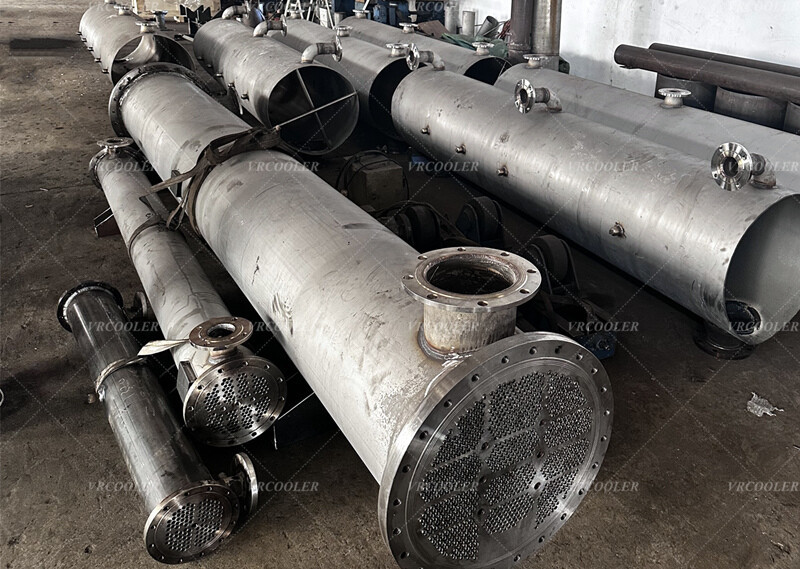
A shell-and-tube natural-gas cooler transfers heat from hot natural gas to a colder medium—such as cooling water, a water-glycol solution, chilled water, or seawater—without allowing the two fluids to mix.
Natural gas flows through either the tubes or the shell, while the coolant circulates on the opposite side. Heat passes through the tube walls into the coolant. Baffles may direct shell-side flow across the tube bundle, increasing turbulence and improving heat transfer. The cooled gas then leaves the exchanger at the required process temperature.
As the gas temperature falls, water vapor and heavy hydrocarbons may condense. The system therefore often includes a downstream knockout drum or separator to remove condensed liquids. Effective drainage is important because liquid accumulation can increase pressure drop, cause corrosion, and disturb gas flow.
The cooler must be designed for the gas composition, flow rate, inlet pressure and temperature, required outlet temperature, coolant conditions, allowable pressure drop, and expected condensation. Sour gas containing hydrogen sulfide may require special materials, controlled weld hardness, corrosion allowance, and compliance with applicable sour-service standards.
During operation, gas and coolant temperatures, flow rates, pressure drops, corrosion, fouling, and tube integrity should be monitored. Fouled surfaces, insufficient coolant flow, high coolant temperature, plugged tubes, gas flow above the design rate, or accumulated condensate can reduce cooling performance.