
Tube bundles in fertilizer plants are usually cleaned by mechanical cleaning, chemical cleaning, high-pressure water jetting, or a combination of these methods. The right cleaning method depends on the type of deposit, tube material, process medium, exchanger design, and how severe the fouling is.
For light sludge, soft deposits, mud, or loose particles, the tubes can often be cleaned by mechanical brushing, rodding, or flushing. This is common for cooling-water side fouling, especially when deposits are not strongly attached to the tube wall. In shell-and-tube exchangers, maintenance workers may open the channel cover and clean each tube passage using brushes or flexible cleaning tools.
For hard scale, crystallized salts, corrosion products, or process deposits, high-pressure water jetting is often used. Hydro-jetting can remove stubborn deposits from tube interiors and, when the bundle is removable, from the outside of the tubes and baffle areas. This method is useful in fertilizer plants because many services involve crystallization, scaling, and sticky chemical residues.
Chemical cleaning may be used when deposits cannot be removed effectively by mechanical methods. Cleaning chemicals are selected according to the deposit type and tube material. For example, acid cleaning may be used for mineral scale, while alkaline or solvent-based cleaning may be used for oily or organic deposits. However, chemical cleaning must be controlled carefully because the wrong chemical can corrode tubes, damage tube sheets, attack welds, or shorten equipment life.
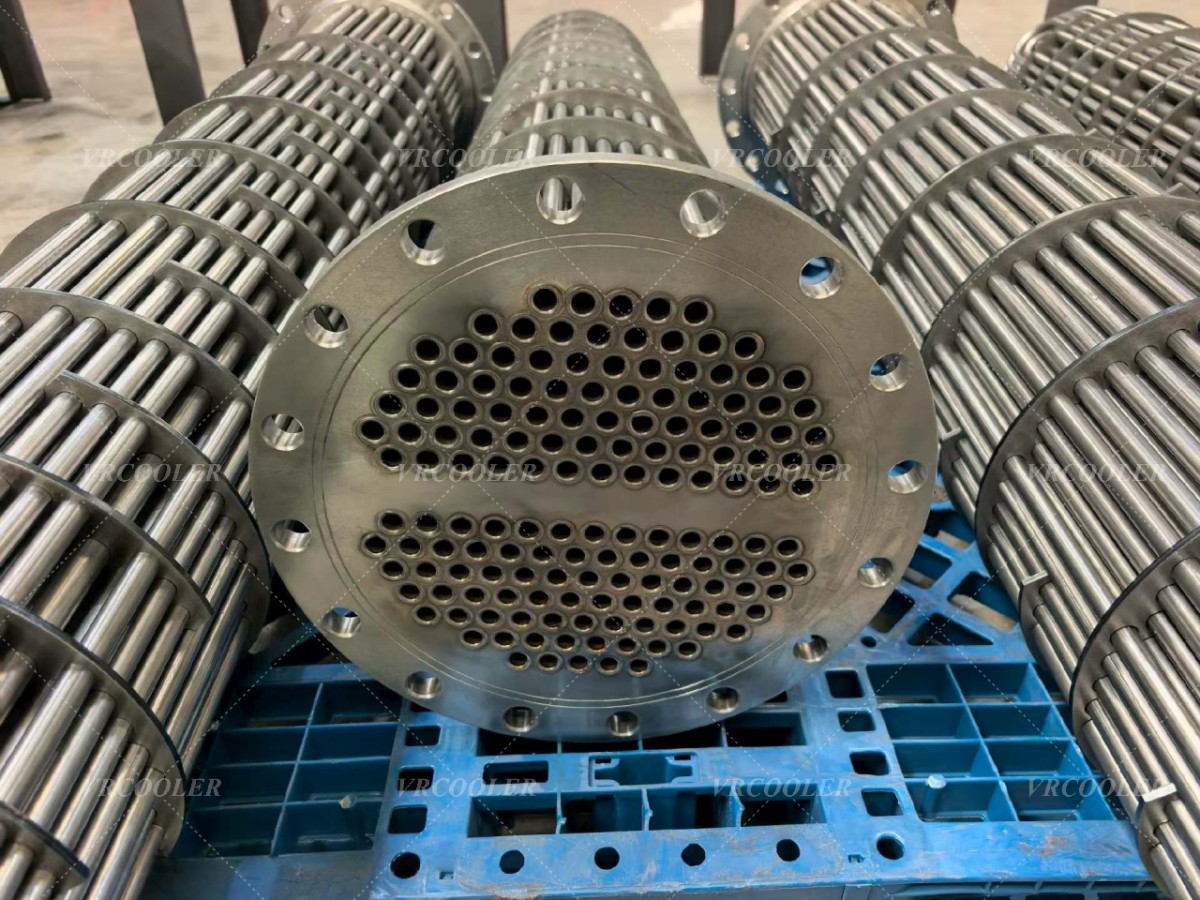
For removable tube bundles, the bundle can be pulled out from the shell for external inspection and cleaning. This is especially useful when fouling occurs on the shell side, around baffles, or between tubes. After removal, the bundle can be washed, hydro-jetted, inspected for corrosion or erosion, and repaired if needed.
During cleaning, operators should also check for tube leakage, thinning, cracking, blocked tubes, damaged baffles, loose tubes, tube-sheet corrosion, and gasket failure. Cleaning is not only about restoring heat-transfer efficiency; it is also an opportunity to find early signs of tube bundle damage before they cause unplanned shutdowns.
