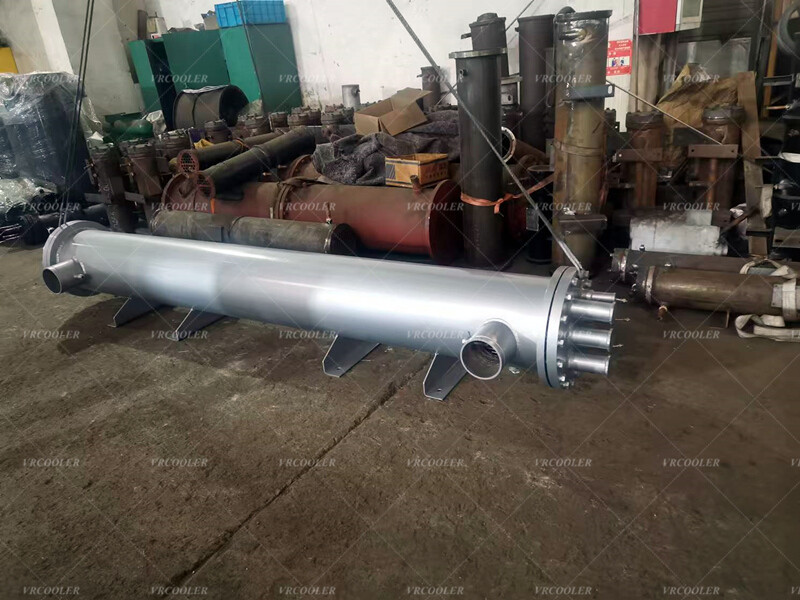
When water inside a shell-and-tube evaporator freezes, it expands by approximately 9%. Because the water is confined within the tubes or shell, this expansion can generate enough force to deform or rupture tubes, crack tube-to-tubesheet joints, distort baffles, and damage the tubesheet or shell.
A ruptured tube allows refrigerant and water to mix. Water may enter the refrigeration circuit, contaminating the refrigerant and compressor oil and causing corrosion, ice blockages, loss of lubrication, or serious compressor damage. Refrigerant may also escape into the water circuit, resulting in pressure instability, loss of cooling capacity, and safety concerns.
Freezing does not always affect the entire evaporator. Low water flow, blocked tubes, poor flow distribution, trapped air, or an incorrect control setting can create localized cold spots. Repeated partial freezing may cause fatigue and small cracks even if immediate failure is not visible.
Preventive measures include maintaining the minimum required water flow, installing and testing a flow switch, using low-temperature and low-pressure cut-outs, keeping tubes clean, venting trapped air, and maintaining the correct glycol concentration where freezing conditions are possible. Pumps should normally continue running during the chiller’s shutdown sequence to remove residual cooling from the evaporator.
If freezing is suspected, the chiller should be stopped and the evaporator allowed to thaw naturally. Do not restart it until tube integrity, water pressure, refrigerant charge, and safety controls have been inspected and tested.