
Water-cooled chiller condenser efficiency can be improved by keeping the heat transfer surfaces clean, maintaining correct cooling water flow, and controlling the cooling water temperature. In a shell and tube condenser, even a thin layer of scale, sludge, or biological fouling on the tube surface can reduce heat transfer and force the compressor to work at a higher condensing pressure. Regular tube cleaning, proper filtration, and good water treatment are therefore very important.
Cooling tower performance also has a direct impact on condenser efficiency. If the cooling tower cannot provide low enough entering condenser water temperature, the chiller condensing pressure will rise, increasing compressor power consumption. Operators should check cooling tower fans, spray nozzles, fill condition, basin cleanliness, and water distribution to make sure the condenser receives stable and properly cooled water.
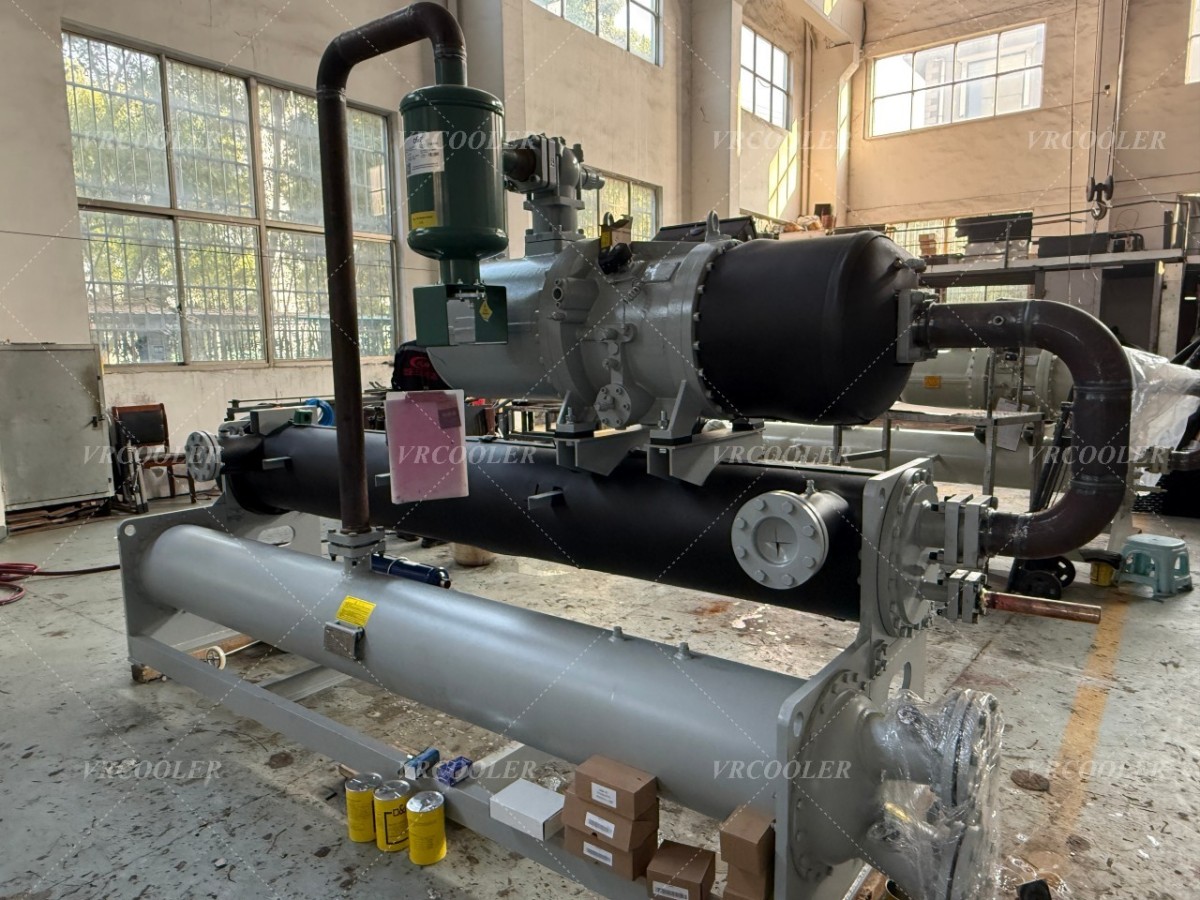
Maintaining the correct water flow rate is another key point. Low water flow reduces heat removal capacity, while excessive flow may increase pump energy consumption and tube erosion risk. The condenser should operate close to the designed flow rate and pressure drop. Strainers, valves, pumps, and control settings should be inspected if the water-side temperature difference becomes abnormal.
Refrigerant-side conditions must also be checked. Non-condensable gases, incorrect refrigerant charge, poor oil return, or refrigerant contamination can reduce condenser performance. These issues may cause higher discharge pressure, unstable operation, and lower chiller efficiency. Monitoring approach temperature, condensing pressure, cooling water temperatures, and compressor power can help detect performance problems early.
For long-term efficiency, the condenser material and water treatment program should match the water quality. For standard treated cooling water, copper tubes are commonly used, while stainless steel, Cu-Ni, titanium, or duplex stainless steel may be selected for poor water quality, high chloride content, or seawater service. A properly maintained water-cooled condenser helps reduce compressor energy consumption, improve chiller capacity, prevent high-pressure faults, and support reliable operation in data centers and industrial cooling systems.
