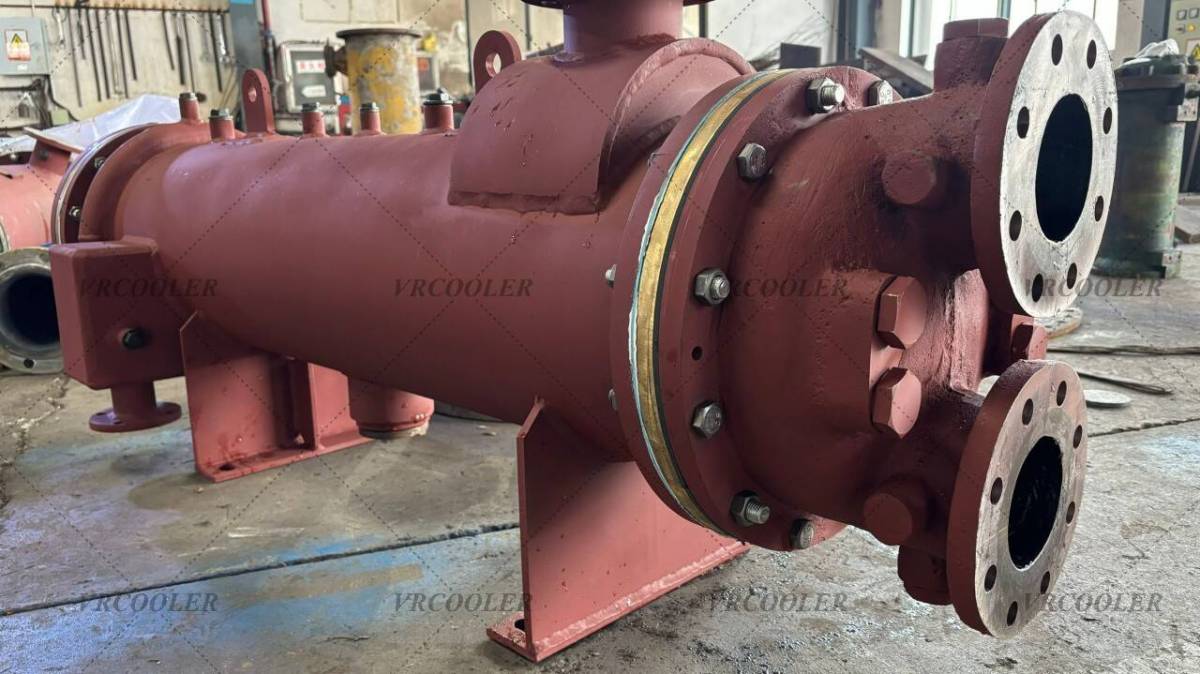
To choose the right marine atmospheric condenser, start with the thermal duty: how much vapor must be condensed, at what inlet condition, and to what condensate temperature. Then match that duty against the available cooling-water temperature and flow, because the exchanger size is driven by the heat load, the temperature approach you can realistically achieve, and the overall heat-transfer coefficient. In shell-and-tube service, performance also depends on flow arrangement, fluid velocity, and the actual heat-transfer surface available.
The next big checks are pressure drop, fouling allowance, and service stability. A condenser that is thermally large enough can still be a poor choice if it creates too much seawater-side resistance, vents poorly, or loses capacity quickly after fouling. Practical exchanger selection therefore has to include an allowance for scale and deposits, because fouling adds thermal resistance and usually requires extra surface area to maintain duty over time.
For marine duty, material selection is often the deciding factor. Because seawater is aggressive, the tube-side and water-box materials have to be chosen for the real water quality, velocity, and galvanic conditions on board. Copper-nickel alloys have a long service history in seawater condenser and heat-exchanger systems, while titanium is widely used where corrosion risk, polluted seawater, or life-cycle reliability requirements are more severe.
After that, check the installation constraints: footprint, orientation, connection locations, tube-pull space, cleaning access, and whether the ship’s piping and pumps can support the design flow. In practice, the right unit is the one that meets duty and fits onboard maintenance reality. So the selection sequence is usually: vapor load → cooling-water conditions → allowable pressure drop → fouling margin → seawater-compatible materials → onboard layout and service access.