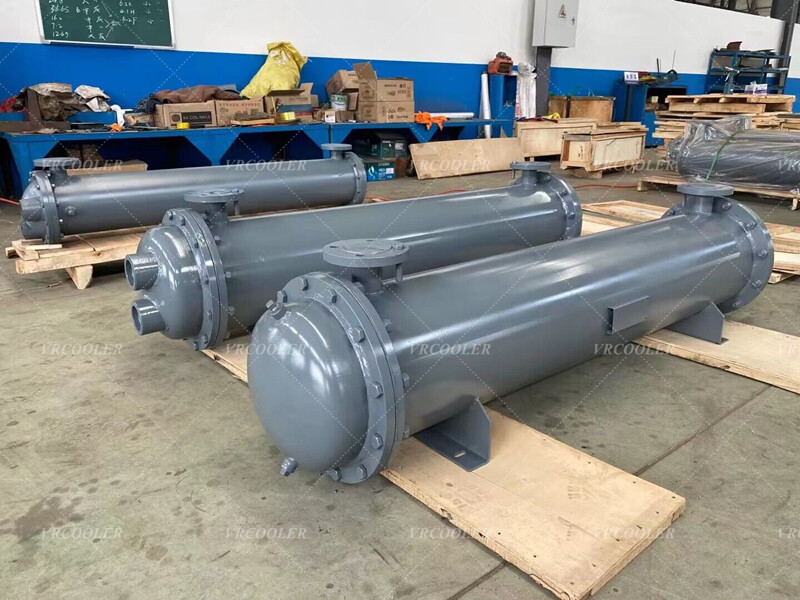
How does a Shell and Tube Heat Exchanger Achieve Efficient Heat Transfer Between the Shell and the Tubes?
The working principle of a shell and tube heat exchanger relies heavily on the process of heat transfer, where heating or cooling is achieved through the exchange of heat between two fluids. The following is a detailed description of its working principle:
Working Principle
Basic Structure:
Shell and tube heat exchanger consists of an external shell and an internal tube bundle. Fluids flow in the shell and tubes, usually one fluid flows in the tubes and the other in the shell.
Heat transfer:
Thermal Conductivity: When a hot fluid (e.g. hot water or steam) flows through a pipe, it transfers heat to a cold fluid (e.g. cold water or air) through the pipe wall. Heat is transferred to the cold fluid through the process of thermal conductivity in the pipe wall.
Temperature Difference Driven: The transfer of heat is driven by the natural tendency of heat to flow from a high temperature fluid to a low temperature fluid. The greater the temperature difference, the higher the heat exchange efficiency usually is.
Fluid Flow:
Merging and Counterflow: fluids can flow in either a merging or counterflow configuration. In a counterflow configuration, hot and cold fluids flow opposite each other at the inlet and outlet of the heat exchanger, a configuration that typically provides higher heat exchange efficiency.
Fluid Velocity: Proper flow velocity enhances heat exchange by increasing fluid contact with the tube wall, thereby increasing heat exchange efficiency.
Heat transfer coefficient:
The heat transfer coefficient is an important measure of the efficiency of heat transfer between fluids and solids. In shell and tube heat exchanger design, different pipe materials and surface treatments are usually selected to improve the heat transfer coefficient.
Ways to Achieve Effective Heat Transfer
Increase the contact area:
Use pipes with ribs or optimize tube bundle arrangement to increase heat exchange surface area and improve heat transfer efficiency.
Optimize flow design:
Design reasonable flow channels to reduce fluid dead space and turbulence losses and ensure that the fluid can fully contact the heat exchange surface.
Selection of suitable materials:
Select materials with good thermal conductivity (such as stainless steel or copper) to manufacture pipes and shells to enhance thermal conductivity.
Design reasonable temperature gradient:
Consider the inlet and outlet temperatures of the fluid in the design to ensure that a proper temperature gradient is maintained throughout the heat exchanger to promote effective heat transfer.