
A boiler blowdown heat-recovery exchanger captures heat from hot water discharged from the boiler and transfers it to cooler makeup water, feedwater or another plant-water circuit. This reduces wasted energy and lowers the temperature of the blowdown before it enters a drain or treatment system.
Hot continuous-blowdown water first leaves the boiler through a controlled blowdown valve. Because its pressure is reduced, part of the water may flash into low-pressure steam inside a flash vessel. The recovered flash steam can be supplied to a deaerator, feedwater tank or low-pressure heating system.
The remaining hot liquid then passes through a shell-and-tube heat exchanger. Cold boiler makeup water usually flows on the opposite side of the tube walls and absorbs the recovered heat without mixing with the blowdown water. The preheated makeup water subsequently enters the deaerator or feedwater system, reducing the steam or fuel required to bring it to boiler temperature.
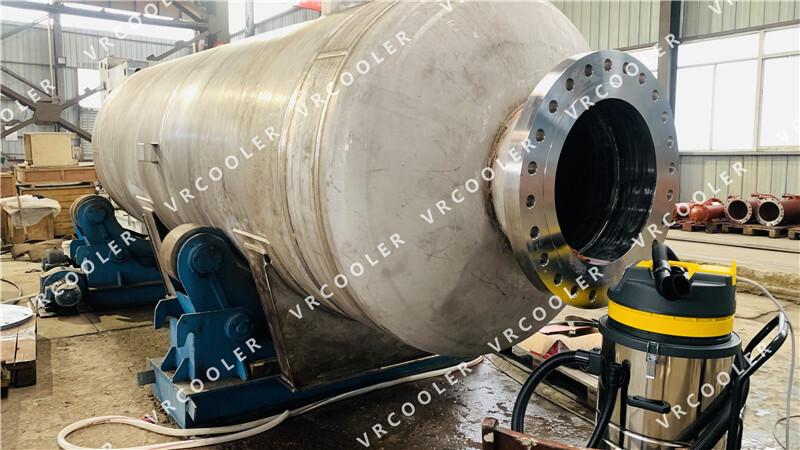
A typical heat-recovery sequence is:
Boiler continuous blowdown → flash vessel → flash-steam recovery → shell-and-tube exchanger → cooled blowdown discharge
The system provides several benefits:
- Reduces boiler fuel consumption
- Preheats makeup or feedwater
- Recovers both flash-steam and liquid-blowdown heat
- Lowers the temperature of wastewater discharge
- Reduces the cooling water required for blowdown disposal
- Improves overall boiler efficiency
The exchanger must be designed for the blowdown pressure, temperature, dissolved-solids concentration and fouling tendency. Blowdown flow normally requires careful pressure control, and the exchanger should include isolation, bypass, drainage and cleaning provisions.
Continuous surface blowdown is generally the most suitable heat source because its flow is relatively steady. Intermittent bottom blowdown may contain sludge and abrasive solids, so it is normally routed to a blowdown vessel rather than directly through a conventional exchanger unless the system is specially designed for that service.