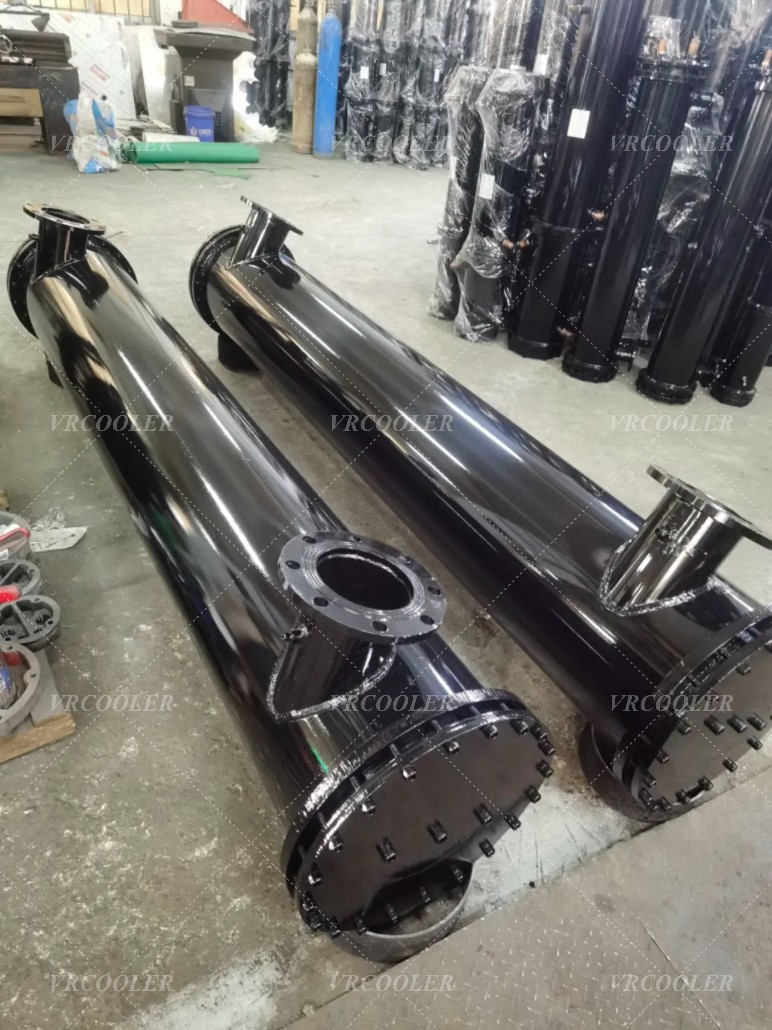
A shell and tube chiller evaporator works by transferring heat from the chilled water loop to the refrigerant inside the chiller. In most large chiller evaporators, chilled water flows through the tubes, while the refrigerant is distributed on the shell side. As the warmer return water from the data center passes through the tube bundle, heat transfers through the tube wall into the refrigerant.
The refrigerant absorbs this heat and evaporates from liquid into vapor. During this phase-change process, the refrigerant removes a large amount of heat from the water without requiring a large temperature difference. The cooled water then leaves the evaporator and is pumped back to the data center cooling system, such as CRAH units, AHUs, fan wall units, rear door heat exchangers, or liquid cooling support equipment.
In a flooded shell and tube evaporator, the tube bundle is surrounded by liquid refrigerant, which provides very efficient heat transfer and stable chilled water production. In a DX shell and tube evaporator, refrigerant expands directly through the evaporator circuit and absorbs heat as it evaporates. Flooded designs are often used for large-capacity, high-efficiency data center chillers, while DX designs may be used in smaller or packaged systems.
For data center operation, the evaporator must maintain a stable leaving chilled water temperature under continuous load. Good water flow, clean tube surfaces, correct refrigerant charge, and proper control of evaporation pressure are essential. If the evaporator becomes fouled, undercharged, or poorly controlled, heat transfer efficiency drops, chiller energy consumption increases, and the cooling reliability of the data center may be affected.