
In a central AC system, a shell-and-tube evaporator works as the chiller’s cold-producing heat exchanger. Its job is to take heat out of the building’s chilled-water loop and transfer that heat into the refrigerant.
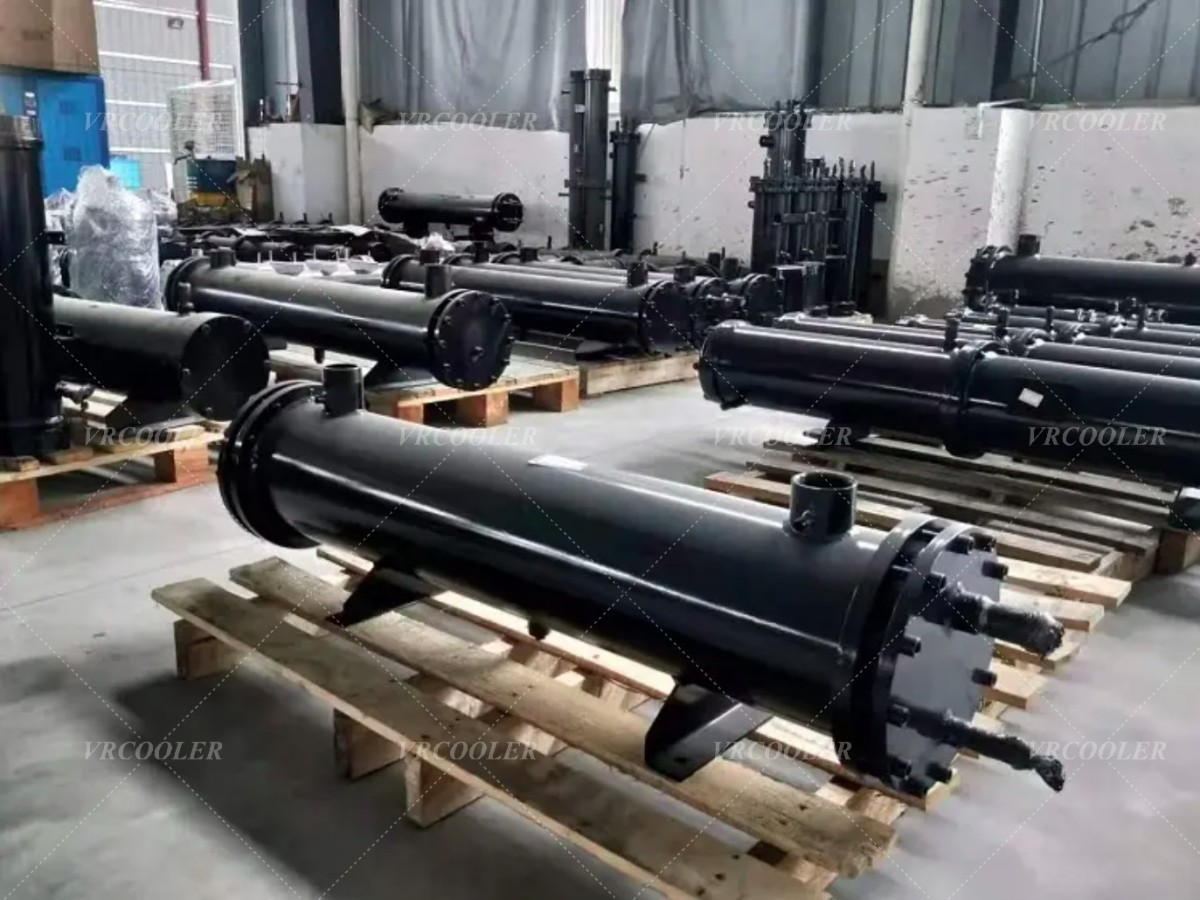
Here is how the process works in practice:
Warm return water from the building enters the evaporator after it has absorbed heat from indoor spaces through AHUs, FCUs, or other cooling coils. This water is warmer because it has already collected unwanted heat from the building.
Inside the evaporator, that water flows through a bundle of tubes. Around those tubes, on the shell side, is the refrigerant at a low pressure and low boiling temperature. Because the refrigerant is colder than the water, heat moves through the tube walls from the water into the refrigerant.
As the refrigerant absorbs this heat, it boils and evaporates. That phase change is the key point. Instead of just warming up like ordinary fluid, the refrigerant changes from liquid to vapor while taking in a large amount of heat. This is why the evaporator can remove heat very efficiently.
While the refrigerant is evaporating on one side, the water inside the tubes is losing heat on the other side. As a result, the water leaves the evaporator at a lower temperature and becomes chilled water again. That cooled water is then pumped back through the building to absorb more indoor heat, and the cycle repeats.
At the same time, the refrigerant that has turned into vapor leaves the evaporator and goes to the compressor. The compressor then raises its pressure and temperature so the heat can later be rejected in the condenser.
So the shell-and-tube evaporator is essentially doing three things at once:
- it receives warm return water from the building
- it transfers that heat into the refrigerant
- it sends cooled water back into the central AC distribution loop
In simple terms, the evaporator is the part of the chiller where the building’s heat is “picked up” by the refrigerant. Without it, the system could not produce chilled water or provide air conditioning.
In many central AC chillers, the water flows through the tubes and the refrigerant evaporates on the shell side, although the exact design can vary. This arrangement is popular because it gives good heat transfer, strong mechanical construction, and relatively easy maintenance for medium and large HVAC systems.
