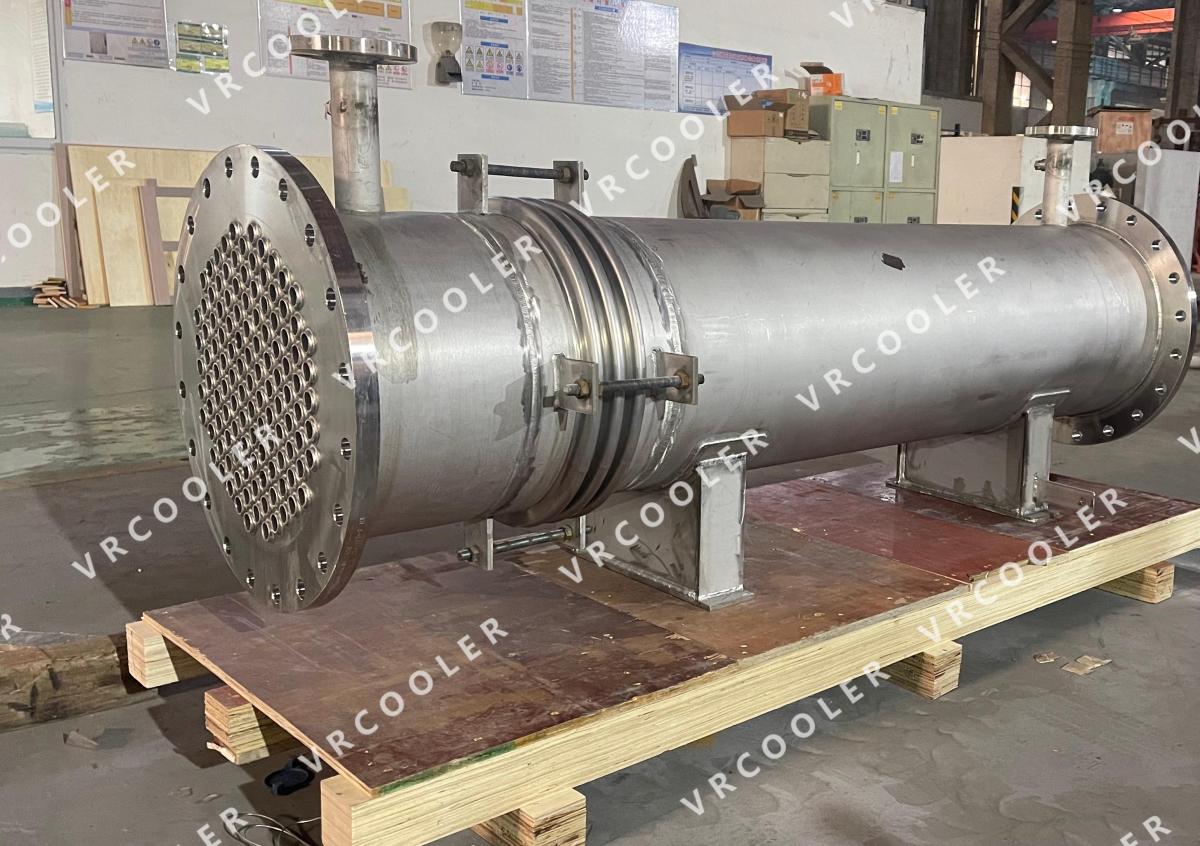
A shell and tube feedwater preheater transfers energy from a hotter fluid—such as exhaust-gas-heated water, steam condensate, compressor cooling water, hot oil or another process stream—to the colder boiler feedwater. The two fluids circulate through separate passages and do not mix.
Typically, the pressurized boiler feedwater flows inside the tubes, while the heating medium passes through the shell around the tube bundle. Baffles direct the hot fluid across the tubes, improve turbulence and increase heat transfer. Heat passes through the tube walls, raising the feedwater temperature before it enters the deaerator, economizer or boiler. The flow arrangement may be reversed according to pressure, fouling, corrosion, cleaning and pressure-drop requirements.
Preheating reduces the amount of fuel needed to bring the water to steam-generating temperature. It also decreases thermal shock when cold water enters hotter boiler components, helping improve boiler efficiency and equipment life. When steam is used as the heating medium, it condenses on the shell side and releases latent heat, providing especially effective feedwater heating.
The system normally includes temperature and pressure instruments, a control valve, vents, drains and a bypass line. These components maintain the required feedwater outlet temperature and allow continued boiler operation when the heat source is unavailable or the exchanger requires maintenance. Proper selection must consider flow rates, inlet and target outlet temperatures, fluid properties, operating pressures, allowable pressure drops, water quality and potential fouling.