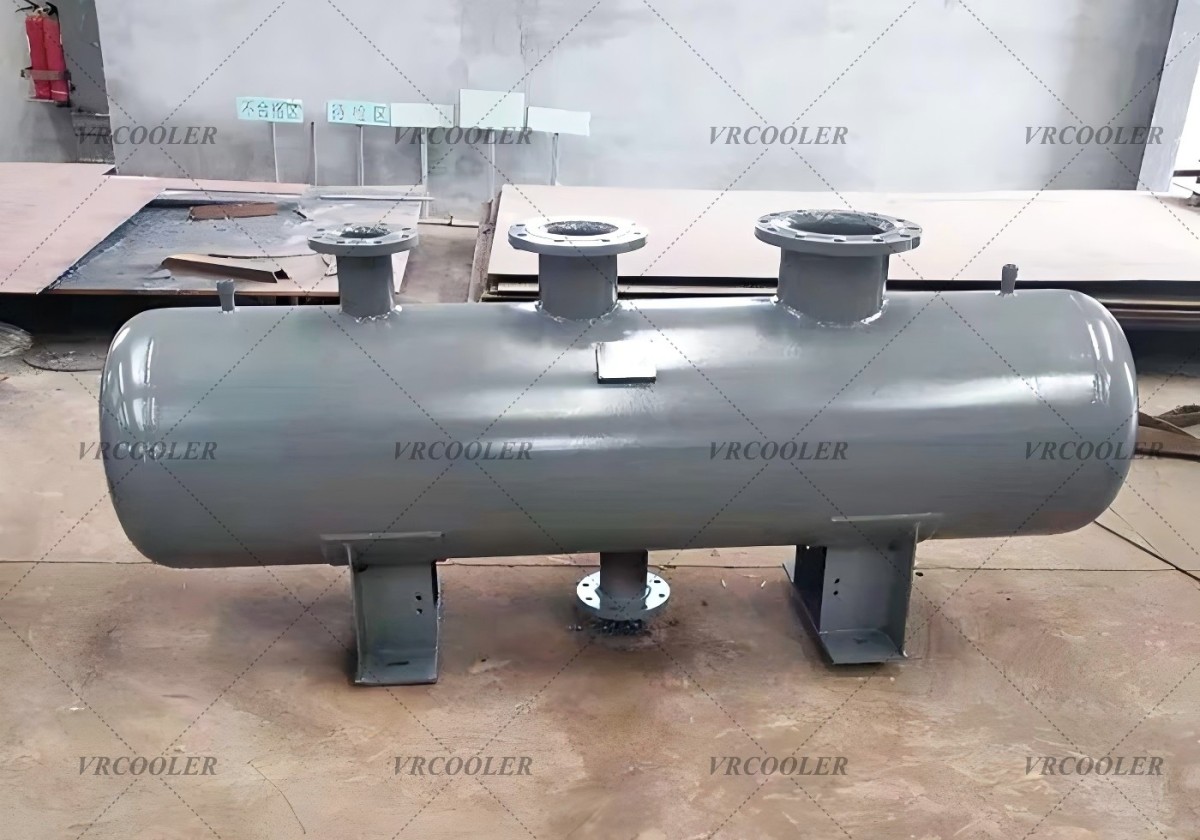
A steam separator improves steam quality by removing entrained water droplets carried through the steam pipeline. Wet steam may develop because of boiler-water carryover, heat loss and condensation in the piping, sudden pressure changes, or inadequate condensate drainage.
Inside the separator, the steam is forced to change direction, swirl, or pass through baffles or a demister. Because water droplets are denser than steam, their momentum carries them toward the separator wall or internal surfaces. The droplets collide, combine into larger drops and fall into the condensate chamber. A steam trap then automatically drains the collected water without allowing significant live-steam loss.
By increasing the steam dryness fraction, the separator provides several operational benefits:
- More stable and efficient heat transfer in coils, heat exchangers and process equipment
- Faster and more consistent heating
- Less condensate entering control valves, flowmeters and pressure-reducing stations
- Reduced water hammer, vibration and pipeline noise
- Lower risk of erosion damage to valves, pipe fittings and turbine components
- More accurate steam-flow measurement
- Reduced corrosion caused by condensate remaining in downstream equipment
- Longer service life for steam traps and process equipment
Separator performance depends on correct sizing, steam velocity, pressure drop, turndown range and reliable condensate drainage. If the separator is undersized, overloaded or fitted with a blocked steam trap, water can be carried downstream again.
A steam separator improves the physical dryness of the steam; it does not remove dissolved gases, chemicals or contaminants present in the vapor phase. Proper boiler-water treatment, pipeline insulation, drip legs and correctly functioning steam traps are still required to maintain high-quality steam throughout the system.