
A transformer oil-water cooler transfers heat from hot transformer insulating oil to a separate cooling-water circuit without allowing the two fluids to mix.
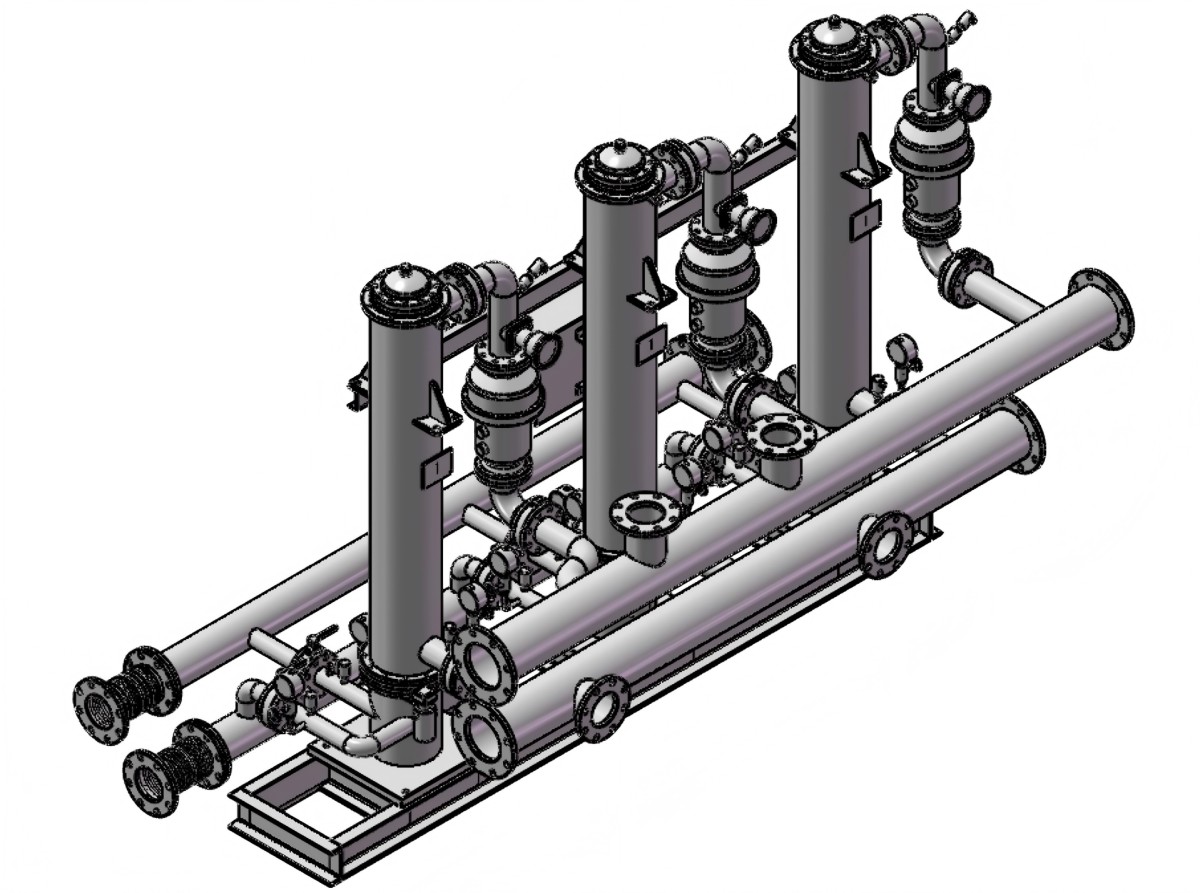
During operation, the transformer windings and core generate heat. An oil pump circulates the heated oil from the transformer tank through the cooler. In a typical shell-and-tube design, oil flows around the outside of the tubes, while cooling water flows inside them. Heat passes through the tube walls into the water, and the cooled oil returns to the transformer to absorb more heat.
Baffles guide the oil across the tube bundle, improving flow distribution and heat transfer. Cooling water is commonly routed through the tubes because the water side is more likely to develop scale or sediment and can therefore be inspected and cleaned more easily. Depending on the installation, the water may come from a closed loop, cooling tower, plant water system, river, or seawater circuit.
The oil side is generally maintained at a higher pressure than the water side. If a tube develops a leak, oil is therefore more likely to enter the water circuit than water to contaminate the transformer oil. For installations requiring greater protection, a double-tube or double-wall cooler can provide an intermediate leak-detection space between the two fluids.
Temperature sensors monitor the transformer top-oil or winding temperature and can start, stop, or stage the oil and water pumps. Some installations use multiple coolers in parallel or duty/standby operation to provide sufficient capacity and maintenance redundancy.
Effective performance depends on adequate oil and water flow, clean heat-transfer surfaces, proper venting, stable inlet-water temperature, and sound tube integrity. Fouling, blocked strainers, pump failure, high cooling-water temperature, or internal leakage can reduce cooling capacity and cause transformer temperatures to rise.
