
In turbo coupling cooling, an oil-water heat exchanger works by transferring heat from the hot coupling oil to cooling water, while keeping the two fluids completely separated.
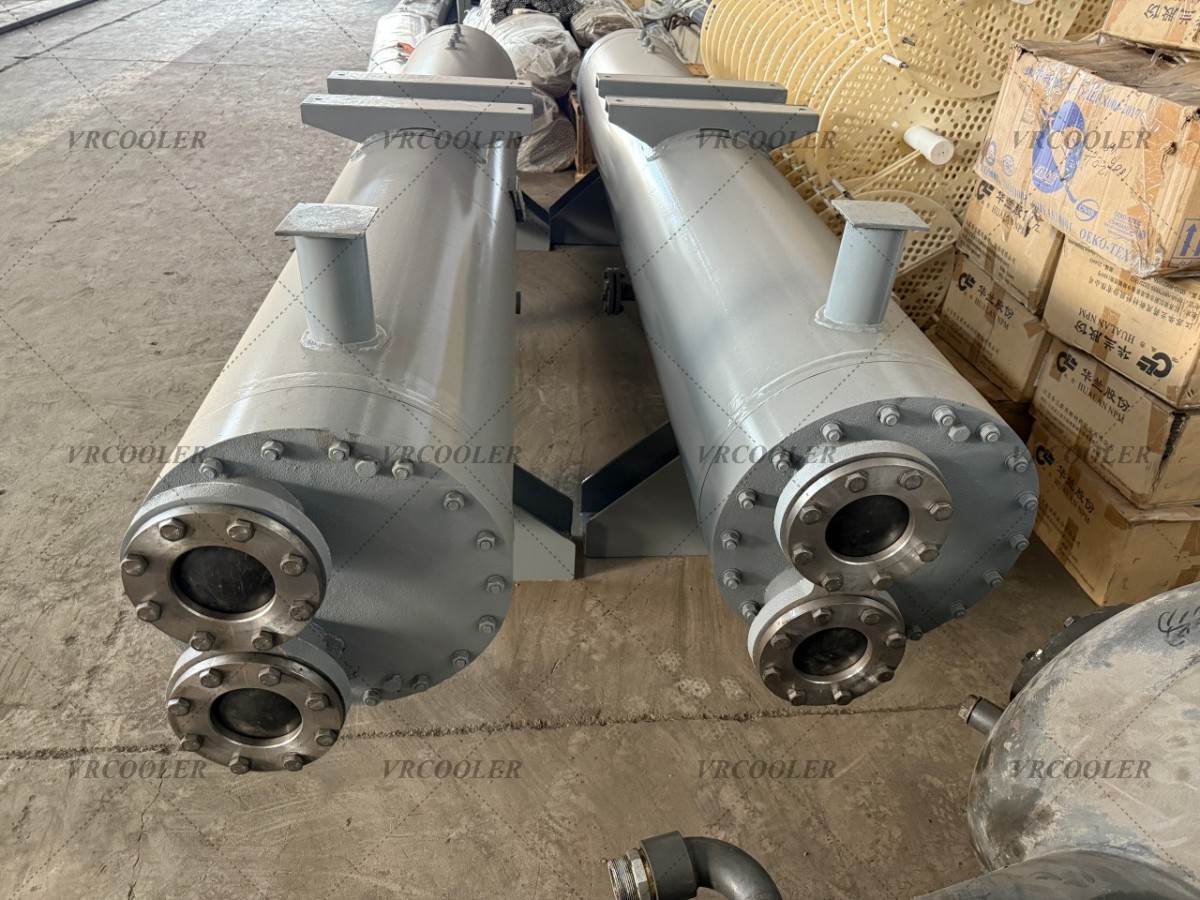
During operation, the turbo coupling, also called a fluid coupling or hydrodynamic coupling, transmits power through circulating oil. Because there is slip between the input side and output side, heat is generated inside the coupling. This heat is absorbed by the working oil or lubricating oil. If the heat is not removed, the oil temperature will rise, the viscosity will decrease, and the coupling may suffer from poor lubrication, seal damage, overheating, or unstable power transmission.
The hot oil is pumped from the turbo coupling to the oil-water heat exchanger. Inside the cooler, the oil flows on one side of the heat transfer surface, while cooling water flows on the other side. In a shell and tube design, cooling water usually flows inside the tubes, and oil flows around the outside of the tubes on the shell side. Heat passes through the tube wall from the hot oil to the colder water.
After heat transfer, the cooled oil returns to the turbo coupling to continue lubrication and power transmission. The heated cooling water is discharged or sent back to a closed cooling water system, cooling tower, dry cooler, or plant cooling water loop.
A temperature control valve or bypass line is often used to keep the oil within the correct operating range. This prevents the oil from becoming too hot or too cold. Stable oil temperature helps maintain proper viscosity, protect bearings and seals, reduce oil oxidation, and ensure smooth operation of the turbo coupling.
In simple terms, the oil-water heat exchanger removes the heat generated inside the turbo coupling and transfers it to cooling water. This keeps the coupling oil stable, prevents overheating, and supports reliable long-term operation of pumps, fans, conveyors, compressors, and other heavy-duty driven equipment.
