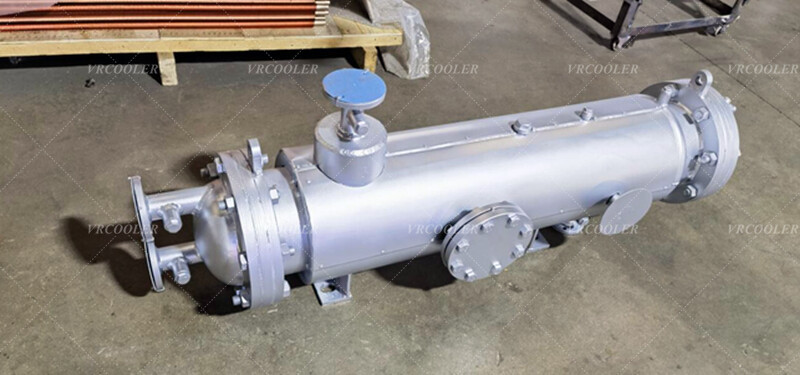
Insufficient seawater flow reduces the condenser’s ability to remove heat from the refrigerant. As less water passes through the tubes, the seawater temperature rises more quickly and the average temperature difference between the refrigerant and cooling water decreases. This causes the refrigerant to condense at a higher temperature and pressure.
The refrigeration compressor must then operate against higher discharge pressure, increasing power consumption and discharge temperature while reducing system capacity and efficiency. In severe cases, the high-pressure protection may stop the compressor. Prolonged operation under these conditions can also accelerate compressor wear and damage seals or other refrigeration components.
Low seawater velocity can additionally encourage sediment, biological growth and scale to accumulate inside the tubes. These deposits create extra thermal resistance and further restrict the water passage, making condenser performance progressively worse.
Common causes include a blocked seawater strainer, fouled tubes, an undersized or worn pump, partially closed valves, air trapped in the piping, or obstructions at the seawater intake. Regularly checking water flow, pressure drop, inlet and outlet temperatures, strainers and tube cleanliness helps maintain reliable condenser performance.