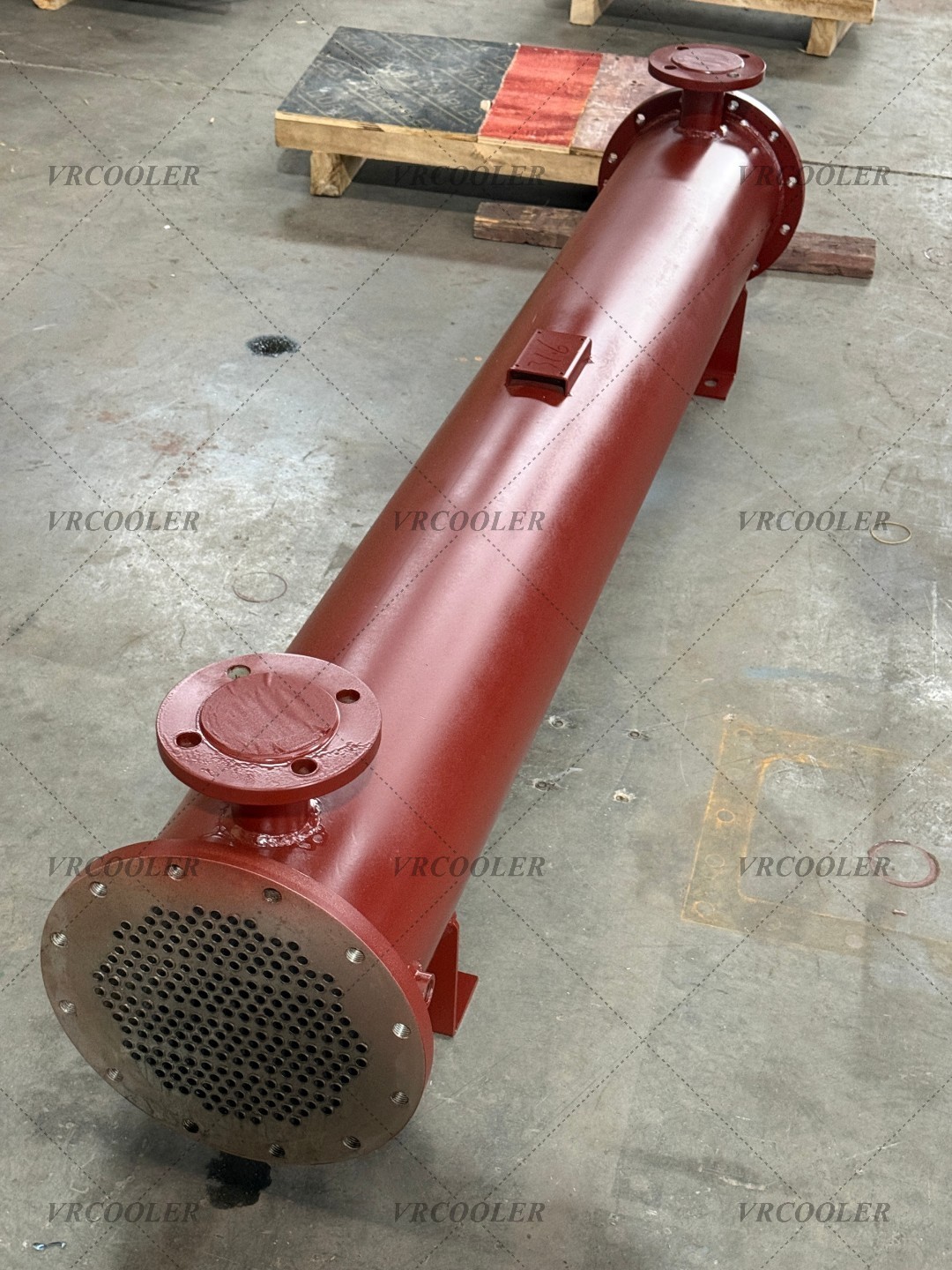
In a CDU, or Coolant Distribution Unit, the shell and tube heat exchanger transfers heat from the server-side coolant to the facility-side cooling water without allowing the two fluids to mix.
The IT-side coolant circulates through cold plates, server manifolds, rear door heat exchangers, or immersion cooling equipment. After absorbing heat from CPUs, GPUs, memory modules, and other high-power components, the warm coolant returns to the CDU and enters one side of the shell and tube heat exchanger.
At the same time, facility water, chilled water, tower water, or glycol solution flows through the other side of the heat exchanger. Heat passes through the tube wall from the hot IT coolant to the colder facility fluid. After the heat is removed, the cooled IT-side coolant is pumped back to the servers to continue the cooling cycle.
The two fluids are completely separated by the tube wall. This is very important because the IT cooling loop usually requires clean, controlled coolant to protect cold plates, pumps, quick connectors, and electronic cooling components. The facility loop may contain glycol, corrosion inhibitors, minerals, particles, or other impurities. The shell and tube heat exchanger allows efficient heat transfer while preventing contamination between the two loops.
In simple terms, the CDU collects heat from the servers, the shell and tube heat exchanger transfers that heat to the building cooling system, and the cooled liquid returns to the IT equipment. This helps maintain stable server temperature, improve cooling reliability, and support high-density data center operation.