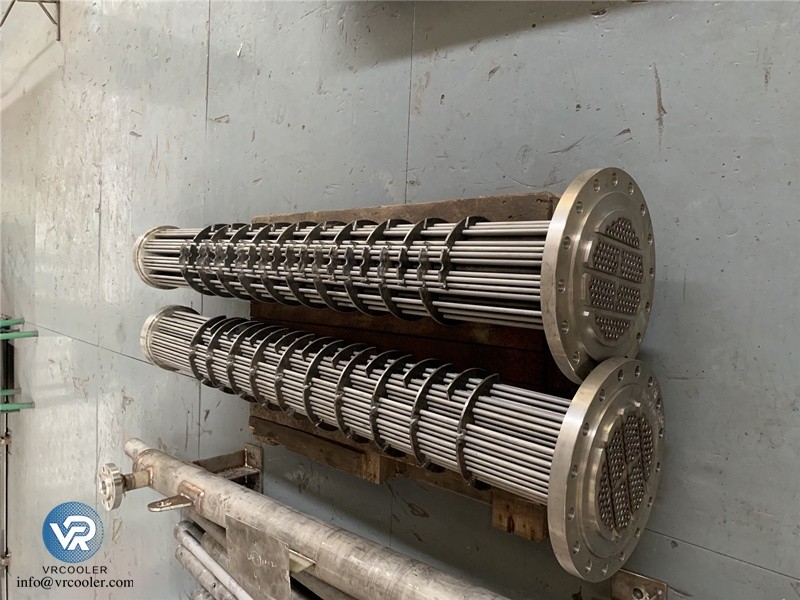
In a power plant, a shell and tube heat exchanger separates the clean closed-loop cooling water from the external cooling-water source. The closed loop circulates treated water through critical equipment such as generator air coolers, turbine and bearing oil coolers, compressor coolers, pump bearings and electrical auxiliary systems. After absorbing heat, the warm treated water returns to the heat exchanger.
Inside the heat exchanger, heat is transferred from the closed-loop water to a colder secondary medium, such as cooling-tower water, river water, lake water or seawater. The two water circuits remain physically separated, which prevents contaminated or corrosive external water from entering sensitive plant equipment. The cooled treated water is then recirculated through the plant.
External cooling water is usually routed through the tubes because the tube side is easier to inspect and mechanically clean. The clean closed-loop water generally flows through the shell side, although the arrangement can be reversed according to pressure, fouling, corrosion and maintenance requirements. Tube materials may include stainless steel, Cu-Ni, Duplex stainless steel or titanium, depending on the quality of the external water.
A correctly selected exchanger maintains a stable closed-loop supply temperature while limiting pressure loss and pumping power. This protects downstream equipment from overheating, reduces corrosion and scaling within plant machinery, and improves overall operating reliability. Temperature, flow and pressure-drop monitoring can also provide early warning of fouling, blocked tubes or insufficient cooling-water flow.