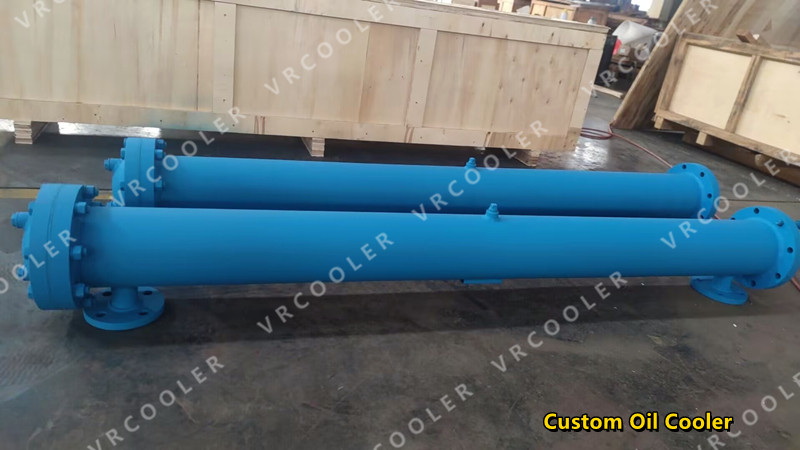
A marine shell-and-tube oil cooler removes heat generated by friction, fluid compression and mechanical losses in gearbox and hydraulic systems. Hot oil circulates through one side of the exchanger while seawater or closed-loop freshwater flows through the other side. The fluids remain separated while heat passes through the tube walls.
Gearbox-oil cooling
In a gearbox lubrication circuit, oil is drawn from the sump and circulated by a pump through filters and the oil cooler before being supplied to gears, shafts and bearings. The cooled oil absorbs heat from these components and then returns to the sump.
Maintaining the specified oil temperature preserves viscosity and lubricant-film strength. This reduces gear wear, bearing damage, oil oxidation, varnish formation and high-temperature shutdowns. A thermostatic bypass valve may divert some oil around the cooler during startup and gradually increase cooling as the gearbox warms.
Hydraulic-oil cooling
Hydraulic systems generate heat through pump inefficiency, throttling, pressure losses and internal leakage. The cooler is commonly installed in the low-pressure return line before the oil returns to the reservoir. It may also be installed in an independent offline cooling loop for continuous oil circulation and temperature control.
Installation in a high-pressure supply line is possible, but the heat exchanger must be specifically designed for the system’s maximum working and surge pressures.
Typical flow arrangement
Cooling water normally passes through the tubes because seawater deposits and marine growth are then easier to inspect and clean. Oil generally flows through the shell side, where baffles improve circulation and heat transfer while keeping the oil-side pressure drop within the pump’s allowable limit.
Reliable operation requires correct oil flow, cooling-water flow, pressure drop and outlet-temperature control. Temperature and pressure sensors, bypass valves, isolation valves and seawater strainers are commonly included. For critical marine systems, double-tube-sheet construction or leakage-detection arrangements may be considered to reduce the risk of seawater contaminating the gearbox or hydraulic oil.