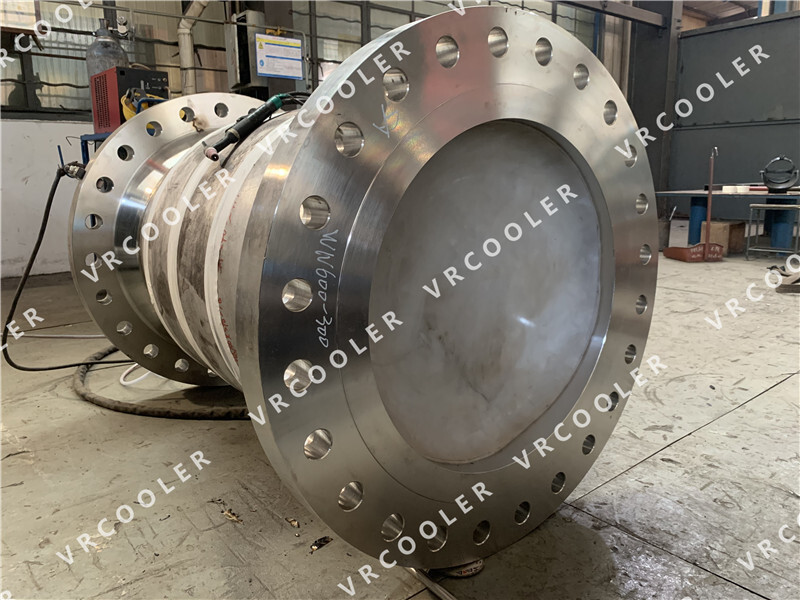
How to Solve Sealing Problems of Shell & Tube Heat Exchangers under High Pressure Working Conditions?
The sealing problem of shell and tube heat exchanger under high pressure working condition can be solved in several ways:
Selection of a suitable sealing structure
Metal ring sealing structure: For shell and tube heat exchangers with relatively low design requirements in terms of pressure and diameter, metal sealing ring structures such as octagonal or elliptical pads can be selected. Its composition is simple and the technology is mature.
ω Ring seal structure: the structure of the overall cost is low, not easy to leak. When the medium is corrosive, it is necessary to reasonably upgrade the material to ensure that the ω ring seal structure will not be damaged by corrosion during the maintenance cycle.
Threaded locking ring sealing structure: suitable for high-pressure working conditions with high space requirements and high heat transfer efficiency requirements. It adopts double shell and double pipe structure, and is a double sealing design, with external threads replacing the main bolts, and internal compression sealing step by step by the split ring, split box and pipe plate.
Diaphragm sealing structure: similar to the thread sealing structure, lighter in weight under the same volume, with the advantages of easy disassembly, low machining precision requirements, simple sealing without leakage, suitable for high-pressure hydrogenation devices.
Adoption of high-performance sealing materials
Metal materials: High strength, corrosion resistant metal materials, such as stainless steel, nickel-based alloys, etc., can be selected to make seals to improve the strength of the sealing structure and pressure resistance.
Non-metallic materials: PTFE and other good corrosion resistance, low coefficient of friction and high sealing performance, can be used to make gaskets, seals and other components. For high-temperature and high-pressure conditions, graphite composite gaskets, etc. can also be used to maintain good sealing performance and stability at high temperatures2.
Composite materials: such as ST-4976 high-temperature mica composite gasket, by double-sided fiber reinforced mica and the middle of the metal punch composite, the mica layer from the expansion of the mica and high-temperature-resistant fibers plus high-grade rubber as a combination of binder, can be used for high-temperature and high-pressure special working conditions4.
Optimize manufacturing and installation process
Improve processing accuracy: Strictly control the processing accuracy of sealing related parts such as tube plate and shell to ensure the flatness, finish and dimensional accuracy of the sealing surface, and reduce the sealing problem caused by processing error.
Ensure the quality of installation: during the installation process, strictly follow the operating procedures to ensure that the seals are installed in place and the bolts are tightened evenly. For example, when installing the O-ring, avoid distortion, scratches and so on. For the threaded locking ring sealing structure, make sure that the matching accuracy of the threads and the tightening torque meet the requirements.
Real-time monitoring and maintenance
Installation of monitoring equipment: install pressure sensors and leakage monitoring devices on the shell and tube heat exchanger to monitor real-time pressure changes in the sealing area and whether there is leakage. Once abnormalities are found, take timely measures to deal with them.
Regular maintenance and inspection: Carry out regular maintenance on the heat exchanger, check the wear and aging of the seals, and replace the damaged seals in time. Check and tighten the bolts and other fastening parts to ensure the reliability of the sealing structure.
Optimize system design
Buffer device setup: Set up buffer tanks, safety valves and other devices in the piping system to reduce the impact of pressure fluctuations and shocks on the sealing structure, and avoid seal failure due to sudden pressure changes5.
Reasonable arrangement of piping: Optimize the piping layout to reduce the bending and resistance of the piping, so as to make the fluid flow smoother and reduce the impact on the sealing parts.