
A Visual of Engineering at Its Core
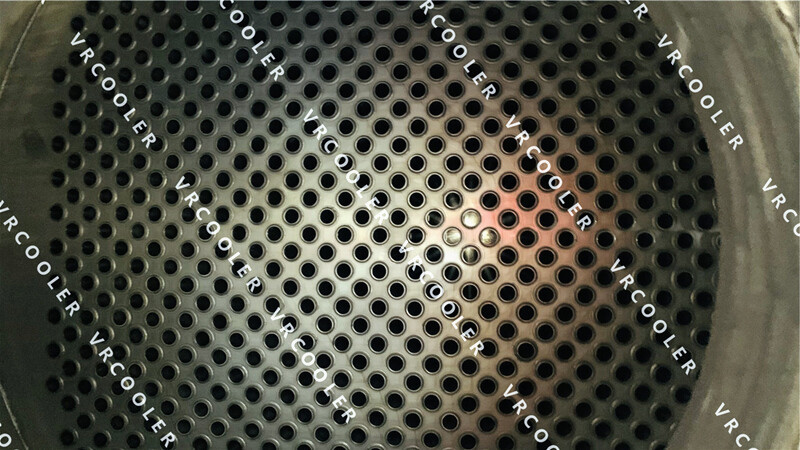
The tube bundle shown in the image represents the heart of a shell and tube heat exchanger. Each tube is carefully inserted into the tube sheet, forming a dense and highly organized heat transfer matrix.
Hundreds of tubes maximize effective heat exchange area.
Tube layout is designed according to thermal calculations.
Precise spacing ensures stable flow and mechanical strength.
This structure directly determines how much energy the exchanger can transfer.
Why Tube Arrangement Defines Performance
Tube arrangement is not random — it follows strict engineering logic.
Triangular layouts improve heat transfer intensity.
Square layouts allow easier mechanical cleaning.
Tube pitch influences pressure drop and turbulence level.
Different industrial systems require different tube configurations to balance efficiency and maintenance.
Why Tube Arrangement Defines Performance
Tube arrangement is not random — it follows strict engineering logic.
Triangular layouts improve heat transfer intensity.
Square layouts allow easier mechanical cleaning.
Tube pitch influences pressure drop and turbulence level.
Different industrial systems require different tube configurations to balance efficiency and maintenance.
Manufacturing Precision Behind Each Tube
Producing such a tube bundle requires strict control.
Tube length tolerance must be minimal.
Tube expansion or welding to tube sheets must be uniform.
Any misalignment may cause vibration or leakage.
This stage defines long-term reliability more than any other part of production.
Why This Structure Remains Irreplaceable
Despite many modern exchanger types, tube bundle systems remain dominant because:
They handle high pressure and temperature.
They allow flexible material selection.
They are repairable and upgrade-friendly.
They offer long service life with predictable performance.
This combination makes the tube bundle one of the most valuable industrial heat transfer designs ever developed.
